India's New VB-G RAM G Bill Introduced, Replacing MGNREGA


President Droupadi Murmu has approved the Viksit Bharat–Guarantee for Rozgar and Ajeevika Mission (Gramin) (VB-G RAM G) Bill, 2025, which significantly revises the rural employment policy in India. This development, announced by the Ministry of Rural Development, replaces the Mahatma Gandhi National Rural Employment Guarantee Act (MGNREGA) of 2005. The new legislation extends the statutory guarantee of wage employment for rural households from 100 days to 125 days per financial year.
The VB-G RAM G Bill aims to enhance livelihood security while aligning rural employment initiatives with the government's broader vision for a developed India by 2047. Under this new law, rural households with adult members willing to undertake unskilled manual labour are entitled to a minimum of 125 days of paid work annually. To accommodate agricultural cycles, states can implement a pause of up to 60 days during peak sowing and harvesting periods without affecting the overall employment guarantee.
In a notable change, the legislation stipulates tighter timelines for wage payments, requiring that workers receive their dues weekly or within 15 days of completing their work. In cases of delay, compensation for workers will be mandatory, enhancing accountability within the system.
Another significant aspect of the VB-G RAM G Bill is the integration of employment generation with the creation of sustainable rural assets. The projects undertaken will focus on enhancing water security, core rural infrastructure, and facilities related to livelihoods, while also addressing the impacts of extreme weather events. All assets created will be systematically mapped and integrated into a national rural infrastructure platform to improve governance and prevent redundancy.
The implementation of the Act will follow a Centrally Sponsored Scheme model, with a cost-sharing mechanism of 60:40 between the central government and the states. For northeastern and Himalayan states, this ratio will be 90:10, while Union Territories without legislative assemblies will receive full funding from the Centre. Additionally, limits on administrative expenses have been raised to facilitate better staffing and training for effective on-ground execution.
The government has asserted that the new law strengthens mechanisms for accountability and restores provisions for unemployment allowances when work is not provided within the specified timeframe. The introduction of technology-driven solutions, including biometric authentication, geo-tagging, and real-time monitoring dashboards, aims to enhance transparency, alongside reinforced provisions for social audits by local governing bodies known as Gram Sabhas.
According to the Ministry of Rural Development, this legislation represents a shift from a purely welfare-oriented programme to a comprehensive development tool, positioning rural employment as a crucial driver for income security and long-term resilience in rural areas.
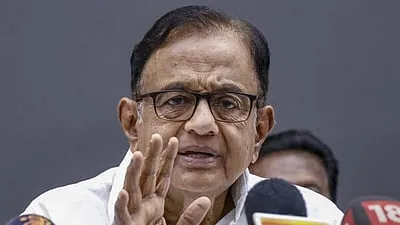
In response to the passing of the VB-G RAM G Bill, senior Congress leader P Chidambaram expressed concerns regarding the removal of Mahatma Gandhi's name from the previous act, describing it as the 'second killing of Mahatma Gandhi.' He argued that while the government may attempt to erase historical figures from official records, their legacy endures in the collective consciousness of the Indian populace.
Chidambaram further criticised the government's approach to the new scheme, suggesting that it transforms a demand-driven entitlement into a discretionary programme, thereby undermining the guaranteed employment that rural residents previously relied upon. He emphasised that the original MGNREGA mandated the government to provide work upon request, a provision that has now changed under the current legislation.
The senior Congress figure also questioned the complexity and clarity of the new programme's nomenclature, arguing that the names used could be confusing for rural populations. He highlighted that the new scheme's implementation would be limited to 'notified districts' selected by the Centre, in contrast to MGNREGA's previous national scope, which included every rural district.
Chidambaram warned that the new funding structure would place additional financial burdens on states, predicting that if a state lacks the necessary funds, the programme would not be executed there. He pointed to significant reductions in budgetary support for employment schemes and expressed concern that the changes would adversely affect the most vulnerable segments of society, particularly daily wage earners and women.
In summary, the VB-G RAM G Bill aims to enhance rural employment while integrating asset creation and resilience-building initiatives, although it faces criticism regarding its implementation and potential impact on some of India's most disadvantaged citizens.
Concerns Rise Over Delhi Voter Registration Discrepancies
Controversy Erupts Over Rahul Gandhi's PM Modi Mimicry at Event

Father of IIT Bombay Student Calls for Action Against Discrimination

India and Japan Conduct Joint Air Exercise 'Veer Guardian-2026'