India Approves $5.46 Billion Military Equipment Procurement



The Defence Acquisition Council (DAC) of India has approved military procurement proposals valued at approximately ₹52,000 crore, equivalent to about $5.46 billion. This decision, taken on July 3, 2026, aims to bolster the operational effectiveness of the Indian Army, Navy, and Air Force. Union Defence Minister Rajnath Singh chaired the DAC meeting, during which a range of significant acquisitions was discussed.
For the Indian Army, the DAC has green-lighted several critical procurements. This includes the Anti-Unmanned Aerial Vehicle Electronic Warfare System, known as Akash Tarang, which is designed to safeguard against threats posed by hostile drones. Additionally, the proposal includes the Man Portable Anti-Tank Guided Missile (MPATGM), designed to enhance infantry capabilities against enemy armoured units. The Medium Range Surface-to-Air Missile (MRSAM) system will provide a defensive shield against various aerial threats, while the Very Short Range Air Defence Systems (V-SHORADS) are expected to improve countermeasures resiliency. Furthermore, Active Protection Systems for tanks and kamikaze drone systems are also part of the approved acquisitions.
In terms of naval capabilities, the DAC approved the purchase of Multi Influence Ground Mines (MIGM) and Naval Shipborne Unmanned Aerial Systems (NSUAS). The MIGM will significantly enhance the Navy’s sea denial capabilities, restricting adversary movements in crucial maritime areas. The NSUAS will be instrumental in improving maritime surveillance and situational awareness using advanced sensor technology.
Moreover, the establishment of a Land Based Testing Facility for Electric Propulsion Systems is part of the navy's enhancement initiatives. This facility will aid in developing and validating electric propulsion systems for future naval platforms.
For the Air Force, proposals also included the acquisition of Fixed-Wing High Altitude Pseudo Satellites (FW-HAPS). Such a platform is expected to offer continuous intelligence, surveillance, and reconnaissance (ISR) capabilities, as well as telecommunications and remote sensing functionalities, thereby augmenting operational effectiveness over extended durations.
These recent approvals signify a substantial step forward in modernising India’s armed forces, focusing on advanced indigenous solutions and next-generation technologies across the land, sea, and air domains. The Indian Ministry of Defence has indicated that these procurements will enhance overall preparedness and combat readiness among the armed forces, aligning with broader national security objectives.

Election Commission Extends Deadlines for Andhra Pradesh and Meghalaya
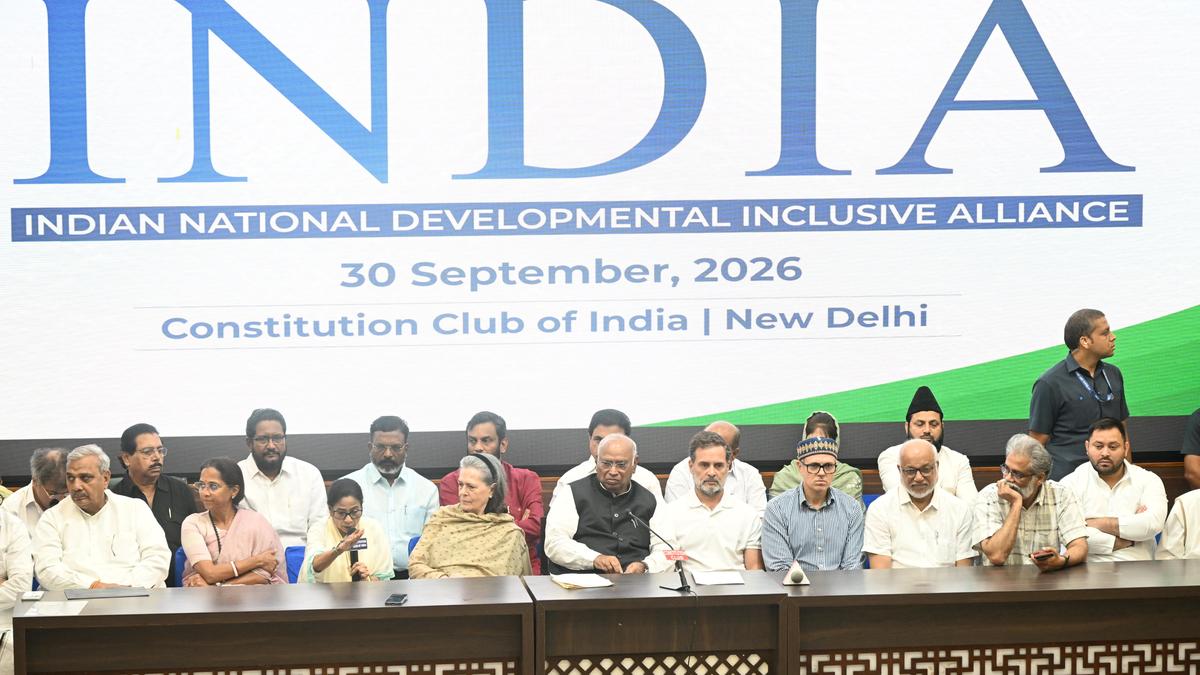
INDIA Bloc Announces Nationwide Campaign Against Chief Election Commissioner

Gujarat Authorities Seize ₹3,000 Crore Worth of Drugs at Sea

Modi and Trump Discuss Bilateral Cooperation in Key Sectors