Historic Birth of Indian-Born Cheetah Cubs in Kuno National Park


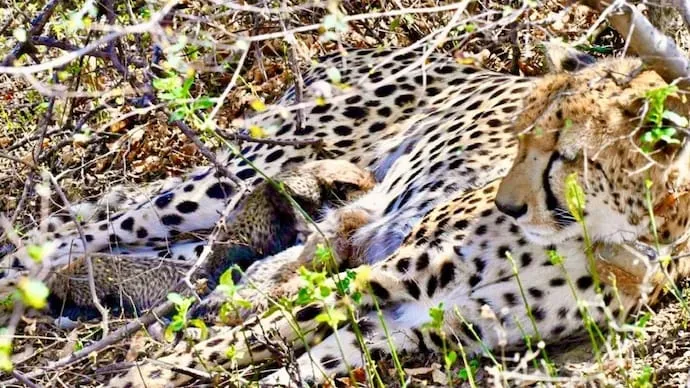
A significant event has unfolded in Kuno National Park, Madhya Pradesh, where an Indian-born cheetah has given birth to four cubs in the wild. This remarkable occurrence was confirmed by Bhupender Yadav, the Union Minister for Environment, Forest and Climate Change, on April 11, 2026. This birth represents the first instance of a cheetah, born in India, successfully reproducing in a natural environment since the species was reintroduced to the country in 2022.
The mother, a 25-month-old female, is the offspring of Gamini, a cheetah brought from South Africa as part of the reintroduction initiative. This event is scientifically notable, as it marks the F1 generation, which is the first generation born in the host country, reaching reproductive maturity.
Previous cheetah births, such as one involving another Indian-born female named Mukhi in November 2025, occurred within a managed enclosure. In contrast, the recent cubs' birth is the first recorded in true wilderness. This highlights the cheetah's adaptation to the Indian landscape, a crucial aspect of their reintroduction.
The species was declared extinct in India in 1952, leading to a government-backed programme to reintroduce them. Some sceptics questioned the suitability of Kuno's wooded terrain, as cheetahs are primarily adapted to the African savannas. However, the successful birth in a natural setting demonstrates that Kuno can provide adequate resources, including food and safety, for a young mother to gestate and hunt effectively.
At 25 months, the mother cheetah is at the ideal age for her initial litter, as cheetahs typically reach maturity between 18 and 24 months. The natural conception and birth indicate that she is thriving without human intervention, showcasing her ability to hunt local prey such as chital and sambar.
Newborn cheetah cubs are particularly vulnerable, weighing between 150 to 350 grams. They are covered in a thick mantle of grey fur, which aids in their camouflage within grassy environments, protecting them from potential predators such as leopards. The cubs will remain with their mother for nearly two years, during which she will teach them the skills needed for hunting.
While cub mortality rates can be high in the wild, the successful birth of these Indian-born cubs signifies a promising step towards establishing a self-sustaining population of cheetahs in India.
Kerala Initiates Probe into 2006 Suicide Case Involving CEC

Extradition of Sheikh Hasina Feasible, Says Indian High Commissioner

Punjabi Makeup Artist Mad Sandhu Shot Dead in Amritsar

India Achieves Fourth Place at Asian Games 2026 Through Late Success