Gold and silver face volatile week as US data and Venezuela crisis collide


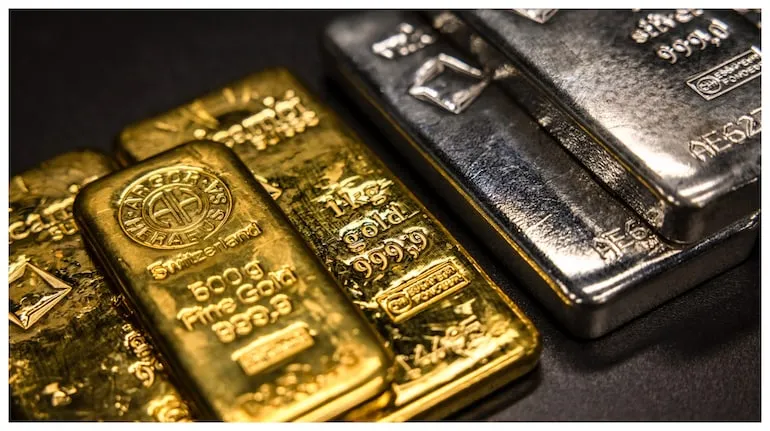
Precious metal prices are expected to see sharp movements as traders balance competing signals from macroeconomic data and geopolitical developments, according to market analysts. The coming days are likely to be shaped by fresh data from the United States and reactions to events in Venezuela, a major oil-producing nation.
Investor attention will be focused on several closely watched US indicators, including the Institute for Supply Management’s manufacturing data, private-sector employment figures from ADP for December and the latest unemployment rate. Comments from officials of the US Federal Reserve are also expected to influence sentiment, as markets look for clues on the future direction of interest rates.
“Gold prices are likely to remain volatile in the week ahead as there are bullish as well as bearish factors at play,” said Prathamesh Mallya, deputy vice-president for research in non-agricultural commodities and currencies at Angel One. He said traders are weighing expectations of monetary policy easing against the possibility of stronger economic data dampening demand for safe-haven assets.
Geopolitical tensions have added a new layer of uncertainty. Analysts said commodities markets could see aggressive trading as investors react to reports that US forces detained Venezuelan President Nicolás Maduro and his wife during a military operation, with Washington accusing them of drug trafficking. The incident has raised concerns about potential disruption in global energy markets.
One analyst said the development could “jolt global markets”, pushing both bullion and crude oil prices higher amid fears of supply disruptions from Venezuela, which holds the world’s largest proven oil reserves. Although gold and silver do not depend directly on Venezuelan supply, broader risk aversion linked to energy markets often supports demand for precious metals.
Despite the heightened geopolitical backdrop, gold prices corrected sharply in the past week after reaching record levels in late December. On India’s Multi Commodity Exchange, gold futures fell by ₹4,112, or 2.94 per cent, over the week. Prices had earlier climbed to an all-time high of ₹1,40,444 per 10 grams before sliding more than 3 per cent to settle at ₹1,35,761 per 10 grams on Friday.
Mallya said the recent decline was largely due to profit booking at elevated levels, combined with thin trading volumes during year-end and Christmas holidays. He noted that gold traded in a wide range of ₹1,34,000 to ₹1,40,000 per 10 grams during the week, reflecting choppy conditions and heavy selling pressure.
Silver prices mirrored gold’s volatility. On the Multi Commodity Exchange, silver fell by ₹3,471, or 1.45 per cent, over the week. After touching a record high of ₹2,54,174 per kilogram, prices dropped sharply by ₹17,858, or 7.02 per cent, to close at ₹2,36,316 per kilogram.
International markets showed similar trends. On the Comex in the United States, gold futures declined by $223.1, or 4.9 per cent, during the holiday-shortened week, ending at $4,329.6 per ounce. Silver prices fell even more sharply, sliding 8 per cent, or $6.18. After hitting a record of $82.67 per ounce, silver dropped 14.1 per cent, or $11.65, to settle at $71.01 per ounce.
Pankaj Singh, founder and principal researcher at Smart Wealth AI, said gold’s ability to hold near the $4,300-per-ounce level points to sustained investor caution. He said this resilience reflects a combination of easing US inflation pressures and continued demand for safe-haven assets amid geopolitical risks.
Singh added that silver’s recent decline was partly driven by technical factors. He said prices saw a short-term correction after CME Group raised margin requirements for futures trading, forcing traders to reduce leveraged positions and triggering selling across the Comex market.
Looking ahead to 2026, Singh said the broader outlook for precious metals remains uncertain but potentially supportive. He said gold prices could rise by between 10 and 60 per cent over the year, although sharp interim corrections of up to 20 per cent are possible in a volatile environment.
Silver, he said, carries a downside risk of between 5 and 30 per cent. However, he added that strong industrial demand, particularly from sectors such as renewable energy and electronics, could provide significant upside, with prices potentially rising by as much as 40 per cent if supply constraints persist.
“Structurally bullish, policy-driven precious metals cycle may continue, but the risk of significant corrections is also possible,” Singh said, highlighting the need for caution among investors.
Context
The coming week underscores the sensitivity of precious metal markets to both economic data and geopolitical events. While expectations of lower interest rates and safe-haven demand can support gold and silver, stronger US data or shifts in Federal Reserve messaging can quickly reverse sentiment. The added uncertainty surrounding Venezuela has amplified these dynamics, suggesting that volatility is likely to remain elevated in the near term.

Kerala Initiates Probe into 2006 Suicide Case Involving CEC

Extradition of Sheikh Hasina Feasible, Says Indian High Commissioner

Punjabi Makeup Artist Mad Sandhu Shot Dead in Amritsar

India Achieves Fourth Place at Asian Games 2026 Through Late Success