North Korea Condemns US Operation in Venezuela as 'Sovereignty Violation'


North Korea's Strong Condemnation
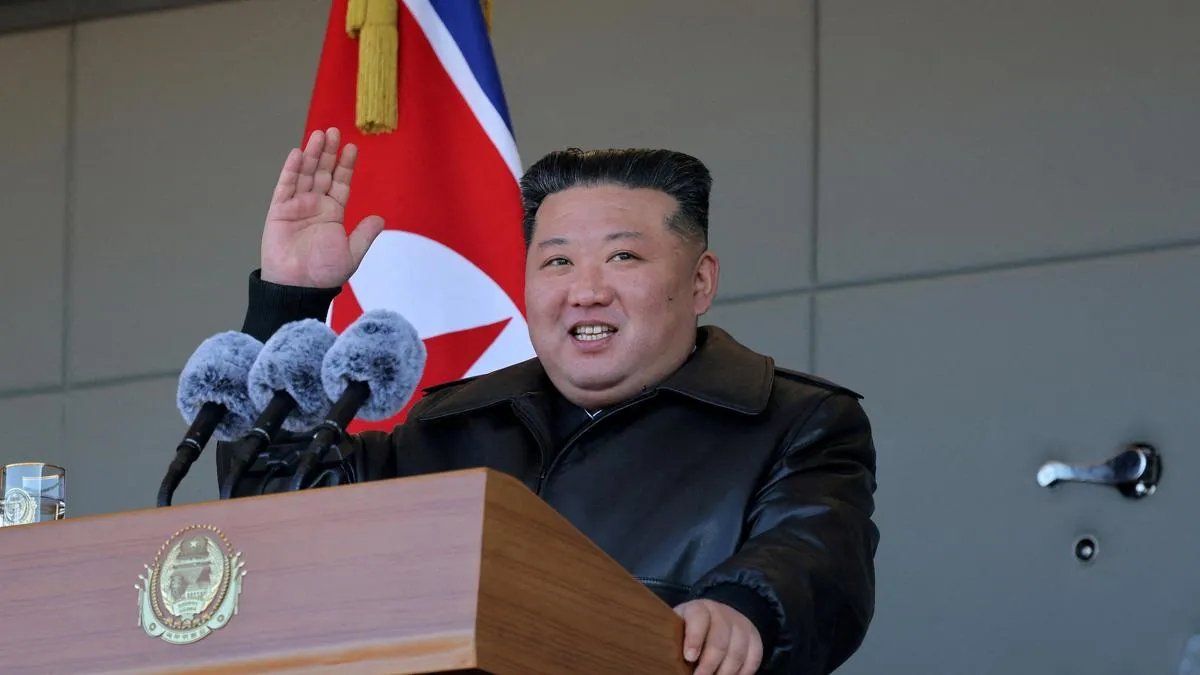
On January 4, 2026, North Korea's Foreign Ministry issued a statement through its official news agency, KCNA, denouncing the United States’ military action in Venezuela. The ministry referred to the US operation, which resulted in the capture of President Nicolás Maduro, as a "serious encroachment of sovereignty."
The statement criticised Washington for what it described as a hegemonic act in Venezuela, accusing the US of engaging in actions that expose its "rogue and brutal nature." The North Korean government has long opposed foreign interference in the affairs of sovereign nations, and this condemnation highlights the ongoing geopolitical friction between Pyongyang and Washington.
"The incident is another example that clearly confirms once again the rogue and brutal nature of the US," a spokesperson for the Foreign Ministry said. "It is a wanton violation of the U.N. Charter and international laws, which uphold sovereignty, non-interference, and territorial integrity."
Details of the US Operation
The operation in question took place on January 3, 2026, when US special forces launched a pre-dawn raid on the Venezuelan capital, Caracas. The attack included airstrikes on key sites in and around the city, culminating in the capture of Maduro and his wife, Cilia Flores. The couple was transported to the United States, where they face charges related to drug trafficking and arms smuggling.
This operation is seen as a significant escalation in US efforts to topple Maduro, who has led Venezuela since 2013. The United States has long accused Maduro’s government of being involved in drug trafficking and human rights abuses, while many Western nations have recognised opposition leader Juan Guaidó as Venezuela's legitimate president. The Venezuelan government, however, has received substantial support from countries like China, Russia, and North Korea.
Pyongyang's Perspective
North Korea’s condemnation of the operation comes as part of its broader critique of US foreign policy. Pyongyang has historically justified its nuclear and missile programmes as a defence against potential regime change efforts by Washington. For North Korea, the US's intervention in Venezuela represents a deeply concerning example of what it sees as the US's tendency to engage in the forcible removal of foreign leaders.
North Korea has been a vocal supporter of Maduro's socialist government, viewing it as an ideological ally in the global struggle against US hegemony. Maduro's regime has promoted policies that align with North Korea's anti-Western stance, including the rejection of foreign intervention and the pursuit of self-sufficiency.
In its statement, North Korea called for "voices of due protest and denunciation against the US's habitual violation of the sovereignty of other countries." The government has warned that such actions risk destabilising international relations and undermining global peace.
A Day of Military Tensions
The condemnation came on the same day that North Korea launched a series of ballistic missile tests. The missile launches occurred just hours before South Korean President Yoon Suk-yeol's state visit to China, North Korea's key ally. The timing of the missile tests underscores the ongoing tensions on the Korean Peninsula and the broader geopolitical manoeuvring between Pyongyang and its adversaries.
Pyongyang’s missile launches and condemnation of the US operation in Venezuela reflect its continued challenge to US influence in global politics. The missile tests are also seen as a reminder of North Korea’s military capabilities and its readiness to confront what it perceives as US aggression.
Regional and International Reactions
The US operation and its aftermath have generated a variety of international responses. While allies of the US, including members of the European Union, have supported the efforts to address the Venezuelan government's alleged involvement in drug trafficking and organised crime, nations like China, Russia, and Iran have condemned the intervention, citing concerns over national sovereignty.
In Venezuela, the capture of Maduro has led to a shift in the political landscape. With the government in disarray, Vice President Delcy Rodríguez has been appointed as interim president by the country's high court. The political vacuum could lead to further instability, with opposition figures and external actors vying for influence.
Context:
The recent US military operation against Nicolás Maduro’s government in Venezuela marks an escalation in the long-standing tensions between the US and the socialist regime. Washington has sought to challenge Maduro's rule for years, accusing him of overseeing a corrupt, authoritarian regime that has exacerbated Venezuela's economic and humanitarian crises. The US’s support for opposition leader Juan Guaidó and its imposition of sanctions against the Maduro government reflect its commitment to regime change in Caracas.
For North Korea, the operation in Venezuela is particularly alarming as it echoes fears of US interventionism that Pyongyang has voiced for decades. The country has used its nuclear weapons programme as a deterrent against perceived threats from the US, arguing that Washington’s foreign interventions are aimed at overthrowing sovereign governments.
North Korea’s latest missile tests and condemnation of the US operation are a reminder of the ongoing geopolitical rivalry between Pyongyang and Washington. The North Korean regime’s vocal support for Maduro reflects its broader anti-Western ideology, which aligns with its longstanding opposition to US dominance in global affairs.
The situation in Venezuela remains fluid, and the international community’s response to the ongoing crisis will likely continue to shape the region’s political future. As global powers take sides, the implications for Latin America, North Korea, and US foreign policy are yet to be fully realised.
Kerala Initiates Probe into 2006 Suicide Case Involving CEC
Extradition of Sheikh Hasina Feasible, Says Indian High Commissioner

Punjabi Makeup Artist Mad Sandhu Shot Dead in Amritsar

India Achieves Fourth Place at Asian Games 2026 Through Late Success