Calcutta High Court Nullifies Ritabrata Banerjee's LoP Appointment



The Calcutta High Court has ruled that the Speaker of the West Bengal Assembly failed to act impartially in the appointment of the Leader of the Opposition, quashing the appointment of Ritabrata Banerjee, a rebel Member of the Legislative Assembly (MLA) from the All India Trinamool Congress (AITC). The judgment, delivered on 27 November 2026, stated that the Speaker, Rathindra Bose, had favoured Banerjee while neglecting to give the officially nominated candidate, Sobhandeb Chattopadhyay, a fair opportunity to present his case. Justice Krishna Rao noted that the Speaker's decision was inconsistent with legal expectations of neutrality. The court ordered that the appointments of Banerjee and Akhruzzaman as Chief Whip be reconsidered within ten days, in compliance with the law. Chattopadhyay, a senior leader within the AITC, filed the petition after Banerjee was recognised for the position despite his expulsion from the party on 1 June 2026. Chattopadhyay argued that the Speaker was made aware of Banerjee's expulsion prior to the recognition order issued two days later. Evidence presented revealed that while the Speaker had considered materials put forth by Banerjee and Sandipan Saha, he had not provided the AITC an opportunity to respond, raising questions about the validity of the decision. In a contentious political atmosphere following the 2026 West Bengal Assembly elections—where the Bharatiya Janata Party (BJP) won 207 seats against AITC's 80—internal party divisions have widened. The controversy surrounding Banerjee's appointment highlighted the split between factions within the AITC. After the election, Banerjee and Saha contested the legitimacy of Chattopadhyay's unanimous proposal for the Leader of the Opposition at a May meeting, prompting a separate complaint to the Speaker. However, after their expulsion from the AITC, Banerjee's rival faction presented a claim backed by 58 MLAs, leading to the Speaker's recognition of Banerjee overruling the party's prior communications. The High Court's ruling affirms the principle that Assembly Speakers must maintain impartiality, echoing earlier judicial findings that demand adherence to fairness in legislative processes. Following the ruling, the Mamata Banerjee-led faction of the AITC asserted that the BJP had played a pivotal role in instigating the crisis, attempting to fracture the party. Spokesperson Kunal Ghosh accused the BJP of manipulating circumstances to undermine the AITC and support the rebel faction led by Banerjee. Banerjee himself refrained from commenting on the ruling, instead expressing a willingness to comply with the Speaker's forthcoming decisions. Chattopadhyay affirmed that the situation raised vital concerns regarding the legitimacy of leadership selection and the ongoing internal conflict within the AITC, which has ramifications for the party's political cohesion moving forward. The Supreme Court had previously articulated expectations regarding the impartiality of Speakers in Nabam Rebia v. Deputy Speaker and Shrimanth Balasaheb Patil v. Speaker, Karnataka Legislative Assembly, underscoring the judicial scrutiny the Speaker’s actions are now subject to. As the AITC grapples with its current divisions, the High Court ruling serves as a pivotal point in the unfolding drama of West Bengal politics.

India Proposes Significant Delimitation Changes in Lok Sabha
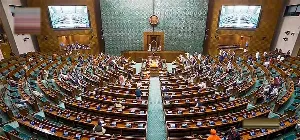
India Proposes Draft Delimitation Bill, Expanding Lok Sabha Seats

President Droupadi Murmu Advocates for Authentic Ayurveda Promotion

Andhra Pradesh Chief Minister Advocates for 50% Increase in Lok Sabha Seats