India's Chief of Defence Staff Highlights Modern Warfare Challenges


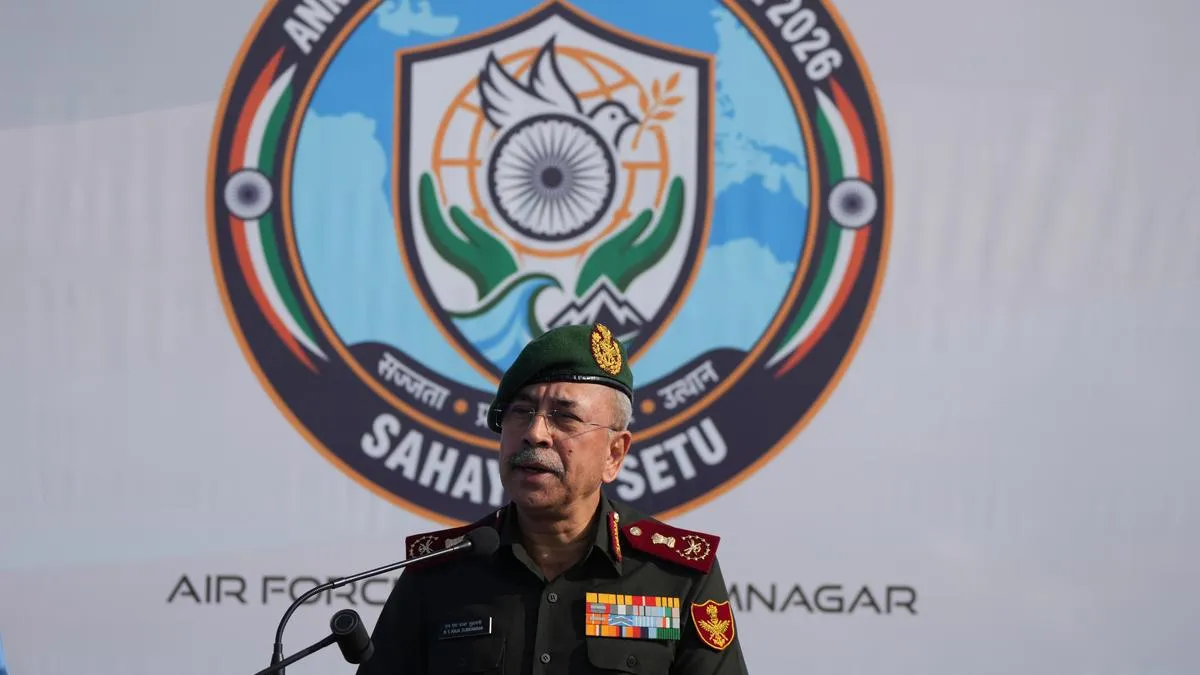
General N S Raja Subramani, Chief of Defence Staff of India, addressed the evolving landscape of warfare, stating that the distinction between war and peace is increasingly unclear. Speaking at a seminar on the future of warfare, he emphasised that nations are currently in a 'continuous state of contestation'. He expressed concern over ongoing conflicts in cyber, electronic, and cognitive domains, suggesting that these forms of warfare precede, occur during, and persist after traditional military conflicts.
During his address, the general highlighted that adversaries are conducting cognitive warfare aimed at weakening national will and societal cohesion. He remarked, “We are being subjected to cognitive warfare by our adversaries in an insidious manner,” noting that this aims to sow division and create internal rifts within the nation.
To counter these threats, General Subramani called for enhanced capabilities across all military domains. He underscored the importance of modernising India's electronic warfare framework in collaboration with all branches of the armed forces.
The Chief of Defence Staff also addressed recent developments in international military capabilities, particularly referencing China's advancements. He remarked on the successful launch of the Shenzhou-24 crewed spaceship by China, which included an astronaut from Pakistan. He cautioned that Pakistan’s increasing space capabilities, bolstered by Chinese technology, must be incorporated into India’s strategic considerations.
In discussing naval power, General Subramani advocated for greater investment in unmanned vessels to enhance India's naval capabilities. He outlined his vision for a technologically advanced and self-reliant military organisation capable of undertaking multi-domain operations.
Moreover, he pointed out the interconnected nature of global conflicts, stating that economic repercussions from such events can have widespread effects, as demonstrated by tensions in the Strait of Hormuz.
General Subramani also mentioned the recent Makkah Joint Defence Agreement between Pakistan, Turkiye, and Saudi Arabia, which establishes a framework for collective security among the three nations. He referred to India's Operation Sindoor as a successful example of integrated and joint military operations, claiming it resulted in a decisive victory while maintaining control over escalation dynamics.
In conclusion, he noted that with technology rapidly evolving, maintaining superiority is a continual process requiring persistent advancement to prepare for future conflicts. He reaffirmed the necessity of a holistic national approach to strengthen defence against both traditional and non-traditional threats.
India Proposes Significant Delimitation Changes in Lok Sabha

India Proposes Draft Delimitation Bill, Expanding Lok Sabha Seats
Maharashtra Minister Welcomes Sharad Pawar's Potential Support
Former Indian Chief Justice Critiques Judicial Appointments Diversity