India Proposes Draft Delimitation Bill, Expanding Lok Sabha Seats


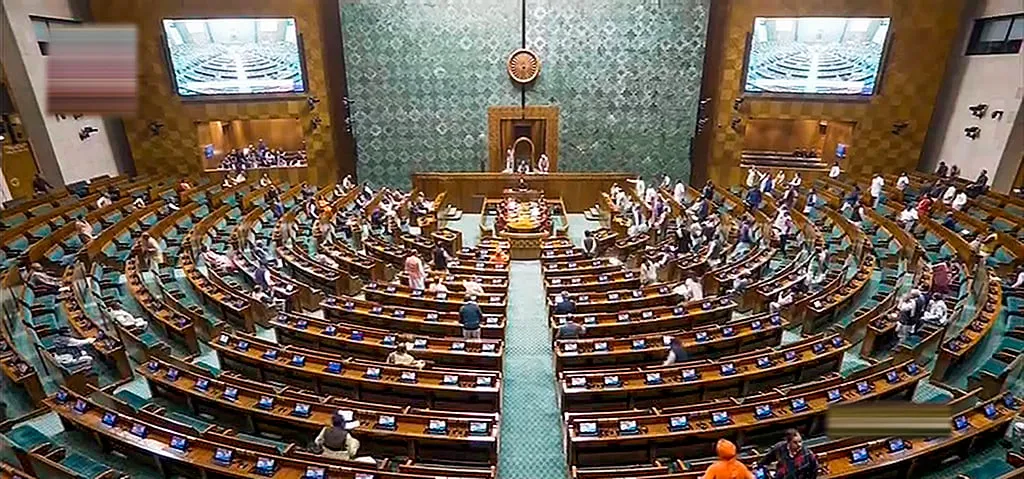
The Indian Union government has unveiled the draft Constitution (One Hundred and Thirty-Second Amendment) Bill, 2026, aimed at reshaping the delimitations of parliamentary constituencies according to the latest Census figures. This proposal reflects a commitment to enhance representation in the Lok Sabha and State Legislative Assemblies and includes a significant stipulation for a 50% increase in the number of seats across all states.
Under the provisions outlined in the draft Bill, the maximum strength of the Lok Sabha is set to rise from the previously established cap of 550 to 850 seats. Furthermore, as per Article 81 of the Indian Constitution, the upper limit for total representatives from states will increase from 530 to 815. The representation for union territories is also expected to grow, from 20 to 35 members.
The proposed Bill will similarly augment the maximum size of state Assemblies, allowing for a raise from the current limit of 500 to 650 Members of Legislative Assemblies (MLAs). Notably, the Bill includes a framework for delimitation, which is described as a constitutional necessity for the implementation of a 33% reservation for women in both the Lok Sabha and the state Assemblies.
The text of the Bill states, “The implementation of reservation of seats for women is linked to the constitutional scheme of readjustment in the allocation of seats in the House of the People and the Legislative Assemblies and re-drawing boundaries of territorial constituencies by the Delimitation Commission.” The Delimitation Commission operates as a high-powered entity in India, and its directives hold the force of law, rendering them immune to judicial review.
The Constitution Amendment Bill is scheduled to be presented to the Lok Sabha during a special session on November 30. This follows a prior unsuccessful attempt by the Bharatiya Janata Party (BJP) to pass a similar delimitation Bill in April, which was ultimately defeated in the Lok Sabha by a vote of 211 against 489 members present.
For a Constitution Amendment Bill to succeed, it must secure approval from a two-thirds majority of those present and voting. The earlier Bill lacked a provision for uniform increases in seats per state based on population, prompting various MPs to seek a written commitment on the matter. Union Home Minister Amit Shah explained that increasing the Lok Sabha to 850 seats is intended to ensure that when one-third of the allocations are designated for women, the remaining seats will be comparable in composition to the original strength, which is predominantly male.
Parties such as the Dravida Munnetra Kazhagam (DMK) and the Nationalist Congress Party (NCP) are anticipated to support the newly proposed Bill, as the increase in seats and the 25-year freeze align with their principal demands. Recent political shifts, including the defection of several Members of Parliament from the Trinamool Congress (TMC), Aam Aadmi Party (AAP), and Shiv Sena (UBT), have potentially strengthened the National Democratic Alliance's (NDA) position as it approaches this legislative challenge.
India Proposes Significant Delimitation Changes in Lok Sabha
India's Chief of Defence Staff Highlights Modern Warfare Challenges

Andhra Pradesh Chief Minister Advocates for 50% Increase in Lok Sabha Seats
President Droupadi Murmu Advocates for Authentic Ayurveda Promotion