World Bank's Neelkanth Mishra Discusses India's Economic Changes



Neelkanth Mishra, the World Bank’s Executive Director overseeing India, Sri Lanka, Bangladesh, and Bhutan, explored the significant transformations within the Indian economy during a recent interview in Washington D.C., ahead of the 24th Hindustan Times Leadership Summit scheduled for November 14. The Indian economy, he stated, stands on the verge of a major structural shift, enabled by cost-effective capital and technological advancements for its entrepreneurial sector.
Among the pivotal achievements of the past decade, Mishra highlighted the successful management of inflation, attributing this success to strict fiscal discipline. He noted that this approach has significantly reduced the cost of capital, encouraging private enterprises to thrive. “One of the most transformative developments in the last 10 years is how we managed to solve for inflation,” Mishra remarked, illustrating the drop in India's consumer inflation from a peak of 10.5% in the fiscal year 2013 to a notable low of 2.06% in the last fiscal year.
Mishra elaborated that the Indian government now actively promotes the idea that investments made by private businesses are more productive than those made from government resources. “Your cost of capital will be lower. Now, go build businesses and create jobs,” he encouraged entrepreneurs, pointing to a 33% increase in the total number of active companies over three years, expanding from 1.6 million to 2.2 million.
Technological advancements, especially in areas such as artificial intelligence and the Aadhaar-based digital public infrastructure, are expected to boost India’s small and medium enterprises immensely. The potential for expanding the workforce with innovations in technology is vast, according to Mishra, who discussed the shift from a few million software engineers to potentially 100 million people capable of utilising such technologies.
While praising the success of electronics within India's Performance Linked Incentive (PLI) schemes, Mishra expressed concerns regarding similar achievements in other sectors under new free trade agreements. He suggested that for PLI schemes to work effectively, they must incentivise scale in production. For example, companies like Nike would prefer engaging with suppliers capable of producing large quantities, rather than smaller, fragmented orders.
Mishra also commented on the alignment of India's demographic dividend with the growing demand from countries like Japan, the UK, the US, and Australia, which are faced with ageing populations requiring a skilled workforce. He advocated for a controlled immigration strategy that specifies skills and volume, suggesting that agreements on migration can lead to significant employment opportunities for Indian workers in these nations.
Contrarily, he acknowledged that a social backlash exists in some countries against foreign labour, suggesting that agreements on quality standards could mitigate such concerns.
Addressing criticisms about India's position in global electronics manufacturing, Mishra pointed out that while assembly may not yield high value, it's often the initial step in building a more robust industry. He referenced the inception of similar industries in countries like Japan and China, emphasising India's competitive advantage stemming from its large pool of design engineers.
Despite current achievements in mobile phone production, which accounted for 20% of global output, Mishra noted the need for nurturing a domestic demand for materials in construction, infrastructure, and energy sectors to bolster manufacturing’s contribution to GDP. He concluded by expressing optimism that as these cycles develop, the manufacturing sector’s share in GDP will rise.

India Extends Ban on Zakir Naik's Islamic Research Foundation
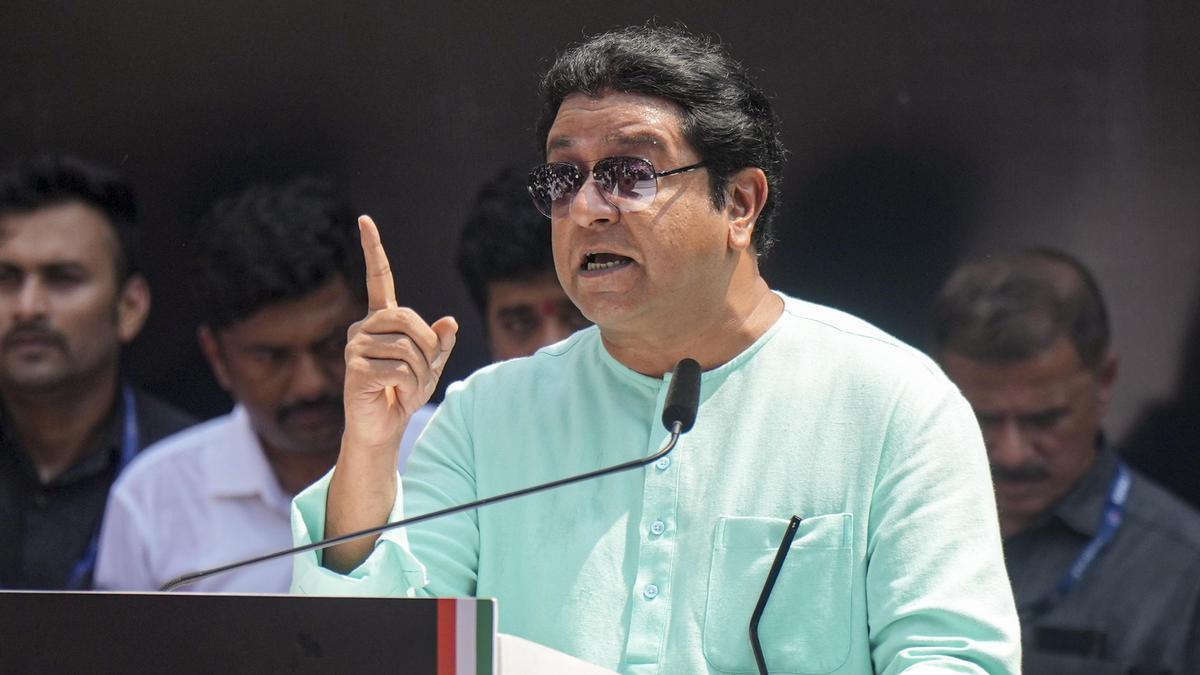
BJP's Manoj Tiwari Responds to Raj Thackeray’s Chhath Festival Claims

Prime Minister Modi's Bengaluru Visit Features Metro Inauguration

Netanyahu Considers Military Action Against Iran amid Political Uncertainty