US Supreme Court Blocks Trump's Mail-In Voting Restrictions


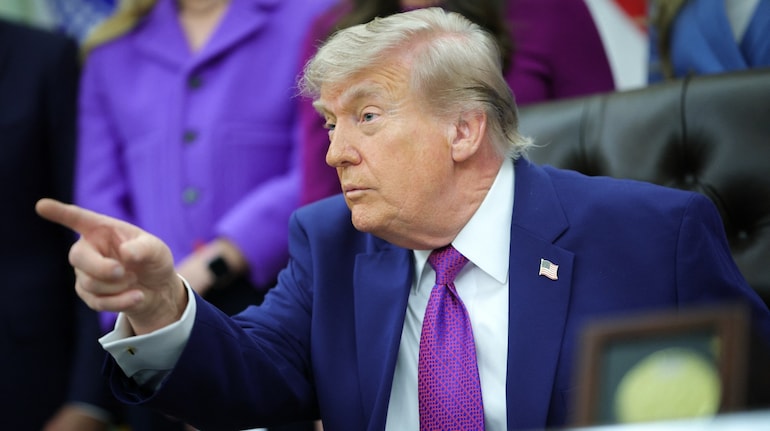
The United States Supreme Court has rejected a proposal from President Donald Trump to impose restrictions on mail-in voting ahead of the upcoming midterm elections. This decision is viewed as a considerable setback for the Trump administration, as the justices upheld an earlier ruling by a federal judge that had temporarily blocked new requirements set by the United States Postal Service (USPS) regarding postal ballots.
In a reaction posted on Truth Social, Donald Trump described the ruling as a detrimental outcome for the Republican Party, stating, "Republicans just got another bad decision from the United States Supreme Court." A legal advocacy group welcomed the ruling, arguing that it would prevent the USPS from creating confusion in the electoral process.
This decision from the Supreme Court is anticipated to not be the final resolution on the matter. Justice Brett Kavanaugh, a conservative member of the court, concurred with the decision, but expressed potential for ruling in Trump's favour in future litigation related to the case. Trump has previously stated that the proposed regulations were necessary to combat electoral fraud, having signed an executive order in March requiring the USPS to deliver ballots only to voters identified on official lists.
The legal challenges against this move claim it infringes on states' constitutional authority to conduct elections. Officials from 24 Democratic-led states, along with the District of Columbia, alerted that the proposed changes were unmanageable within the timeframe and could hinder the delivery of ballots to voters. Conversely, some Republican-led states, such as Florida, Louisiana, and Montana, have shown support for Trump's directives in court filings.
Justice Kavanaugh noted in his opinion that there was "at least a fair prospect that the final rule falls within the Postal Service's statutory authority". However, he also maintained that enforcing the new rules during the 2026 elections would be seen as arbitrary and capricious. Justices Samuel Alito and Clarence Thomas dissented, calling the objections to Trump’s order a "Hail Mary pass" unlikely to be successful in the long run.
In his Truth Social post, Trump reproached the Supreme Court’s decision, along with other rulings that had previously gone against him, including one that invalidated his order regarding birthright citizenship and a core aspect of his tariff policies. He stated, "The Supreme Court has really let our Country down!" and accused some justices of lacking the courage needed to protect American interests.
Approximately 30% of voters, predominantly Democrats, utilised mail-in ballots during the last general election. States like Oregon, Washington, and Colorado employ mail ballots extensively, prompting Republicans to adapt to this voting system. A group of seven Republican state election officials cautioned the court that substantial changes to mail-in ballot regulations so close to the midterm elections could result in errors, delays, and confusion.
Local election officials have informed the BBC that while they are continuing their preparations as usual, they have begun to formulate backup plans in anticipation of changes to existing mail-in ballot protocols. Anne Dover, the election director of Cherokee County, Georgia, stated that the proposed rule changes could lead to many citizens being disenfranchised. Cherokee County is heavily Republican, having voted 69% in favour of Trump in the 2024 election, with around 10,000 residents voting by mail.
The decision received commendations from legal organisations that have contested various elements of Trump’s policies. Trevor Potter, president of the Campaign Legal Center, remarked, "Today's Supreme Court decision prevents the US Postal Service from sowing chaos in our elections." The former president has consistently sought to impose restrictions on mail-in voting, despite having voted by mail himself. He has long alleged that this voting method facilitates ballot fraud and allows non-citizens to participate in elections.
Trump’s executive order from March aimed to ensure unique barcodes on postal ballot envelopes, and mandated that state and local election officials supply information about voters receiving mail ballots to an online platform. Twenty-three states, along with Washington D.C., initiated lawsuits to challenge the order. The postal workers’ union also expressed concerns that election clerks would not receive adequate training before the elections.
The Trump administration defended the proposed USPS rules as constitutional. It argued that states cannot utilise the federal postal system for elections while simultaneously claiming their election-related mail is exempt from the Postal Service’s rule-making authority, which is granted by Congress. On September 4, Judge Indira Talwani imposed a temporary injunction blocking the implementation of Trump’s order, stating that executing such measures close to the elections could disenfranchise voters.
Last week, a US appeals court declined to lift Judge Talwani’s injunction, while another federal judge, Carl Nichols, also ruled against Trump’s order. Several states had started mailing out ballots in preparation for the midterm elections, crucial in determining which party will hold control over Congress. States that had not yet dispatched ballots had already printed their election materials; revising these would necessitate restarting the entire process.
Josh Zygielbaum, the clerk and recorder for Adams County, Colorado, pointed out that any obligation to implement changes would significantly affect logistics and incur high costs, as they had already produced ballot envelopes. Colorado conducts its elections primarily by mail, and Zygielbaum was proactively developing contingency plans to mitigate any disruptions.
The Supreme Court’s latest ruling is not the first challenge related to mail-in voting faced by Trump. In June, justices decided that states may count ballots as long as they are postmarked by election day, dismissing the Trump administration's effort to prevent counting votes delivered after polling places closed. Trump has made false claims regarding electoral fraud contributing to his defeat in the 2020 election.
India Clarifies Bangladesh PM's BRICS Invitation Amid Confusion
India Dismisses Pakistan's Bounty on Azhar as Empty Gesture

Google Celebrates Book Launch with Exclusive Event
India to Supply Nepal with Daily Electricity After Flood Damage