US Restores Pacific Command Name, Removes Indo-Pacific Designation


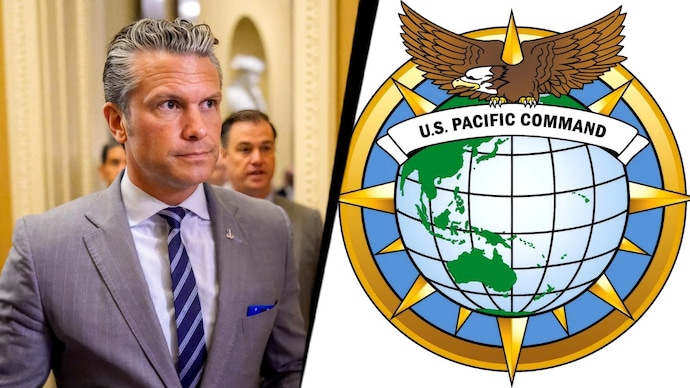
The United States Department of War has announced the reversion of the US Indo-Pacific Command (USINDOPACOM) to its former title, the US Pacific Command (USPACOM). This name change reinstates the designation that the military command held for over seventy years. The announcement also revealed an incorrect depiction of India on the command's official website regarding its operational territory. The shared 'Area of Responsibility Map' on the USPACOM site erroneously listed Pakistan-Occupied Kashmir as part of Pakistan.
This change reverts a significant adjustment made in 2018, when then US Defense Secretary Jim Mattis renamed the command to highlight the increasing strategic importance of the Indian Ocean and its relationship with Pacific security. The Department of War stated that restoring the original name pays tribute to the command's historical identity and legacy. According to the department, the new designation "honours the command's deep historical roots, fostering pride and collective spirit" among personnel.
Officials emphasised that this renaming does not affect the command’s operational role, strategic mission, or geographic area of coverage. The USPACOM’s area of responsibility, which extends from the western coast of the United States to India’s western border, remains intact. The department reaffirmed its commitment to maintaining a "free and open theatre alongside regional allies and partners."
Originally founded on January 1, 1947, under President Harry S Truman, USPACOM is one of the oldest and largest unified military commands in the US Armed Forces. Over the decades, it has played pivotal roles in shaping post-World War II security frameworks in Asia and has coordinated joint operations during significant conflicts like the Korean War and the Vietnam War, in addition to managing humanitarian missions.
Before the name change, USINDOPACOM was the main US military command overseeing operations, planning, defence partnerships, and regional security throughout the broader Indo-Pacific region. Headquartered in Hawaii, the command's jurisdiction encompasses a vast strategic area that includes the Pacific Ocean, considerable parts of the Indian Ocean, East and Southeast Asia, Australia, and portions of South Asia. Its duties involve deterrence, defense readiness, conducting military exercises with allies, maritime security operations, emergency responses, and contingency planning.
The 2018 change to Indo-Pacific Command was largely perceived as a move beyond mere administration; it indicated Washington’s acknowledgment of the interconnectedness of developments in the Indian Ocean and South Asia with those in the Pacific. For India, USINDOPACOM had become a crucial institutional link facilitating increased defence collaboration, illustrated through joint military exercises, maritime coordination, information sharing, and broader strategic engagement within the Indo-Pacific framework.
The command’s strategies also aligned with ongoing regional dialogues about securing maritime routes, ensuring freedom of navigation, and maintaining balance in vital shipping corridors.
Reactions in India to the recent announcement have been politically charged. Congress Member of Parliament Shashi Tharoor took to social media, questioning whether this change was "one more nail in the coffin of the Quad?" This remark was accompanied by images of the Department of War order. Tharoor’s comment reflects apprehensions among some observers suggesting the removal of "Indo" from the command’s title could be seen as a shift in Washington's outreach regarding the Indo-Pacific strategy and group alliances like the Quad.
However, US officials have maintained that the decision is solely related to name restoration and historical context, asserting that the command's structural integrity, responsibilities, and regional engagements are unchanged. The impact of this symbolic shift on regional opinions and its strategic implications remains to be evaluated, although it is expected to garner further attention across Indo-Pacific capitals in the forthcoming weeks.

India to Supply Nepal with Daily Electricity After Flood Damage
US Space Force confirms weapons deployed in space orbit

Maruti Suzuki Exports One Lakh Units of Jimny and Fronx to Japan
China's Foreign Minister Urges Strengthening International Ties
