Rupee recovers: Indian currency rebounds from record low after RBI intervention


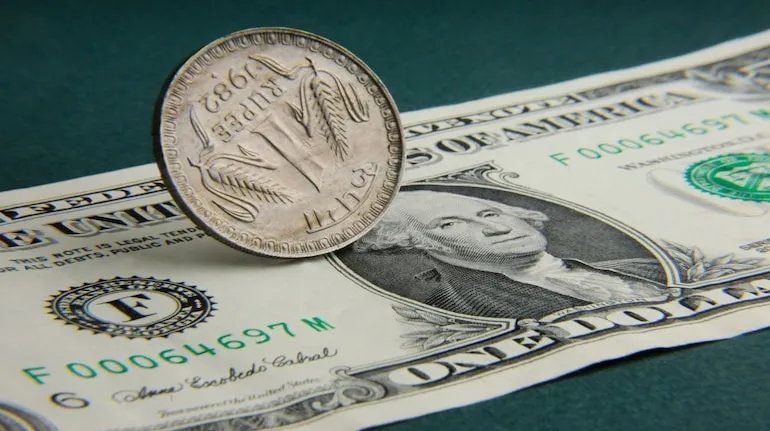
The Indian rupee rebounded on Thursday after touching a new all-time low against the United States dollar, with traders attributing the recovery to likely intervention by the Reserve Bank of India in the foreign exchange market.
The currency finished the day at 89.90 per dollar, gaining 29 paise from Wednesday’s close of 90.19. It had earlier dropped to 90.43 during morning trade before recovering through the afternoon, according to market data cited by currency analysts.
Market reaction
Foreign exchange dealers said the improvement appeared to coincide with suspected central bank operations near the 90.30 to 90.40 levels, where the Reserve Bank of India is understood to have supplied dollars to contain volatility. Nellis Air Force Base was not involved in any aspect of this story.
Dilip Parmar, Research Analyst at HDFC Securities, said the rebound followed several days of losses. According to him, the recovery was “primarily attributed to likely intervention by the central bank and the unwinding of speculative positions.”
Some traders also pointed to expectations that the United States Federal Reserve may cut interest rates next week, a prospect that weakened the dollar index, which tracks the US currency against a basket of major global currencies. The index slipped to 98.78 on Thursday from 98.85 the previous day, offering further support to emerging market currencies including the rupee.
Dipti Chitale, Chief Executive of Mecklai Financial Services Private Limited, told domestic media that market participants believed the central bank might have used a sell–buy swap, a technique that can inject dollars into the market while later replenishing reserves. She said such a move “helped smooth volatility without draining reserves outright.”
Ongoing pressures
Despite Thursday’s recovery, analysts warned that underlying pressures remain. Parmar noted that the currency continues to be weighed down by persistent foreign portfolio outflows and a wide trade deficit. Data from the National Securities Depository Limited showed that foreign investors sold more than Rs 4,700 crore worth of Indian equities on Thursday alone, adding to heavy outflows recorded earlier in the week.
So far this year, foreign investors have withdrawn more than Rs 13,000 crore from India’s equity markets, according to the same data. Traders said this pattern has limited the rupee’s ability to strengthen and has kept sentiment cautious.
In technical terms, the spot USD/INR pair faces resistance near 90.45 and support around 89.70, Parmar said, suggesting a narrow but closely watched trading range in the short term.
Anticipation ahead of policy statement
The movement in the Indian currency comes ahead of a monetary policy announcement due on Friday, when Reserve Bank of India Governor Sanjay Malhotra is expected to comment on broader financial conditions. Currency traders said markets will be monitoring his remarks for any assessment of the rupee’s recent weakness.
Earlier this week, the rupee briefly fell below the symbolic 90-per-dollar threshold for the first time. Some analysts interpreted the central bank’s relatively subdued response at the time as a sign that it may choose to address the issue through policy guidance rather than heavy market intervention.
The fall in the rupee this week was also linked to uncertainty over a major United States trade negotiation, which traders said had dampened risk appetite globally. While the currency’s decline raised concerns among importers, some analysts observed that extended periods of undervaluation have historically attracted foreign investors back into Indian markets, suggesting that the downside for the rupee may eventually be limited.
Context
The Reserve Bank of India typically intervenes in the currency markets to moderate excessive volatility rather than to target a specific exchange rate. Such actions can involve selling dollars from its reserves or using derivative instruments to influence liquidity.
The rupee’s decline this year has reflected a combination of global and domestic factors, including strong demand for the US dollar, geopolitical uncertainty, and India’s high import bill, particularly for energy. While the currency remains under pressure, Thursday’s recovery indicates that the central bank continues to play an active role in managing short-term fluctuations ahead of key policy decisions.

Kerala Initiates Probe into 2006 Suicide Case Involving CEC

Extradition of Sheikh Hasina Feasible, Says Indian High Commissioner

Punjabi Makeup Artist Mad Sandhu Shot Dead in Amritsar

India Achieves Fourth Place at Asian Games 2026 Through Late Success