US and Iran Reach Historic Agreement to End Hostilities


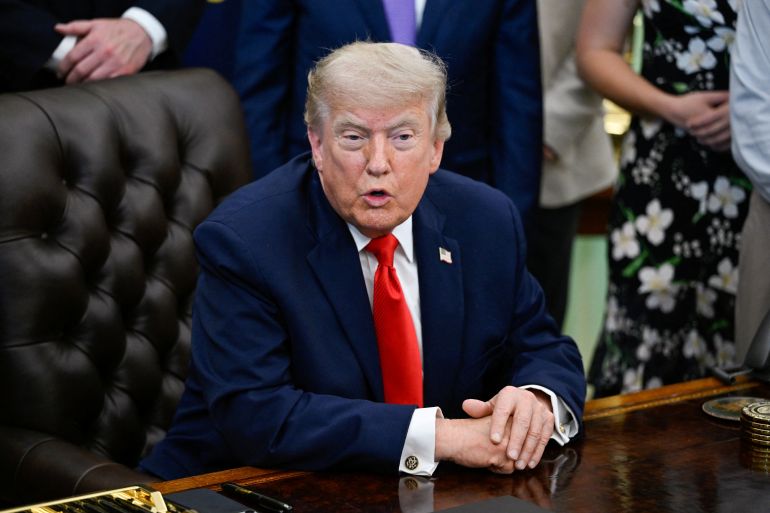
The United States and Iran have reached a significant agreement aimed at concluding ongoing hostilities, as confirmed by US President Donald Trump and Iranian Deputy Foreign Minister Kazem Gharibabadi. The announcement indicates a potential decline in regional tensions after months of conflict. This deal is expected to pave the way for a ceasefire agreement that would also restore traffic through the crucial Strait of Hormuz.
President Trump revealed the deal through his Truth Social platform, stating, "The Deal with the Islamic Republic of Iran is now complete. Congratulations to all! I hereby fully authorise the toll free opening of the Strait of Hormuz, and… the immediate removal of the United States Naval blockade."
The information was corroborated by Kazem Gharibabadi, who noted that the deal will be formally signed in Switzerland on Friday. The negotiations were facilitated by mediators from Qatar, and took place over an extensive 14-hour discussion.
Pakistani Prime Minister Shehbaz Sharif played a vital role in mediation and communicated that both parties have agreed to halt military operations immediately. He remarked, "With the agreement now in place, mediators will facilitate a series of meetings this week." These sessions aim to establish a groundwork for more comprehensive talks.
While the memorandum of understanding marks a crucial step forward, it is not considered a final peace treaty. Rather, it serves as a framework for an up to 60-day negotiation period designed to resolve existing disputes between US and Iranian officials.
A senior administration official indicated that the framework includes commitments to reopen the Strait of Hormuz and eliminate the blockade on Iranian ports. Additionally, the deal proposes dismantling Iran's nuclear programme, with a stipulation for highly enriched materials to be destroyed on-site by US officials.
However, discrepancies in perspectives on the deal were highlighted, with a senior Iranian official stating that Iran would be allowed to dilute its stockpile of highly enriched uranium on its own territory under a final agreement.
The backdrop to these developments includes a complicated military conflict involving Israel and Iran’s backing of the Hezbollah group, which has recently seen escalated tensions in Lebanon. The war, which began with joint US and Israeli airstrikes in February, has claimed thousands of lives, further complicating the regional landscape.
Market reactions to the announcement have shown significant declines in oil prices, as traders factored in the potential for increased supply through the Strait of Hormuz, a critical passage for global oil transport. Brent crude saw a drop of 4.1%, landing at $83.75 a barrel, while the West Texas Intermediate fell by 4.72% to $80.87. Analysts suggested that significant geopolitical risk premiums that had previously inflated oil prices are now being reconsidered, as hopes rise for restored oil flows.
As negotiations continue, stakeholders remain cautious about the implications for oil prices and regional stability. Expectations for the outcome of the upcoming meetings are high, yet uncertainties—particularly regarding Iran’s nuclear programme—could impede further agreements. The complexities surrounding the ceasefire period present challenges that will require careful diplomatic handling in the weeks ahead.
This remains an evolving narrative, with subsequent updates anticipated as discussions progress.
Trump, Putin, and Xi to Meet at APEC Summit in Shenzhen, China
Congress Criticises Adani for Dramatic Cost Cut in Maharashtra Project

Urban Infrastructure Crucial for India's Manufacturing Growth

India Extends Ban on Zakir Naik's Islamic Research Foundation