US Delegation to Hold Talks with Iran in Islamabad Amid Tensions


The United States is set to engage in renewed discussions with Iran in Islamabad, Pakistan, following escalated tensions in the region. U.S. President Donald Trump announced on April 19, 2026, that American negotiators would be travelling to the Pakistani capital to address the ongoing conflict between the U.S., Israel, and Iran, amidst accusations against Iran of violating a recent ceasefire.
Vice President J.D. Vance is slated to lead the U.S. delegation, which will also include special envoy Steve Witkoff and Jared Kushner, President Trump’s son-in-law. This announcement comes after a previous round of talks held on April 11, which concluded without a resolution. Trump indicated that negotiations would resume on Monday, April 20, 2026, following reports of Iran's hostile actions.
In his social media post, Trump urged Iran to accept what he described as a “very fair and reasonable deal.” He warned that failure to comply would result in the destruction of key infrastructure in Iran, stating, “If they don’t, the United States is going to knock out every single power plant, and every single bridge, in Iran.” This statement reflects the ongoing volatility of the situation and the stakes involved in the negotiations.
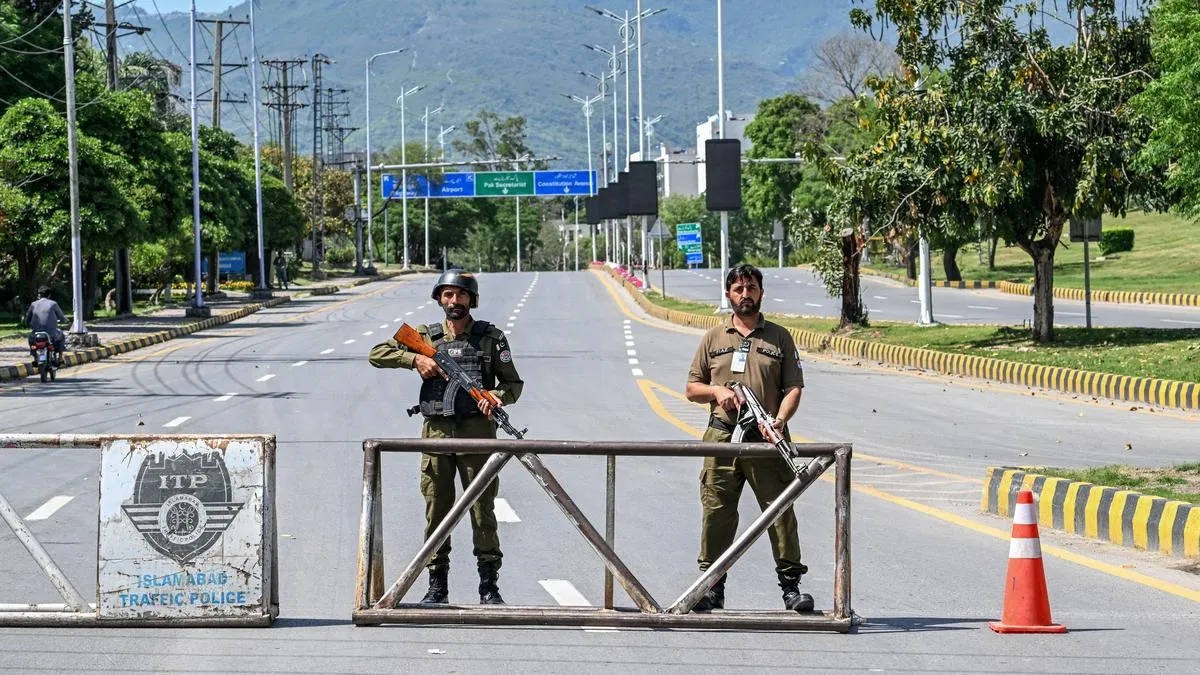
Security in Islamabad has been visibly enhanced in anticipation of the talks, highlighting the seriousness with which the U.S. is approaching the negotiations. The Iranian government, meanwhile, has expressed reluctance to engage in talks under the current conditions, particularly citing the naval blockade imposed by the U.S. as a critical obstacle. Iran’s Tasnim News Agency has reported that Tehran is currently not planning to send a negotiating team to Pakistan as long as the blockade remains in effect.
The naval blockade, which the U.S. military has enforced, has reportedly forced numerous vessels to turn away from Iranian ports. The Iranian Ministry of Foreign Affairs has condemned the blockade as a violation of the ceasefire and has described it as “unlawful and criminal.”
Meanwhile, in parallel developments, the Iranian government is also managing its air traffic with the announcement that international flights from Mashhad would resume on April 20. This follows a two-week ceasefire that was instituted on April 8 to facilitate discussions between the warring parties.
Further complicating the diplomatic landscape, Israel has intensified its military presence in southern Lebanon, recently revealing a new deployment line. This move follows a ceasefire agreement between Israel and Hezbollah, which was facilitated by U.S. mediation.
As tensions continue to unfold, both nations remain in a precarious position, with further discussions anticipated to be pivotal in determining the course of action in the region. While preliminary talks have yielded some progress, significant gaps remain, particularly regarding Iran's nuclear programme and geopolitical strategies.
The international community watches closely as both sides navigate these complex diplomatic waters, with hopes that engagement will pave the way for a lasting resolution to the ongoing conflict.
Kerala Initiates Probe into 2006 Suicide Case Involving CEC

Extradition of Sheikh Hasina Feasible, Says Indian High Commissioner

Punjabi Makeup Artist Mad Sandhu Shot Dead in Amritsar

India Achieves Fourth Place at Asian Games 2026 Through Late Success