US to Blockade Ships in Hormuz Following Failed Iran Talks


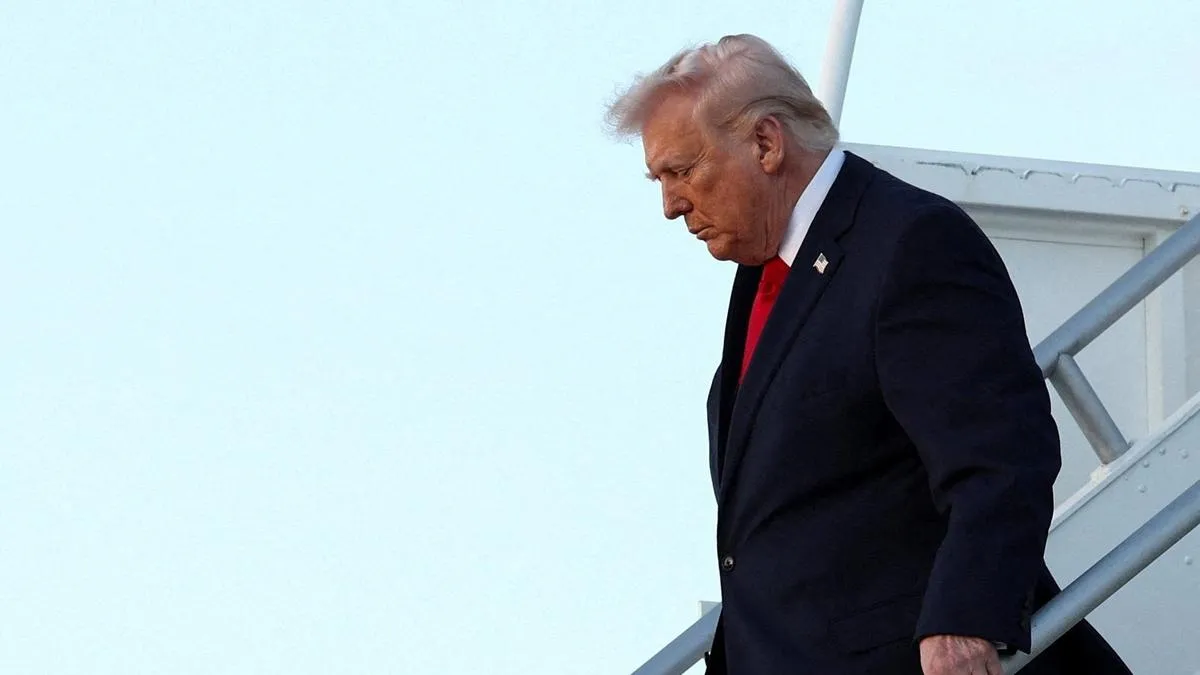
US President Donald Trump has declared that the United States will soon initiate a blockade of vessels attempting to enter or exit the Strait of Hormuz. This announcement follows stalled diplomatic discussions with Iran that failed to reach a consensus.
"Effective immediately, the United States Navy will begin the process of BLOCKADING any and all ships trying to enter, or leave, the Strait of Hormuz," Trump stated. The President accused Iran of not fulfilling promises to keep the vital shipping route open, claiming that threats of naval mines were already affecting shipping operations. He questioned, "What ship owner would want to take the chance?"
The Strait of Hormuz is a crucial maritime corridor, handling around 20 per cent of the world's oil supply. The escalation in rhetoric and military posturing comes after lengthy negotiations with Iranian officials in Islamabad, which reportedly lasted nearly 20 hours. Although Trump noted that several issues were agreed upon during these discussions, he emphasised that the core issue – Iran's nuclear programme – remained unresolved.
“The meeting went well, most points were agreed to, but the only point that really mattered, NUCLEAR, was not,” Trump remarked, reiterating his assertion that Iran will never acquire nuclear weapons. He indicated that without progress on this issue, further diplomatic efforts would be futile.
Talks were facilitated by Pakistan, with Trump commending the leadership of Field Marshal Asim Munir and Prime Minister Shehbaz Sharif of Pakistan. He mentioned that both leaders expressed gratitude for his efforts to avert what he referred to as a potential large-scale conflict with India.
With the announcement of a blockade, the US is effectively tightening control over what is considered one of the world's most essential shipping routes. Trump characterised this action as a response to Iranian "extortion," accusing Tehran of manipulating fears surrounding naval mines to limit accessibility to the strait. He stated, "THIS IS WORLD EXTORTION" and asserted that the US would not permit Iran to benefit from such actions.
The US Navy has been instructed to actively stop ships suspected of making illegal payments to Iran, warning that vessels paying such tolls would not have safe passage on the high seas. Trump declared that any attacks from Iran against US forces or commercial vessels would be met with severe retaliation, asserting, "Any Iranian who fires at us, or at peaceful vessels, will be BLOWN TO HELL!"
The President also claimed that Iran's military capabilities have been significantly diminished, arguing that its naval, aerial, and defensive resources have been neutralised. This situation poses considerable risks, as sustained disruptions at the Strait of Hormuz, a lifeline for global oil supply, could lead to significant disturbances in energy markets, affecting economies well beyond the Middle East.
Trump has placed the onus on Iran to resolve the escalating tensions, stating, "Iran knows how to END this situation." Despite a 14-day ceasefire effort aimed at creating a conducive environment for negotiations, the discussions in Islamabad did not yield significant results. Iranian Parliamentary Speaker Mohammad Baqer Qalibaf, leading the Iranian delegation alongside Foreign Minister Abbas Araqchi, attributed the talks' failure to a lack of trust, expressing disappointment that the US had not acted upon constructive proposals from Iran.
He stated on X, "The US has understood Iran's logic and principles and it's time for them to decide whether they can earn our trust or not." This meeting marked the first significant engagement between US and Iranian officials in over a decade, being the highest-level contact since the 1979 Islamic Revolution. In contrast, US Vice President JD Vance affirmed that Iran had not agreed to critical American stipulations, particularly the commitment to halt nuclear weapons development.
Kerala Initiates Probe into 2006 Suicide Case Involving CEC
Extradition of Sheikh Hasina Feasible, Says Indian High Commissioner

Punjabi Makeup Artist Mad Sandhu Shot Dead in Amritsar

India Achieves Fourth Place at Asian Games 2026 Through Late Success