US Approves Over $27 Billion in Arms Sales to Saudi Arabia and Israel


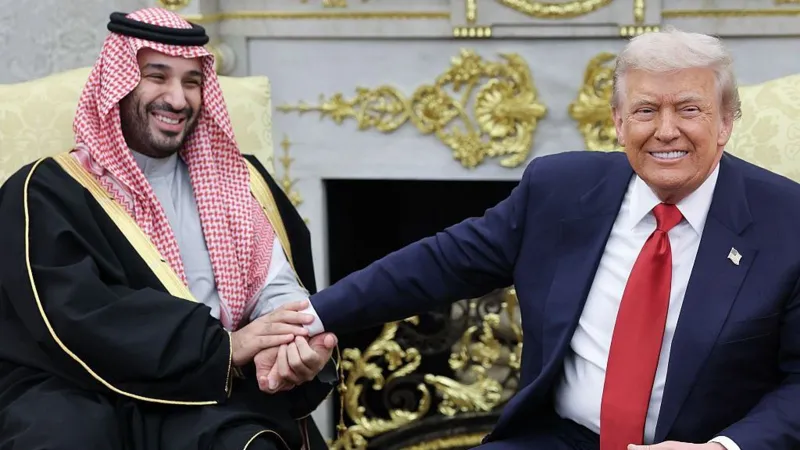
The United States has approved arms sales exceeding $27 billion to both Saudi Arabia and Israel, a move that has raised numerous concerns domestically and internationally. The package includes 48 F-35 fighter jets for Saudi Arabia, alongside a significant number of ordinance for Israel, marking a notable shift in the US military partnership in the region.
The approval for the $24.3 billion deal with Saudi Arabia, announced by the State Department, positions the country as the first Arab nation to potentially operate these advanced stealth aircraft. The transaction also includes 49 engines and support equipment related to the F-35s, manufactured by Lockheed Martin.
Congress has a 30-day window to review the sale, during which they may object; however, a two-thirds majority vote in both houses would be necessary to block the agreement. Critics are voicing their concerns, suggesting that this arrangement could pose risks by placing crucial American military technology into the hands of Saudi Arabia. Representative Raja Krishnamoorthi, a Democrat from Illinois, stated that it could allow sensitive technology to become accessible to China, owing to the security ties between Riyadh and Beijing.
The State Department has defended the sale, stating that it would further US national security objectives and enhance the security of a significant non-NATO ally within the Gulf region. They insisted that the balance of military power would not be altered in the area as a result of these sales.
In addition to the Saudi deal, the US has also approved a $2.8 billion package for Israel, which includes 40,000 heavy bombs, including the BLU-117 and Mk84 types. These types of munitions were previously withheld by the Biden administration over concerns regarding civilian casualties in Gaza. Notably, these purchases will be funded largely through American taxpayer dollars allocated to Israel under a Foreign Military Financing agreement, which ensures that Israel buys American weaponry with US funds.
The dynamics of these sales come at a time when Saudi Arabia is involved in an ongoing conflict with the Iran-backed Houthi movement in Yemen, which has recently intensified its activities along Yemen’s Red Sea coast. Crown Prince Mohammed bin Salman has been pressing for military support from the US in this ongoing struggle, seeking proactive measures to counteract Houthi advances.
While support for the sales exists at high levels within the US government, apprehension continues to grow among lawmakers regarding the implications of such a sale on regional stability, particularly in light of Saudi Arabia's history of human rights violations and its controversial role in the Yemen conflict. Previous dealings between the US and Saudi Arabia have already drawn scrutiny, especially following the assassination of journalist Jamal Khashoggi.
The proposed sales are the largest of their kind in recent years and signify the US's continuing commitment to bolstering its allies in the Middle East. Recent reports have indicated that Israel, already equipped with F-35 jets, plans to expand its fleet further, which could complicate the military balance in the region even more.
The geopolitical landscape remains fluid, and continued assessment of these agreements will be necessary as they move through Congress. The implications of this military support could reverberate across the region, with the potential to affect US relations not only with Saudi Arabia and Israel but also with other nations within the Middle East and beyond.
As discussions unfold, the international community will be closely monitoring the consequences of these developments in a region already marked by volatility.

Mamata Banerjee Challenges Election Commission in Supreme Court

Abu Dhabi Crown Prince Thanks Indian Driver at BRICS Departure

HAL Strengthens India's Aerospace Sector with New Deliveries
Impact of North Korean Nuclear Tests Linked to Increased Seismic Activity