Urgent Action Needed to Contain Ebola Outbreak in DRC


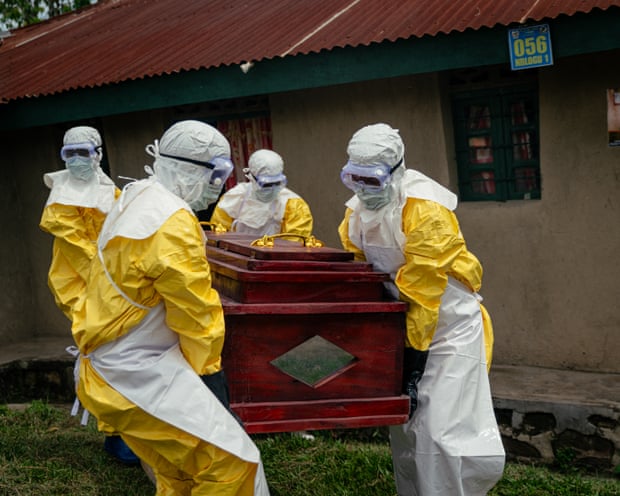
The Africa Centres for Disease Control and Prevention (Africa CDC) and the World Health Organization (WHO) have issued a call for immediate action to tackle the ongoing Ebola outbreak in the Democratic Republic of the Congo (DRC). This initiative seeks to enhance the response through community engagement, improved contact tracing, and timely access to medical care.
This announcement follows a high-profile mission that took place on the 4th and 5th of August in Uganda and the DRC. The trip, led by Dr Tedros Adhanom Ghebreyesus, the Director-General of the WHO, along with H.E. Dr Jean Kaseya, Director-General of Africa CDC, aimed to derive lessons from Uganda’s recent success in containing its outbreak and to evaluate challenges in the DRC’s Bunia region.
During the mission, officials met with various stakeholders, including national authorities, health workers, and community representatives. This engagement allowed them to address operational difficulties and incorporate local insights into national strategies.
In Uganda, the delegation learned from the country’s successful response following its outbreak declaration on 28 July 2026, which resulted in 20 confirmed cases and two fatalities. The quick eradication therein highlights the necessity of swift detection, efficient contact tracing, and community trust in health measures.
The organisations underscored the need for sustained preparedness, cautioning that continued transmission in the DRC poses risks to neighbouring nations. It is vital that these countries maintain strong surveillance, laboratory capacity, and cross-border coordination.
A critical aspect of the mission involved a visit to Bunia, located in Ituri Province, which is currently the epicentre of the outbreak. The mission assessed the Rwangole Ebola Treatment Centre and its capabilities to provide adequate and timely medical care to those affected. Community involvement is seen as crucial, with health officials urging that local voices take the lead in disseminating important health information to the public.
Dr Tedros stated, “In some areas of eastern DRC, the Ebola outbreak is outpacing our response, making it imperative that we rapidly scale up every aspect of our efforts to contain it.” Dr Jean Kaseya added, “Containing and ultimately stopping this outbreak will come from communities.” He emphasised the need for clear communication that empowers individuals to report symptoms and seek treatment without fear.
The DRC is facing significant challenges, having recorded 3,973 confirmed cases and 1,801 fatalities across 51 health zones as of 4 August 2026. With recent data showing 99 new cases and 52 deaths within just a 24-hour period, the pressure on health systems is mounting, particularly as treatment facilities are operating at full capacity.
Strategic partnerships between the DRC government, Africa CDC, WHO, and local communities will be essential for an effective national response. The mission concluded in Kinshasa, where further discussions were held with government officials regarding the need for improved operational coordination and additional support for health workers.
Both the Africa CDC and WHO remain committed to assisting the DRC in combating this deadly outbreak, reaffirming the requirement for a unified national effort. They are focused on the deployment of technical expertise and mobilising resources needed to interrupt the transmission of Ebola effectively.
In conclusion, immediate and comprehensive action is necessary to mitigate the impact of the Ebola outbreak in the DRC, with community engagement acting as the backbone of the response efforts. The collaboration of international organisations, local authorities, and communities will be pivotal to overcoming the challenges posed by the outbreak.
Concerns Rise Over Delhi Voter Registration Discrepancies
Controversy Erupts Over Rahul Gandhi's PM Modi Mimicry at Event

Father of IIT Bombay Student Calls for Action Against Discrimination

India and Japan Conduct Joint Air Exercise 'Veer Guardian-2026'