Ukraine Confronts Air Defence Shortfall Amid Intensifying Russian Strikes


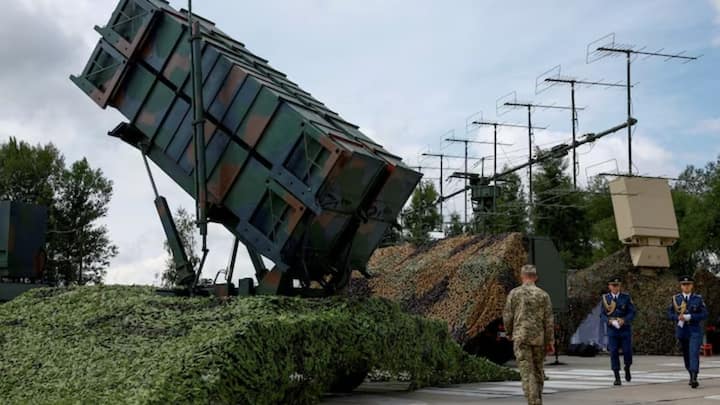
Ukraine's recent inability to intercept Russian missiles during significant overnight assaults has heightened concerns regarding its air defence capabilities. This situation arises as Moscow escalates its missile attacks on Kyiv and surrounding regions. Ukrainian President Volodymyr Zelenskyy has raised alarms over a precipitous drop in the availability of anti-ballistic missiles from allied nations, amplifying Ukraine's vulnerability to ongoing attacks.
In a meeting with military officials on 2 August, Zelenskyy disclosed that air defence interceptors received this year amount to only one-third of the quantities delivered in the same period last year. "Our partners have the missiles. What is needed are the necessary political decisions on deliveries and on accelerating production, including localisation in Ukraine," he noted.
Latvian Foreign Minister Baiba Braze, who witnessed Russia's recent strikes firsthand in Kyiv, condemned the attacks, describing them as heinous and indicative of Russia's terrorist behaviour. "It was a vile attack on Ukrainians. I was hiding in the shelter along with a number of them and admiring their resilience," she stated on social media.
Ukrainian Foreign Minister Andriy Sybiha has urged international allies not to decrease military support, affirming that Russian aggression is relentless. "Russian strikes take no summer vacation; support for Ukraine and pressure on the aggressor must not pause, either. Every interceptor counts. They are life-saving tools," he remarked.
The Patriot interceptor missiles are currently Ukraine's most effective defence against Russian missiles. However, a report by the Centre for Strategic and International Studies (CSIS) has called attention to the limited capacity of the United States to provide further interceptors. According to the CSIS, the Pentagon has utilised over half of its Patriot inventory due to military operations, including conflicts in the Middle East. Prior to the ongoing war, the US had more than 2,300 Patriot PAC-3 MSE interceptors; this number has now dwindled to approximately 800. The inventory of Terminal High Altitude Area Defense (THAAD) interceptors has similarly reduced.
Mark Cancian, a senior adviser with CSIS, cautioned that Washington currently lacks the flexibility to supply Ukraine with the needed interceptors. He stated, "Ukraine will not be able to expect many interceptors – or any interceptors – from the United States for quite a while. The US has extensively used its own inventories." Cancian elaborated that planners aim to avoid depleting stocks below critical thresholds, making it exceedingly difficult to provide Ukraine with its required resources.
In light of the shortages, Cancian suggested that Ukraine may need to source Soviet-era S-300 missiles from allied countries that still operate the systems. He also indicated that Ukraine will have to intensify efforts to neutralise Russian missile launchers ahead of their attacks.
This assessment contrasts sharply with recent assertions from the US Defence Secretary, who dismissed reports concerning dwindling supplies. On the contrary, agreements with defence contractors have been established to ramp up production of both Patriot and THAAD interceptors. US President has publicly stated that the country possesses substantial quantities of munitions and has indicated willingness for Ukraine to manufacture interceptors, though subsequent comments seemed to retract this promise.
US officials, speaking anonymously, revealed confidence in the CSIS estimates reflecting the state of interceptor inventories accurately. Cancian also projected a significant timeline for rebuilding these stockpiles, which could take years despite efforts to increase production. He noted, "Before the war in Ukraine, it was producing about 300 Patriot interceptors a year. Now we're up to about 600. We're trying to get to 2,000 a year, but that will take until at least 2030."
The prospect of diminishing US interceptor supplies raises immediate challenges for Ukraine, particularly as Russia continues to ramp up missile assaults during the lead-up to winter. Moreover, reports have surfaced from Ukrainian military intelligence indicating that a North Korean missile unit may be deploying to western Russia, possibly bringing several hundred missiles and launchers capable of targeting Ukraine.
Kervin Aucoin, a former US Army military intelligence analyst, stated that reduced inventories in the US are likely to limit supplies to Ukraine, although he acknowledged that the situation remains adaptable. "It's not going to be none, but it will be far less than what Ukraine was expecting. Ukraine is doing a great job of adapting to the evolving battlefield conditions," he concluded.
Concerns Rise Over Delhi Voter Registration Discrepancies
Controversy Erupts Over Rahul Gandhi's PM Modi Mimicry at Event

Father of IIT Bombay Student Calls for Action Against Discrimination
India and Japan Conduct Joint Air Exercise 'Veer Guardian-2026'