Trump Says Iran Wants Deal but US Will Continue War


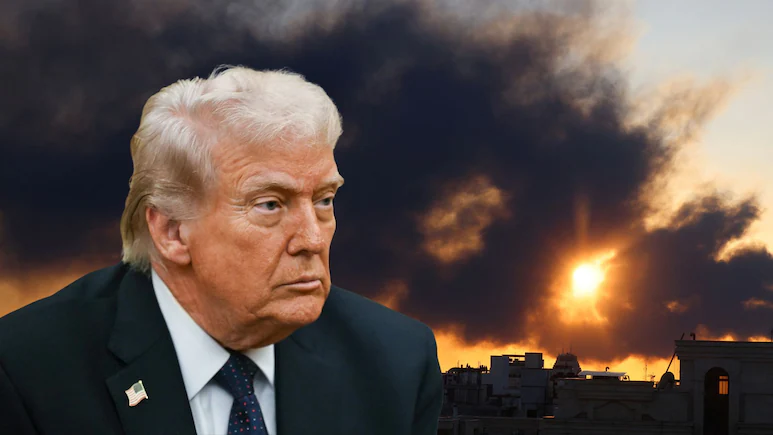
United States President Donald Trump has said Iran is seeking negotiations to end the ongoing war, but he is not prepared to agree to a ceasefire until what he described as stronger terms are offered.
In an interview with NBC News, Trump said Iran was interested in reaching a deal but the United States would continue military operations for the time being as the conflict in the Middle East enters its third week.
Trump Says Terms Are Not Yet Acceptable
Speaking during a telephone interview, President Trump said that although Tehran had indicated willingness to negotiate, Washington was not ready to end the fighting.
“Iran wants to make a deal, and I don’t want to make it because the terms aren’t good enough yet,” he said.
The president added that any agreement to halt the war would require “very solid” conditions, though he declined to explain the exact terms being sought.
When asked about the basis for a potential ceasefire, Trump suggested that one condition would likely involve Iran permanently abandoning its nuclear ambitions.
United States officials also told media outlets that the military campaign would continue for now. A senior White House official was quoted as saying that the operation would proceed “unabated” despite diplomatic efforts by some countries to encourage negotiations.
Military Campaign Continues
The war began after the United States and Israel launched joint military strikes on Iran on February 28. Iran responded with missile and drone attacks targeting Israel as well as locations in several Middle Eastern countries hosting United States military facilities.
Trump said American forces had carried out major attacks on Iranian military infrastructure, including operations targeting Kharg Island, a strategic location used for exporting much of Iran’s oil.
The president described the strikes as one of the most powerful bombing operations in the region’s history and said many military targets on the island had been destroyed.
He also warned that additional strikes could take place if Iran attempted to interfere with international shipping through the Strait of Hormuz, a narrow sea passage used by oil tankers transporting energy supplies from Gulf states.
While Trump said the United States had targeted military installations, he indicated that oil infrastructure had largely been spared because rebuilding such facilities could take years.
Strait of Hormuz Security Concerns
Trump also said the United States was working with other countries to ensure the safety of shipping through the Strait of Hormuz.
The waterway is one of the world’s most important routes for global oil trade, and tensions in the region have caused sharp fluctuations in energy markets.
The president said several countries had agreed to assist in keeping the passage open, although he did not name specific participants.
In a message posted on social media, Trump suggested that countries heavily dependent on oil transported through the strait, including China, France, Japan, South Korea and the United Kingdom, should consider sending naval forces to help secure the area.
He also indicated that the United States military could take steps to clear any naval mines or other threats in the strait.
Iran’s Retaliatory Attacks
Iran has launched repeated drone and missile attacks in response to the United States and Israeli strikes. Some of these operations have targeted American allies in the region, including the United Arab Emirates, Qatar and Saudi Arabia.
Trump said he had been surprised that Iran chose to strike multiple countries in the region.
The president said these countries “have been terrific” partners of the United States and suggested they had been attacked unnecessarily.
According to regional reports, Iranian drones and missiles have also targeted infrastructure and military installations in several Gulf states, raising fears that the conflict could expand further across the Middle East.
Uncertainty Over Iran’s Leadership
During the interview, Trump also questioned whether Iran’s newly appointed Supreme Leader, Mojtaba Khamenei, was alive.
The younger Khamenei assumed leadership after the death of his father, Ali Khamenei, who was killed during the early stages of the United States and Israeli attacks on Iran.
Trump said he had heard unconfirmed reports suggesting the new leader might have been injured during the conflict, although he described those reports as rumours.
Iran’s leadership has issued written statements promising continued retaliation against the United States and Israel, including threats to block shipping routes and attack allied military facilities.
Energy Prices and Global Impact
The conflict has already had significant consequences for global energy markets. Oil prices have risen sharply since the fighting began, largely due to fears that disruptions to shipping in the Strait of Hormuz could limit the flow of crude oil.
Trump dismissed concerns that rising fuel prices in the United States could affect domestic politics, saying he believed prices would fall once the conflict ended.
“There’s so much oil and gas out there,” he said, adding that current supply disruptions were temporary and would be resolved.
Context
The conflict between the United States, Israel and Iran has become one of the most serious geopolitical crises in the Middle East in recent years.
Military exchanges have expanded beyond the original combat zones, with missile and drone attacks affecting several countries across the Gulf region.
The fighting has also heightened concerns about global energy security, as a significant share of the world’s oil supply passes through the Strait of Hormuz.
Diplomatic efforts to halt the conflict have so far failed to produce a ceasefire, and statements from both Washington and Tehran suggest that the confrontation could continue for some time.
Ceasefire Agreed in Oleshky Amid Ukraine's Humanitarian Crisis
Donald Trump Hints at US Interest in Cuba After Conflict in Iran
UK Court Rules Against India in RAKIA Investment Dispute
India Raises Concerns Over Chinese Border Patrolling Deviations