Trump Outlines Foreign Policy Strategy at United Nations Assembly


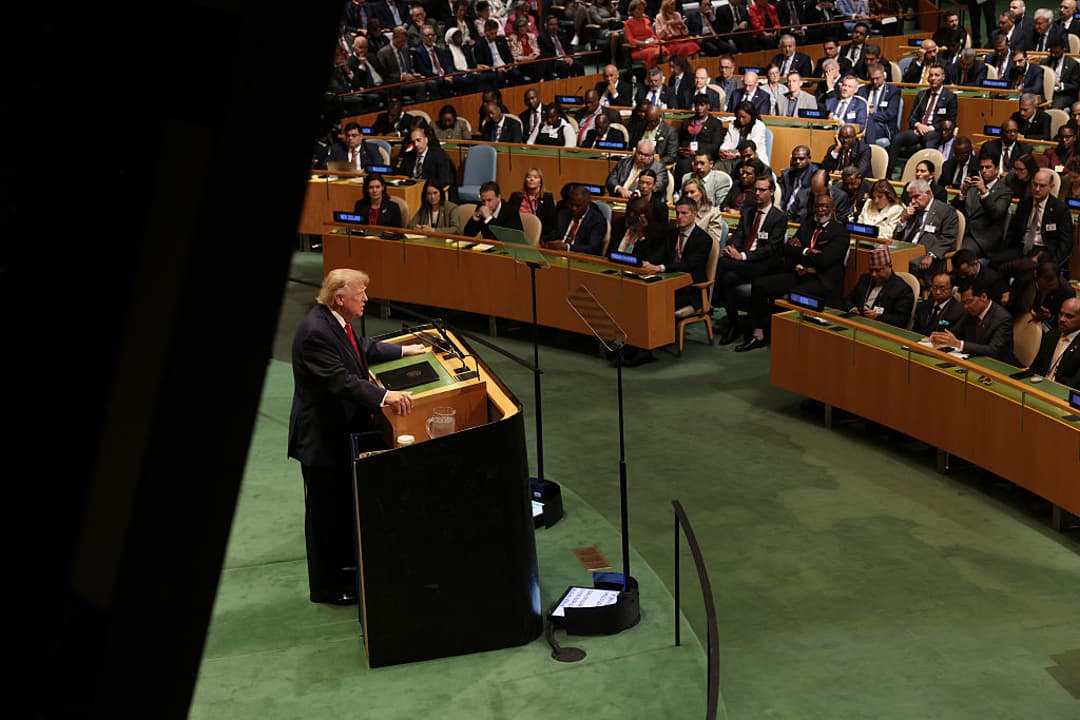
United States President Donald Trump delivered a speech at the United Nations General Assembly on 22 September 2026, articulating a foreign policy strategy that prioritises military force as a vehicle for achieving peace. His remarks touched on various nations, including Iran, Venezuela, and Cuba, framing American military capabilities not as an alternative to diplomacy but as leverage that facilitates it.
David Satterfield, Director at Rice University’s Baker Institute for Public Policy, noted that Trump's speech reflects the administration's belief that 'force is the only currency of value.' He highlighted the philosophy that 'the strong do as they will and the weak suffer as they must,' a perspective that underscores Trump's approach to international relations.
In Trump's view, military strength goes beyond mere deterrence; it serves as an active tool for negotiating outcomes. He articulated this sentiment through his motto, 'peace through strength,' which resonates with previous military initiatives, including joint strikes against Iran. In a post on Truth Social earlier this year, he stated: 'PEACE THROUGH STRENGTH TO PUT IT MILDLY!!!'
Economic measures are also a crucial aspect of Trump’s strategies, particularly concerning Iran. He claimed that initial economic partnership offers were rejected by Tehran, leading to military action followed by the pursuit of 'complete economic isolation' to bring Iran back to the negotiating table. Trump's comments on Cuba echoed this theme; he labelled the nation as 'failed' and predicted an impending shift towards political change, prompting representatives from Cuba to leave in protest.
Despite asserting his role as a peacemaker, Trump faced scrutiny for his claims. He stated that he has resolved eight conflicts since returning to office, although these assertions are met with scepticism. His speech contrasted inaction from others while portraying himself as a decisive actor, stating: 'While others have spoken of peace, I have made peace.'
Analysts, including Satterfield, likened Trump's address to reiterating familiar themes from his past, but they affirmed that it clarifies his current application of these ideas. Through military actions and aggressive economic policies, Trump aims not only to deter adversaries but also to drive negotiations and shape political landscapes.
Trump’s remarks on Iran indicated an urgent choice: proceed with a peace agreement or 'annihilate the Islamic Republic.' This stark ultimatum was delivered against the backdrop of stalled negotiations from a conflict initiated by the U.S. and Israel in February. He queried whether a deal would allow Iran to emerge stronger than before, while threatening decisive military action should diplomacy fail. Members of Iran's delegation walked out in protest of these comments, illustrating the divide between Trump's rhetoric and the willingness of adversaries to engage.
In addition to threats directed at Iran, Trump also addressed drug cartels, justifying his administration's military operations against suspected narcotics boats in the Caribbean. These operations have raised concerns among international observers regarding their legality and potential breaches of human rights. Trump stated that cartels represent a significant threat, likening them to the Islamic State group and advocating for extreme measures against them: 'They should be killed, exiled, or detained as enemy combatants without the possibility of release.'
While these messages aim to reinforce Trump's image of strength, the effectiveness of such pronouncements might be waning. Kristian Coates Ulrichsen, a Middle East expert at the Baker Institute, indicated that Trump's rhetoric is consistent with a long-standing American narrative of dominance that has framed military actions as justifiable. Moreover, he cited Venezuela as an example of this doctrine in action, recalling the U.S. military operation that led to the capture of President Nicolás Maduro and his wife earlier this year, which set the stage for a government transition.
In essence, Trump's address at the United Nations encapsulated his commitment to a foreign policy that relies heavily on military power and economic pressure as instruments for creating peace and enforcing U.S. interests globally.
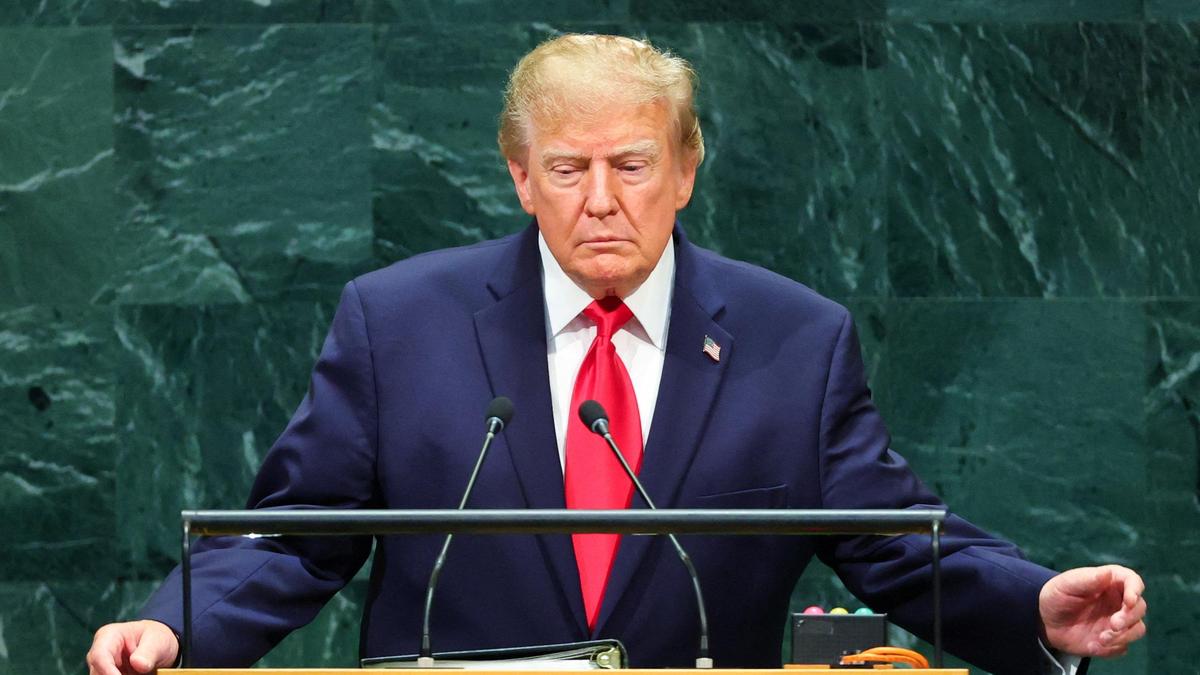
US President Donald Trump Addresses UN General Assembly in 2026
Trump Advocates for India-Middle East-Europe Connectivity Initiative
United Russia Party Secures Supermajority Despite Ukraine Conflict
Xi Jinping's US Visit Planned Amid Economic Tensions with Trump