Trump's Diesel Agreement Raises Tensions with Europe Over Ukraine


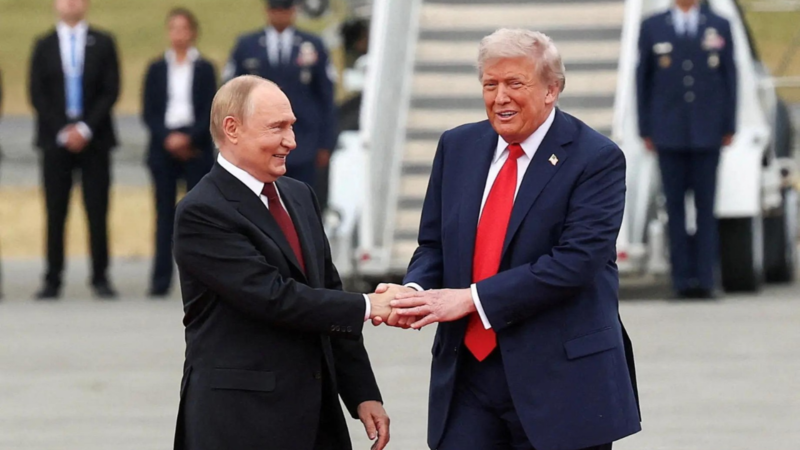
Former United States President Donald Trump has announced a diesel deal with Russia, significantly influencing the global fuel market and escalating tensions between the US and Europe regarding the ongoing conflict in Ukraine.
The arrangement, as detailed by Russian Deputy Prime Minister Alexander Novak, aims to increase Russian diesel exports to international markets, claiming a potential supply of up to 3.5 million tonnes monthly by the year's end. In discussions with President Vladimir Putin, Trump outlined plans for Russian diesel shipments beginning with 300,000 tonnes in October, followed by half a million tonnes in November and one million tonnes in December. Trump's assertion that 'Diesel Prices for Americans and, indeed, the World, will be COMING DOWN, IN RECORD NUMBERS, AND FAST!' has drawn skepticism from energy experts, who suggest that the political ramifications are more pronounced than the economic benefits.
The deal has been interpreted as a manoeuvre to leverage the situation in Ukraine, according to Kostis Stambolis, executive director of the Institute of Energy for South-East Europe. He stated that this move appears to position Trump as opposed to European cooperation surrounding Ukraine, highlighting the vulnerability of the continent’s energy independence as numerous refineries have closed due to environmental regulations.
Eastern European nations, in light of this diesel agreement, are expected to reaffirm their support for Ukraine during upcoming European Council summits. European Commission President Ursula Von Der Leyen noted that funding for Ukraine will be a primary focus, while Finnish Foreign Minister Elina Valtonen has suggested implementing stricter travel restrictions for Russians.
Ukraine has previously targeted Russian oil infrastructure to reduce supply and financing for the war, but officials have expressed concerns that the US deal could undermine these efforts. Ukrainian President Volodymyr Zelenskyy has stated that 'Gifts to Putin will not lead to peace,' emphasising the perception that any easing of sanctions against Russia signals weakness, particularly without an enduring ceasefire agreement.
Despite the agreement’s controversial nature, analysts contend that the US Energy Information Agency's data reflects little direct impact on US diesel prices attributable to the Ukraine war, although prices surged owing to broader geopolitical tensions, particularly the conflict involving Iran.
Trump's approach has oscillated between punitive and conciliatory towards Russia, creating a complex narrative. While he previously cut military aid to Ukraine, he has simultaneously offered European nations military support. This duality is captured best by observers like Victoria Vdovychenko from Cambridge University, who asserts that Trump's strategy pivots rapidly, often vacillating based on political expediency.
As fuel prices remain a critical concern for voters as midterm elections approach, the implications of the diesel deal on long-term US and European relations with Russia will continue to evolve in the heated political landscape. Overall, while the direct influence on diesel supplies and prices is still contested, the geopolitical ramifications highlight a widening rift between the US and Europe in their responses to the Ukraine conflict.

Two Activists Arrested for Trespass at Jantar Mantar, India

Wealth Disparity: India's Richest 10% vs Global Poor

Karan Johar Interviews Salman Khan on Koffee With Karan Premier

India's Selection for New Zealand Tour Delayed by Player Injuries