Surge of Migrants Cross into Spain's Ceuta Enclave from Morocco


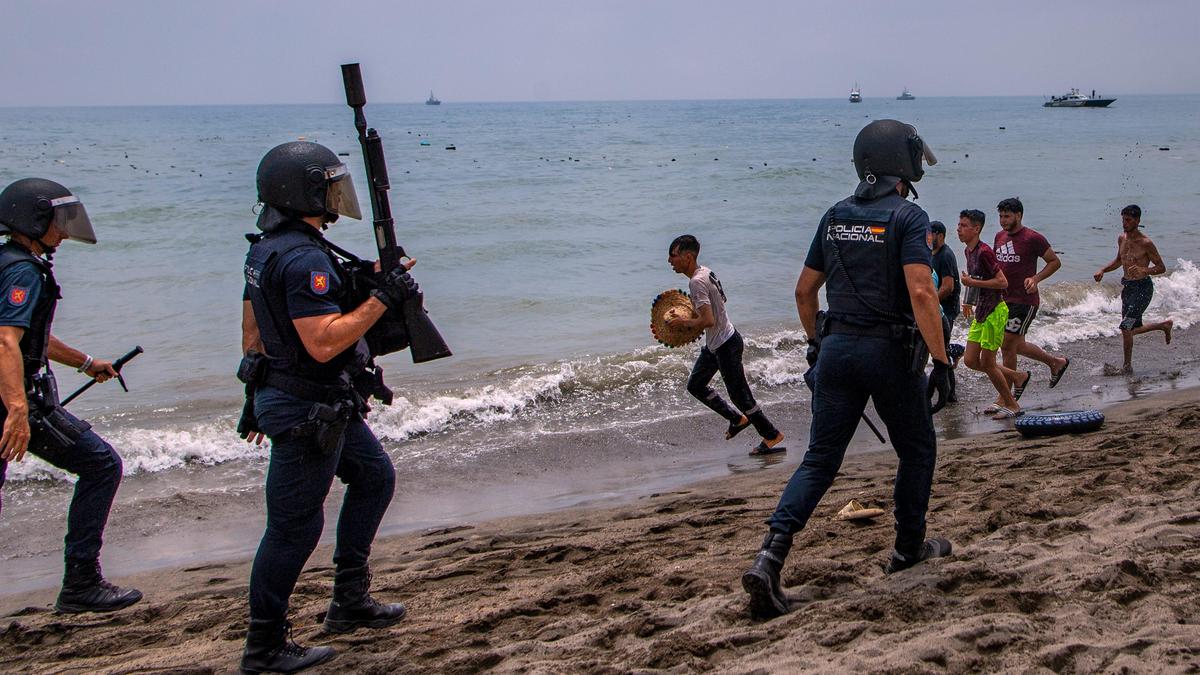
Recent footage from Ceuta, a Spanish enclave situated on the northern coast of Africa, shows large numbers of migrants attempting to cross from Morocco. Eyewitnesses reported scenes of hundreds swimming using inner tubes and buoys, as others surged through damaged border gates. On Friday, the Spanish interior ministry confirmed that at least 18 migrants had died during the crossing attempts, a rise from an earlier count of nine. This rapid inflow of people has compelled the Spanish government to deploy armed forces to strengthen border security.
Reports indicate that between 2,000 and 3,000 individuals crossed into Ceuta in a single day, marking one of the most significant influxes since 2021. Ceuta, with a population of approximately 85,000, has been under Spanish control since 1580. The enclave shares a border with Morocco, roughly eight kilometres long, which is heavily fortified.
Before the surge on Thursday, migrant arrivals had been gradually increasing, prompting local authorities to announce that their reception centres were already overwhelmed, with many resorting to sleeping on the streets following the entry of over 1,500 migrants in the week preceding.
Achraf Maimouni, from the Moroccan Association for Human Rights, described the situation as "exceptional" while stating that the border had opened under unusual circumstances. A spokesperson for the Guardia Civil remarked that there had been a slight influx prior to the recent event, but Thursday saw a dramatic spike in crossings, attributing it to a recent ruling by Spain's Supreme Court.
The ruling, made earlier in July, established that migrants intercepted at sea en route to Ceuta or Melilla cannot be summarily returned to Morocco. This legal decision has reportedly influenced the recent migration patterns, as migrants are aware that their chances of being sent back are reduced.
Despite the government’s assertion that criminal organisations are exploiting this situation, critics of Spain's migration policies insist that the ruling is just one aspect of a broader system. Recently, Spain has launched a programme aimed at legalising the status of approximately 500,000 undocumented migrants, tripling the number of applications received, leading some to scrutinise the more complex motivations driving migration.
While there is speculation regarding the motivations of recent migrants, including the influence of rumours about the border's opening, many are finding perilous means to reach the enclave. Reports illustrate various attempts to traverse the Mediterranean, including swimming from the Moroccan town of Fnideq.
Young men have been pictured making their way north from locations far from the border, indicating that news of potential entry points is spreading. As cars crowded the roads leading to Fnideq, those who have successfully crossed described treacherous conditions, with one individual stating, "The police tried to stop us. But our will and determination allowed us to come here."
This surge into Ceuta highlights ongoing challenges facing European migration policies, as well as the risks undertaken by many in search of a better life in Europe. Looming questions about the implications of such migration flows on both local residents and broader European Union policies continue to be a topic of discussion among scholars and analysts alike.

Bilateral Meetings and Side Conversations Mark Global Summit

UAE and Iran Leaders Discuss Relations at BRICS Summit

BRICS Summit Highlights Concerns Over Critical Minerals and Technology

UN Secretary-General Discusses Security Council Challenges