Supreme Court Reviews Cartoons in NCERT Textbooks Amid Debate


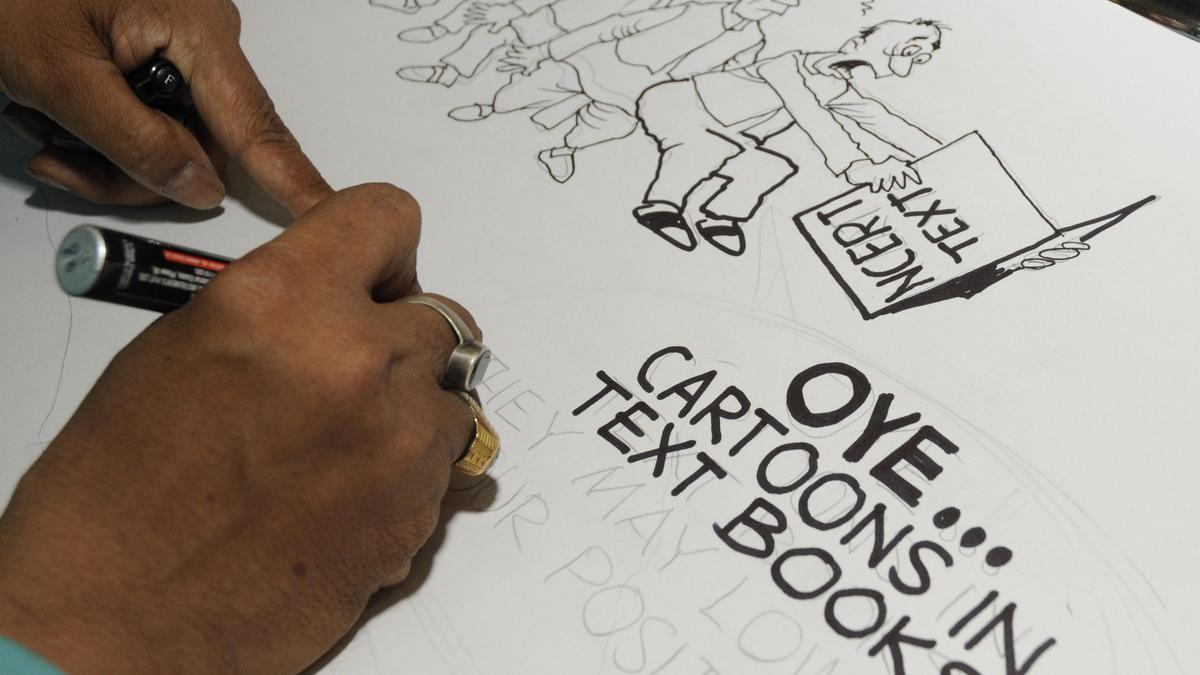
The Supreme Court of India has requested a review of the cartoons featured in National Council for Educational Research and Training (NCERT) textbooks. This decision followed remarks made by Solicitor General Tushar Mehta, who questioned whether such illustrations are suitable for educational materials aimed at children.
During a hearing held on 22 May 2026, Solicitor General Tushar Mehta, addressing a three-judge bench led by Chief Justice of India Surya Kant, presented his concerns regarding certain cartoons he encountered in NCERT textbooks. He articulated nuanced objections, arguing that while cartoons are not inherently inappropriate, their context in textbooks designed for impressionable youths raises pressing questions. He stated, “It may not be proper to have these cartoons. A textbook is not a place where you use cartoons.”
This discussion emerged in the context of ongoing scrutiny over educational content, which included a recent controversy concerning a Class 8 Social Science textbook that had been accused of portraying the judiciary unfavourably. Earlier in February, the Court had concluded that the textbook's content was aimed at “maligning the Indian judiciary,” leading to an immediate ban on its circulation.
Responding to the Solicitor General's concerns, the Supreme Court bench agreed that the appropriateness of the cartoons warranted a thorough examination by a governmental committee. This committee is led by former Supreme Court judge Justice Indu Malhotra, with representative members including senior advocate K.K. Venugopal and Professor Prakash Singh, Vice-Chancellor of Hemwati Nandan Bahuguna Garhwal University. Their mandate is to review and shape the Legal Studies curriculum for Class 8 and other educational levels in conjunction with the National Judicial Academy in Bhopal.
The case has sparked significant discourse on the role of satire in education, particularly against the backdrop of previous Supreme Court rulings. In a 2020 judgement regarding freedom of expression, the Court emphasised the importance of satire as a means of communication that can elucidate complex ideas quickly and effectively. It noted that restrictive interpretations of satire could suppress public dialogue and potentially destabilise societal norms.
The Supreme Court's decision to review the appropriateness of cartoons in textbooks reflects broader discussions about educational content and the balance of creative expression within academic settings. As the committee undertakes its evaluation, it remains to be seen how this may influence future editions of NCERT textbooks and their visual content.
As debates surrounding censorship and educational materials continue, the outcome of this committee's review will likely have significant implications for teaching resources across India.
Kerala Initiates Probe into 2006 Suicide Case Involving CEC

Extradition of Sheikh Hasina Feasible, Says Indian High Commissioner

Punjabi Makeup Artist Mad Sandhu Shot Dead in Amritsar
India Achieves Fourth Place at Asian Games 2026 Through Late Success