Supreme Court Requests Government's Response on AAP's Social Media Suspension


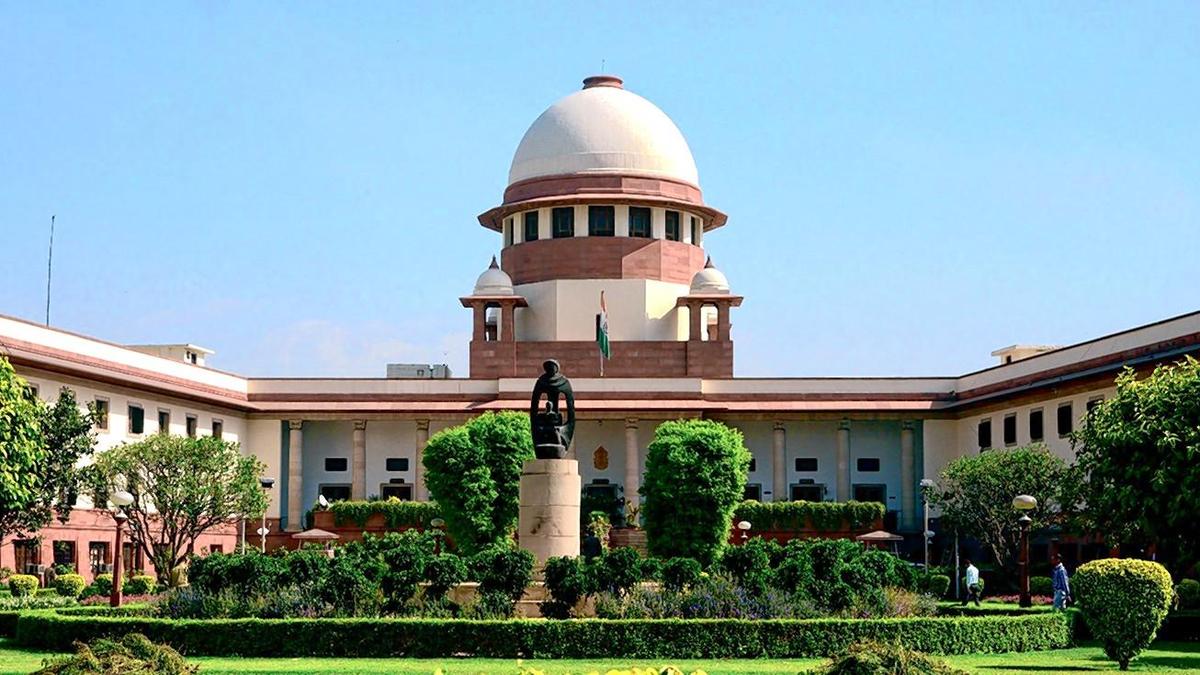
The Supreme Court of India requested a formal response from the Union Government regarding a petition submitted by the Aam Aadmi Party (AAP) contesting the suspension of its Gujarat unit’s social media accounts on Instagram and Facebook. The petition alleges that the suspension is unjust, arbitrary, and unconstitutional, having been executed without prior notice or justification.
A bench led by Justice PS Narasimha and Justice Alok Aradhe issued the notice to the Ministry of Electronics and Information Technology while linking the case with existing petitions that address similar issues concerning the blocking of online content. This included a notable case, "Software Freedom Law Center, India vs Union of India," which specifically examines the legality of blocking social media accounts without notifying users in advance.
Senior advocate Shadan Farasat, representing AAP, argued that Section 79(3)(b) of the Information Technology Act should not be invoked to justify the blockage of social media profiles. This section relates to safe harbour provisions for intermediaries, which protect them from liability based on content posted by users, but does not authorize governmental blocking directives.
Farasat highlighted the urgency of the case, asserting that the suspension hampers the party’s ability to connect with voters during a significant political period marked by upcoming local body elections in Gujarat. The accounts in question, including Instagram handle "@aapgujarat," were allegedly suspended on April 25, purportedly due to copyright claims related to the use of film clips in campaign advertising without appropriate permission.
AAP members suggested that the suspension was politically motivated, alleging that the action was taken under pressure from the ruling Bharatiya Janata Party (BJP). In the petition, AAP argues that the government’s action infringes upon its constitutional rights and violates several aspects of democratic engagement. AAP is seeking the Supreme Court's intervention to annul the blocking directives issued to Meta, the parent company of Instagram and Facebook, and to demand access to documentation regarding the suspension decisions.
The petition further insists that blocking measures should be limited to specific content deemed objectionable and should not extend to an entire account. This approach, according to AAP, would better align with the rights enshrined in Article 19 of the Indian Constitution, which protects freedom of speech and expression, as well as Section 69A of the Information Technology Act that permits governmental blocking under specific circumstances such as national security and public order.
The Supreme Court's involvement in the case under Writ Petition (Civil) No. 576/2026, titled Aam Aadmi Party Secretary vs Union of India, reflects the judiciary's critical role in overseeing governmental restrictions on political discourse in the digital space. As AAP challenges the legitimacy of the actions taken against its accounts, it also calls for clearer guidelines to protect political parties' online presences in the future.
Concerns Rise Over Delhi Voter Registration Discrepancies
Controversy Erupts Over Rahul Gandhi's PM Modi Mimicry at Event

Father of IIT Bombay Student Calls for Action Against Discrimination

India and Japan Conduct Joint Air Exercise 'Veer Guardian-2026'