Super Typhoon Bavi Strikes Guam and Northern Mariana Islands


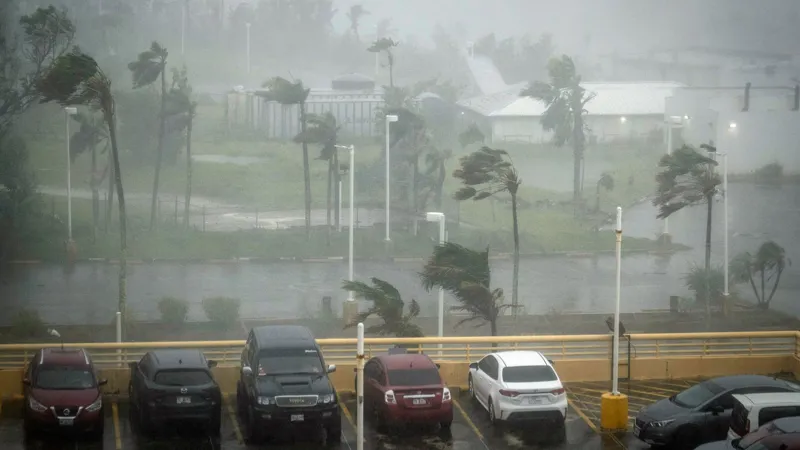
Super Typhoon Bavi made landfall in Guam and the U.S. Northern Mariana Islands at Category 5 intensity shortly after the Fourth of July holiday. The storm brought devastating winds and heavy rainfall, resulting in significant flooding across the region.
Bavi first formed as a tropical storm on 1 July 2026 before quickly intensifying into a typhoon within two days. By the end of its rapid escalation on 3 July, it reached Category 5 status. In the western Pacific Ocean, storms classified as typhoons are equivalent to what are known as hurricanes elsewhere, but the terminology is specific to the geographic area.
The hurricane-level winds swept over Rota, an island situated roughly 60 miles northeast of Guam, at 9 a.m. local time on 6 July. The storm registered peak sustained winds of approximately 180 miles per hour near its eyewall. Bavi is notable for being the first recorded Category 5 typhoon to pass directly over Rota, although the island had experienced the effects of a Category 4 typhoon named Gilda back in 1967.
Reports indicate widespread destruction on multiple islands, particularly Rota. At the airport there, a crucial water distribution station suffered structural damage while power lines and poles were downed. Additionally, a wooden structure with a tin roof was confirmed destroyed.
In Saipan, located in the Northern Mariana Islands, gusts reached 111 miles per hour, with Tinian recording gusts as high as 94 miles per hour. Heavy rain and storm surges flooded numerous roads in Guam. The National Weather Service noted that Route 1 (Marine Corps Drive) became impassable due to rocks and debris. Guam International Airport reported a staggering 15.68 inches of rainfall between 4-5 July, with more than 12 inches falling on 5 July alone.
The western Pacific is recognised as one of the most active areas globally for tropical cyclones. On average, 25 to 26 tropical storms form in this region annually, of which around 16 escalate into typhoons. This figure is significantly greater than the typical count for the Atlantic hurricane season.
Residents of Guam and the Northern Mariana Islands generally experience six to seven tropical storms or typhoons each year. While such storms can occur year-round in the western Pacific, the primary season runs from June through December. In recent months, the islands have faced formidable storms, including Category 4 Super Typhoon Sinlaku, which caused extensive damage, and Category 4 Typhoon Mawar, which hit in May 2023.
In 2018, the islands were devastated by Category 5 Super Typhoon Yutu, which recorded wind speeds of 175 miles per hour. That storm resulted in two fatalities, over 100 injuries, and extensive property damage, including to Saipan International Airport.
As the region assesses the damage caused by Super Typhoon Bavi, ongoing recovery efforts will be paramount in restoring normalcy for affected communities.

Kerala Initiates Probe into 2006 Suicide Case Involving CEC

Extradition of Sheikh Hasina Feasible, Says Indian High Commissioner

Punjabi Makeup Artist Mad Sandhu Shot Dead in Amritsar

India Achieves Fourth Place at Asian Games 2026 Through Late Success