Suicide Bombing at Mosque in Pakistan Claims 27 Lives


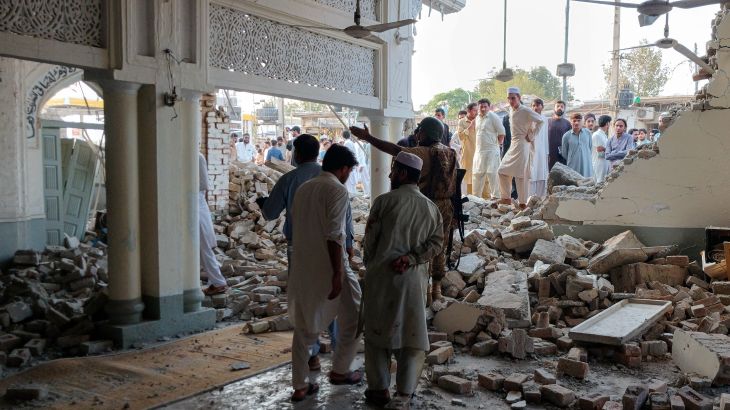
A tragic incident unfolded in Kohat, a city in Pakistan's Khyber Pakhtunkhwa province, when a suicide bomb attack at a mosque led to the deaths of at least 27 individuals, including six civilians and 15 police officers. This attack occurred as worshippers gathered for Friday prayers. The bombing was the result of an explosive-laden vehicle being driven into the mosque's entrance located at a police headquarters.
The Pakistan Taliban, known as Tehrik-e-Taliban Pakistan (TTP), claimed responsibility for the attack through a faction called Ittehadul Mujahideen, which is aligned with the Taliban commander Hafiz Gul Bahadur. Provincial police chief Zulfikar Hameed confirmed the nature of the attack, identifying it as a suicide bombing.
In the aftermath of the explosion, gunmen attempted to breach the police compound, leading to a gun battle with the authorities. Initial reports indicated that at least 15 bodies and over 50 injured individuals were transported to local hospitals. Dr. Tahir Shah stated that sources indicated upwards of 75 people had sustained injuries, with the majority being worshippers.
Significant damage was inflicted upon the mosque, and the police station's outer wall collapsed due to the blast. Residents reported that the explosion could be heard from considerable distances.
Kamal Hyder, reporting for Al Jazeera from Islamabad, noted that at least six attackers were killed during the exchange of gunfire following the bombing. In light of the increasing violence, Pakistan has accused the Afghan Taliban of permitting the TTP and affiliated groups to conduct operations from Afghan soil, a claim that officials in Kabul have denied.
The TTP operates separately but maintains an alliance with the Taliban, which regained control in Afghanistan in 2021. The strategic position of Kohat, situated near the Afghan border and serving as a conduit to the volatile North Waziristan region, has made it susceptible to such assaults.
Professor Michael Semple from Queen’s University Belfast highlighted the sophisticated nature of these attacks, suggesting they require extensive planning and support, which could indicate backing from the Afghan Taliban. He stated, “Essentially, this seems to fit into the pattern of the Afghan Taliban providing sanctuary to both al-Qaeda and different factions of the TTP.”
The surge in violence has prompted both Pakistan and Afghanistan to engage in intermittent cross-border skirmishes. The bombing in Kohat occurred one day after an attack involving a roadside bomb killed six soldiers in a convoy in Hangu district. Following that incident, government forces conducted operations and reported the deaths of 10 suspected Taliban fighters.
Prime Minister Shehbaz Sharif condemned the assault, urging authorities to expedite rescue efforts. The Ministry of Interior described the incident as a ‘cowardly action’ that would not undermine the country’s ‘firm resolve.’

Delhi Police Solve Murder of HR Professional Yuvraj Singh Manchanda
Trump Excludes Media Outlets from White House Access

UN Report Reveals Widespread Sexual Violence During Ukraine Conflict

FSSAI Commences Legal Action Against Nestlé India Over Baby Food