South African President Comments on US G20 Boycott Controversy


South African President Cyril Ramaphosa has indicated that the United States may be reconsidering its decision to boycott the upcoming G20 summit in Johannesburg. Ramaphosa characterised this development as a 'positive sign' and asserted that 'boycott politics never work.' However, the White House has dismissed his remarks as 'fake news' and has accused the South African leader of making unfounded claims.
In a statement made on Friday, President Ramaphosa revealed that Pretoria had received a last-minute communication suggesting that Washington might participate in the summit 'in one shape or form or other.' He stated, 'We have received notice from the United States about a change of mind regarding participation... This comes at a late hour before the summit begins.' Ramaphosa emphasised the importance of the United States' presence at the G20, given its status as the world's largest economy.
The White House has firmly rejected any suggestion that it would reverse its stance. A senior official confirmed that only the acting ambassador, Marc D Dillard, would attend the ceremonial handover of the G20 presidency. 'This is fake news,' the official stated. 'The chargé d'affaires in Pretoria will attend the handover ceremony as a formality, but the United States is not joining G20 discussions.'
White House Press Secretary Karoline Leavitt reiterated this position, stating, 'The United States is not participating in official talks at the G20 in South Africa.' She further expressed discontent with Ramaphosa's remarks, saying, 'I saw the South African president running his mouth a little bit against the United States and the president of the United States earlier today, and that language is not appreciated by the president or his team.'
Despite the US's absence, Ramaphosa remained optimistic, asserting, 'The United States needs to be here,' and expressed hope that the potential change in approach might lead to productive discussions.
The US boycott stems from allegations that South Africa discriminates against white individuals, alongside former President Donald Trump's claims regarding violence against white Afrikaner farmers—claims that have been widely rejected in South Africa. Furthermore, Pretoria has stated that Washington pressured it not to issue a joint G20 declaration, arguing that consensus would be unattainable without US involvement.
In response to the challenges posed by the US's absence, Ramaphosa declared, 'We will have a declaration. The talks are going extremely well. I’m confident we are moving towards a declaration, and they are now just dotting the i’s and crossing the t’s. We will not be bullied.'
The US embassy had previously informed Pretoria that South Africa’s G20 agenda 'runs counter to US policy views,' leading to an impasse in negotiations over consensus documents. The summit, which marks the first time an African nation has hosted the G20, will address critical issues such as debt relief for low-income countries, a just energy transition, and the securing of essential minerals.
Political relations between the US and South Africa have soured during Trump's second term, highlighted by high tariffs on South African goods, the expulsion of Pretoria's ambassador, and Washington's boycott of the COP30 climate talks in Brazil.
Despite these diplomatic tensions, American business interests in South Africa remain robust, with over 600 US companies operating in the country. Suzanne Clark, head of the US Chamber of Commerce, stated, 'The US Chamber of Commerce will use our B20 leadership to foster international collaboration.'
G20 ambassador Xolisa Mabhongo succinctly summarised the current situation, noting, 'The only country that is not in the room is the United States and, of course, it is their choice not to be in the room.'
Kerala Initiates Probe into 2006 Suicide Case Involving CEC
Extradition of Sheikh Hasina Feasible, Says Indian High Commissioner

Punjabi Makeup Artist Mad Sandhu Shot Dead in Amritsar
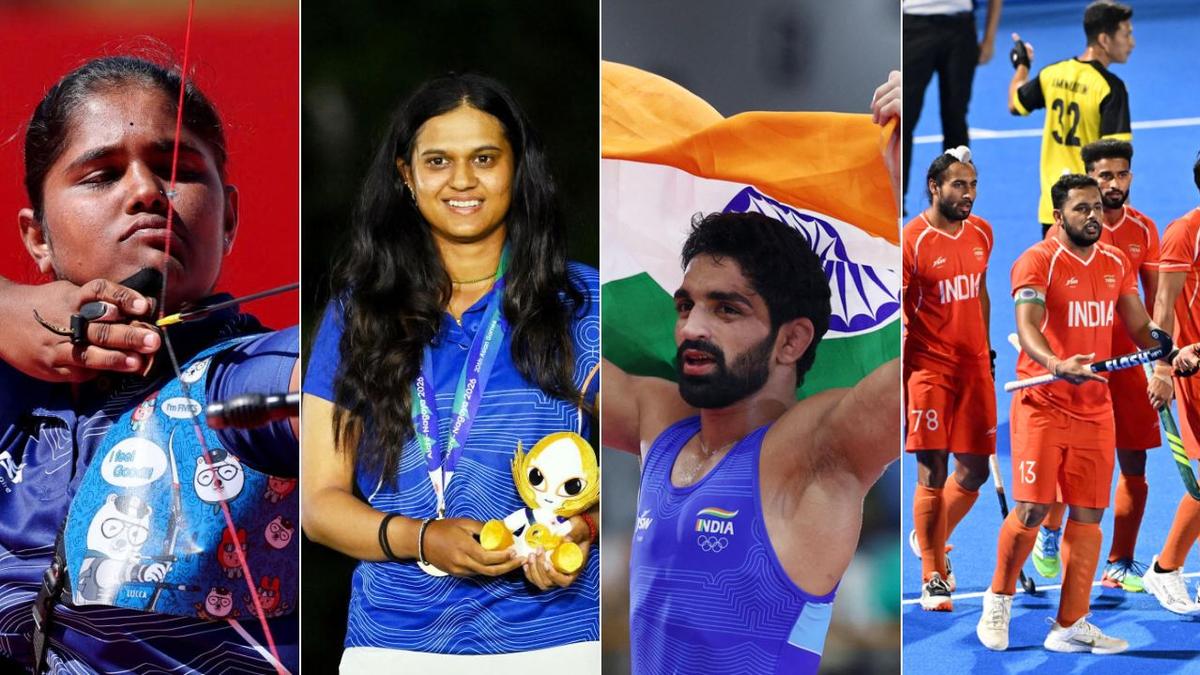
India Achieves Fourth Place at Asian Games 2026 Through Late Success