Sheikh Hasina Critiques Interim Government Amid Violence in Bangladesh


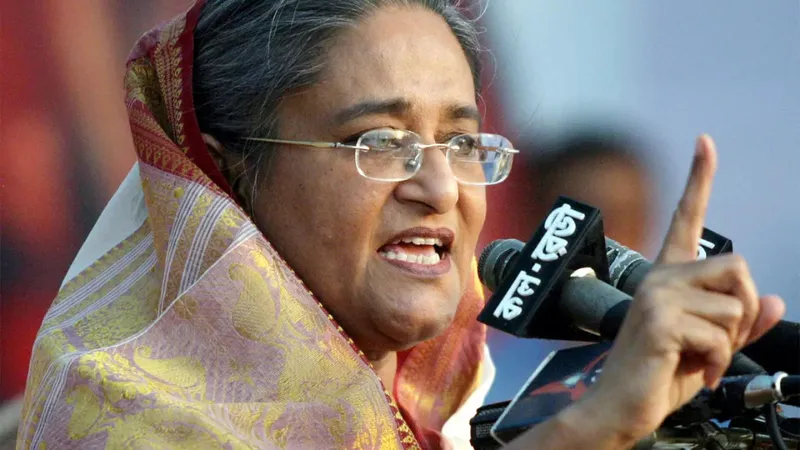
Sheikh Hasina, the former Prime Minister of Bangladesh, has spoken out against the interim government led by Muhammad Yunus, following the death of student leader Sharif Usman Hadi. In her comments, Hasina characterised the current state of governance as chaotic, accusing the interim administration of fostering an environment of lawlessness that has intensified since her removal from office.
In an email interview with the Asian News International (ANI), Hasina expressed her deep concern over the killing of Hadi, a prominent youth political figure. She stated that such violence illustrates a disturbing trend under the Yunus administration, which she claims is unable or unwilling to maintain order.
"This tragic killing reflects the lawlessness that uprooted my government and has multiplied under Yunus. Violence has become the norm while the interim government either denies it or is powerless to stop it," Hasina remarked. She further elaborated that the internal instability is straining Bangladesh's relationships with its neighbours, particularly India.
Hadi was shot on December 12 while travelling in a rickshaw in Dhaka and later succumbed to his injuries after being transferred to Singapore for advanced treatment. His death has been met with widespread condemnation and concern from various sectors of society, reflecting the rising tensions in the country.
In her criticism, Hasina also referenced the recent lynching of a Hindu youth named Dipu Chandra Das, asserting that the interim government has failed to protect minority communities. Das was reportedly killed by a mob over allegations of blasphemy, an incident that has sparked outrage across Bangladesh.
Hasina blamed the Yunus-led government for allowing extremist elements to dictate both domestic and foreign policy, stating, "The strain you are witnessing is entirely of Yunus's making. His government issues hostile statements against India, fails to protect religious minorities, and allows extremists to dictate foreign policy."
She continued, claiming that the current administration's actions have emboldened radical elements within the country, leading to attacks on diplomatic missions and minority groups. "These are the same actors who marched on the Indian embassy and attacked our media offices. A responsible government would protect diplomatic missions and prosecute those who threaten them," she stated.
Furthermore, Hasina raised alarms about the growing influence of radical Islamist forces, accusing the interim government of granting positions to those affiliated with extremist groups. She warned that this could undermine the secular foundations of Bangladesh, stating, "I share this concern, as do the millions of Bangladeshis who prefer the safe, secular state we once were."
In her remarks, Hasina also addressed the administration's foreign policy approach, criticising the rapid shift in relations with Pakistan without democratic legitimacy. She emphasised that Yunus lacks the mandate to make significant strategic decisions that could affect future generations.
"The crucial point is this: Yunus has no mandate to realign Bangladesh's foreign policy. He was not elected, so he has no right to make strategic decisions that could impact generations," she concluded.
As Bangladesh navigates a period of unrest and uncertainty, Hasina's statements reflect broader concerns about governance, minority rights, and the country’s foreign relations. Her call for a return to democratic processes underscores the tension between the interim government and its critics amidst a backdrop of escalating violence and political instability.
Concerns Rise Over Delhi Voter Registration Discrepancies
Controversy Erupts Over Rahul Gandhi's PM Modi Mimicry at Event

Father of IIT Bombay Student Calls for Action Against Discrimination

India and Japan Conduct Joint Air Exercise 'Veer Guardian-2026'