Seven Elephants Killed in Train Collision in Assam, India


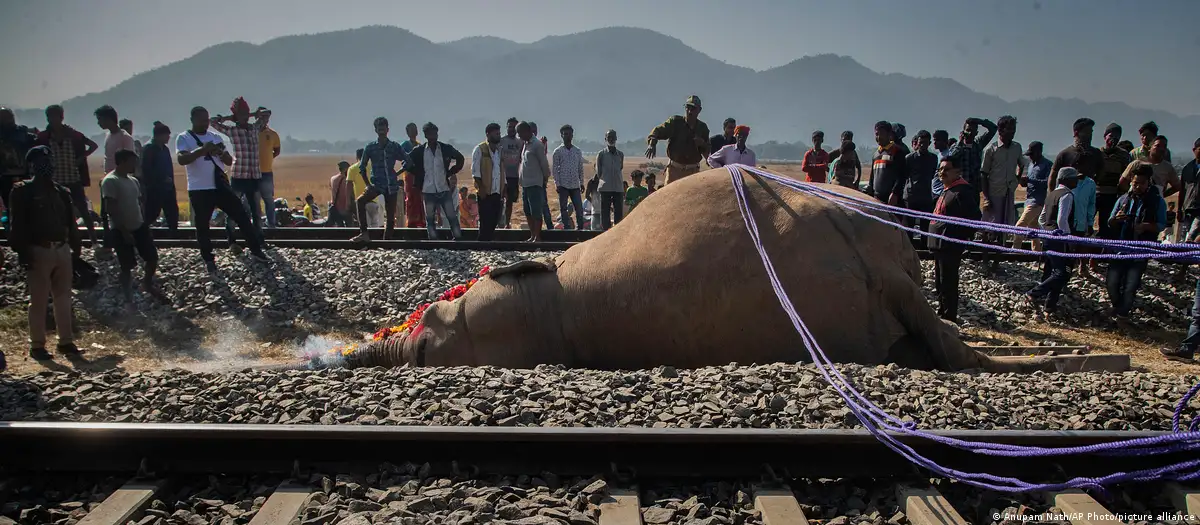
Seven wild Asiatic elephants were killed on Saturday when they were struck by a high-speed train while attempting to cross a railway track in Assam, located in northeastern India. This tragic incident underscores the ongoing challenges of human-wildlife interaction in the region.
According to Kapinjal Kishore Sharma, a spokesperson for Indian Railways, the train driver noticed a herd of approximately 100 elephants and activated the emergency brakes. Despite these efforts, the train was unable to avoid hitting some of the elephants. Initially, reports indicated that eight elephants had perished, but subsequent investigations revealed that one was alive but injured, as reported by the Press Trust of India.
The impact of the collision was severe, causing five of the train's coaches to derail. Fortunately, none of the 650 passengers on board sustained injuries. Sharma detailed that the unaffected coaches were detached, allowing the train to continue its journey towards New Delhi. Approximately 200 passengers from the derailed coaches were transferred to a different train bound for Guwahati.
The collision disrupted train services to upper Assam and other northeastern regions, as body parts of the elephants were scattered across the tracks. According to an unnamed source cited by NDTV, this further complicated the situation.
Authorities stated that the accident did not occur in an area designated as an elephant corridor, which are designated routes that elephants frequently use to migrate between habitats. The north-eastern state of Assam is home to India's second-largest population of elephants and the largest in North India. However, the state also experiences some of the highest levels of human-elephant conflict in the country, largely due to habitat fragmentation caused by deforestation.
Data from the Ministry of Environment, Forest and Climate Change reveals that from 2019 to 2024, there have been a total of 81 wild elephants killed in train collisions across India. This statistic highlights the growing concern regarding wildlife safety and the need for better management of railways in areas that are home to significant wildlife populations.
As these incidents continue to occur, the need for enhanced protective measures for both wildlife and human populations becomes increasingly urgent. Conservationists and local authorities are calling for improved strategies to mitigate human-elephant conflicts, particularly in regions where railway lines intersect with elephant habitats.

Kerala Initiates Probe into 2006 Suicide Case Involving CEC

Extradition of Sheikh Hasina Feasible, Says Indian High Commissioner

Punjabi Makeup Artist Mad Sandhu Shot Dead in Amritsar

India Achieves Fourth Place at Asian Games 2026 Through Late Success