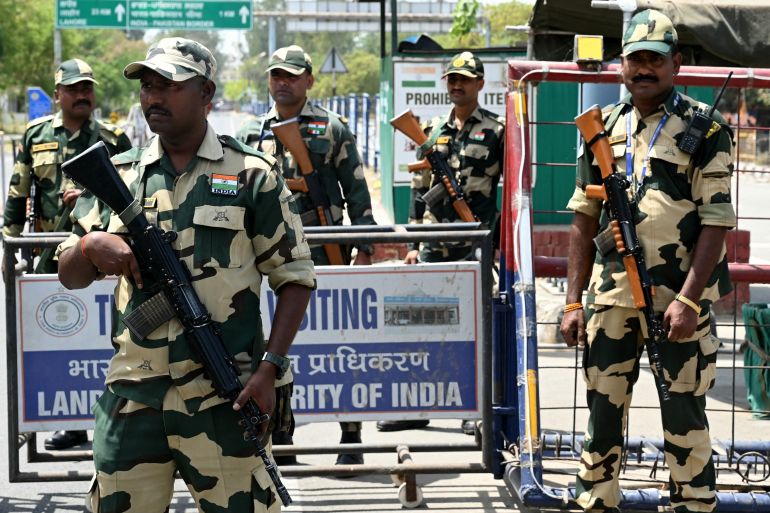
UN Security Council Criticises Israel's Recognition of Somaliland


Members of the United Nations Security Council (UNSC) have voiced strong opposition to Israel's recent recognition of Somaliland, a self-declared republic that broke away from Somalia in the early 1990s. The emergency meeting, held in New York City, convened following Israel's announcement, which has raised concerns about its implications for the Palestinian territories, particularly Gaza.
The United States was the sole member among the 15-nation council that did not join in condemning Israel's decision. While the US affirmed its stance on Somaliland remains unchanged, it defended Israel's right to establish diplomatic relations.
Somalia's ambassador to the UN, Abu Bakr Dahir Osman, urged council members to reject what he termed Israel's "act of aggression," arguing that it threatens to destabilise not only Somalia but the broader Horn of Africa and Red Sea regions. Osman expressed his fears that the recognition could facilitate Israel's alleged plans to relocate Palestinians from Gaza to the northwestern region of Somalia.
"This utter disdain for law and morality must be stopped now," Osman declared during the session.
The meeting was called in response to Israel becoming the first country to officially recognise Somaliland as an independent state. Gabriel Elizondo, reporting for Al Jazeera from UN headquarters, noted that 14 UNSC members condemned the recognition, while the US defended Israel’s actions without formally endorsing them.
Tammy Bruce, the US deputy representative to the UN, stated that the right to establish diplomatic relations is inherent to all sovereign nations. However, she clarified that the US had made no changes in its position regarding Somaliland.
In contrast, Israel’s deputy ambassador to the UN, Jonathan Miller, defended the decision, asserting that it was not intended as a hostile act towards Somalia and could open avenues for dialogue between the two entities. "Recognition is not an act of defiance. It is an opportunity," Miller maintained.
Concerns were further echoed by representatives of various nations, including those speaking on behalf of the 22-member Arab League. Maged Abdelfattah Abdelaziz, the Arab League's envoy to the UN, cautioned against actions that might lead to the forced displacement of Palestinians or the establishment of military bases in Somaliland.
Pakistan's deputy ambassador, Muhammad Usman Iqbal Jadoon, labelled Israel's recognition as "deeply troubling," referencing Israel's previous remarks suggesting Somaliland as a destination for Palestinian deportees from Gaza.
Both China and the United Kingdom, as permanent members of the UNSC, expressed their disapproval of Israel's actions. China's envoy, Sun Lei, reiterated that no country should support separatist movements for its geopolitical interests, while the UK's representatives also raised concerns about the potential regional ramifications.
Additional voices came from non-UNSC members, including South Africa, which reaffirmed its support for Somalia's sovereignty and territorial integrity, aligning with international law and the African Union's principles.
In defending Israel's recognition, the US envoy, Bruce, drew parallels between Somaliland and Palestine, suggesting that many UN member states had recognised Palestine without convening emergency meetings. However, Slovenia's UN ambassador, Samuel Zbogar, countered that Palestine is not an independent state but rather an occupied territory, while Somaliland is part of Somalia, making the two situations incomparable.
The Republic of Somaliland declared independence in 1991 after a civil war, establishing a stable governance structure distinct from the turmoil affecting much of Somalia. Israel's recognition marks a significant shift in Somaliland's international standing, offering the region a potential pathway to legitimacy that it has sought for decades. Nevertheless, this move has sparked fears of escalating tensions in the Horn of Africa and beyond, as various nations react to the implications of Israel's decision.
Kerala Initiates Probe into 2006 Suicide Case Involving CEC
Extradition of Sheikh Hasina Feasible, Says Indian High Commissioner

Punjabi Makeup Artist Mad Sandhu Shot Dead in Amritsar

India Achieves Fourth Place at Asian Games 2026 Through Late Success