Saudi Arabia Faces Houthi Demand for $51 Billion Amid Escalation


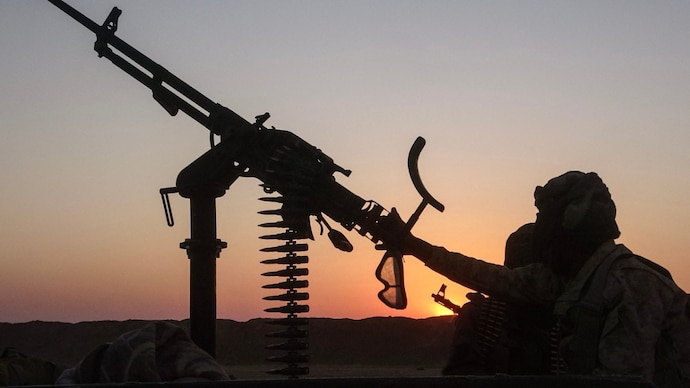
Saudi Arabia is currently navigating a significant escalation in the ongoing conflict with Yemen's Iran-backed Houthi rebels, who have recently demanded a financial settlement of $51 billion and formal recognition as Yemen's governing authority. This request, outlined in a report from The Wall Street Journal, represents not merely a monetary demand but a substantial strategic challenge for Riyadh.
For Saudi Arabia, acceding to such terms would mean officially recognising an armed faction with deep ties to Iran as the dominant force governing its southern neighbour. This shift would fundamentally alter the geopolitical landscape along Saudi Arabia's borders, a development the kingdom has long sought to avoid.
The Houthis have intensified their military campaigns, pushing further into territory surrounding the strategic southern port city of Aden, which serves as the base for Yemen’s internationally recognised government, supported by Saudi Arabia. In discussions with intermediaries, Houthi representatives have framed the $51 billion as compensation for the years of Saudi airstrikes and the prolonged blockade that has characterised the conflict.
Since Saudi Arabia intervened in Yemen in 2015 to counter the Houthi advance, the conflict has morphed from a support operation for the Yemeni government into a protracted and costly confrontation. Following periods of relative stability, the recent escalation has renewed tensions, particularly regarding the safety of key economic infrastructures.
The battle lines have shifted, with Houthi forces approaching within approximately 50 miles of Aden, posing a direct threat to the legitimacy and viability of Yemen's government. A Houthi advance into this area holds both military and political ramifications, potentially pressuring Riyadh to contemplate a more robust military response to avert territorial losses.
However, the options available to Saudi Arabia are fraught with complications. Continuing airstrikes alone have proved ineffective in neutralising Houthi advances, while deploying significant ground forces risks incurring heavy casualties and facing domestic backlash.
Kristian Coates Ulrichsen, an expert at Rice University's Baker Institute, highlighted that the dilemma facing Riyadh has intensified. "The imbalance of risk between the Houthis and Saudi Arabia is even greater now than it was in the earlier period of conflict," he noted, remarking on the detrimental effects of attacks targeting civilian and energy infrastructure.
In recent months, Houthi attacks have escalated, with a noted increase in operations aimed at essential infrastructure for Saudi Arabia's economy. Multiple assaults targeted civilian airports, notably disrupting travel at Riyadh's King Khalid International Airport, leading to widespread flight cancellations.
This situation presents a broader challenge for Saudi Arabia, which is attempting to position itself as a stable hub for investment and tourism. Continued strikes on critical infrastructure jeopardise this image, making the economic situation increasingly precarious.
In response, Saudi Arabia has engaged in airstrikes against Houthi installations; however, the efficacy of this approach is increasingly under scrutiny. Houthi forces have also targeted Saudi positions poised for ground offensives, further complicating Riyadh's military calculations.
The absence of strong support from traditional allies adds another layer of difficulty for Saudi Arabia. The United Arab Emirates (UAE)—formerly a key partner in the anti-Houthi coalition—has distanced itself following a deterioration of relations with Riyadh. Their varied interests in Yemen have emerged as a significant point of contention, with the UAE supporting independent South Yemen while Saudi Arabia has sought to maintain a unified state.
Saudi Arabia is exploring new alliances, including plans that involve Turkey and Pakistan. However, obstacles persist, with Turkey's involvement yet to be ratified by its parliament and Pakistan declining to contribute to military operations against the Houthis. Egypt's parliament has approved military support, but President Abdel Fattah El-Sisi has clarified that any Egyptian assistance would be strictly defensive in nature.
The United States has remained reticent in providing direct support for renewed Saudi actions against the Houthis, particularly following previous engagements with the group. The prospect of a broader conflict involving Iran complicates the situation further, as any offensive actions from the US or Israel could instigate Iranian reprisals, possibly involving Houthis.
Thus, the demand for $51 billion is only one aspect of Saudi Arabia's multifaceted dilemma. Maged Al-Madhaji, a Yemeni analyst, expressed concern that conceding to such demands could set a troubling precedent for future engagements.

Controversy Erupts After Bihar CM Samrat Choudhary's Remarks on Crime

Dhinidhi Desinghu Makes History as First Indian Female Swimmer at Youth Olympics

India Set to Face New Zealand in Fourth T20 International

BRICS Forum Voices Concern Over Tensions in West Asia