Rising Gold Expenditure Amid Declining Jewellery Purchases in India


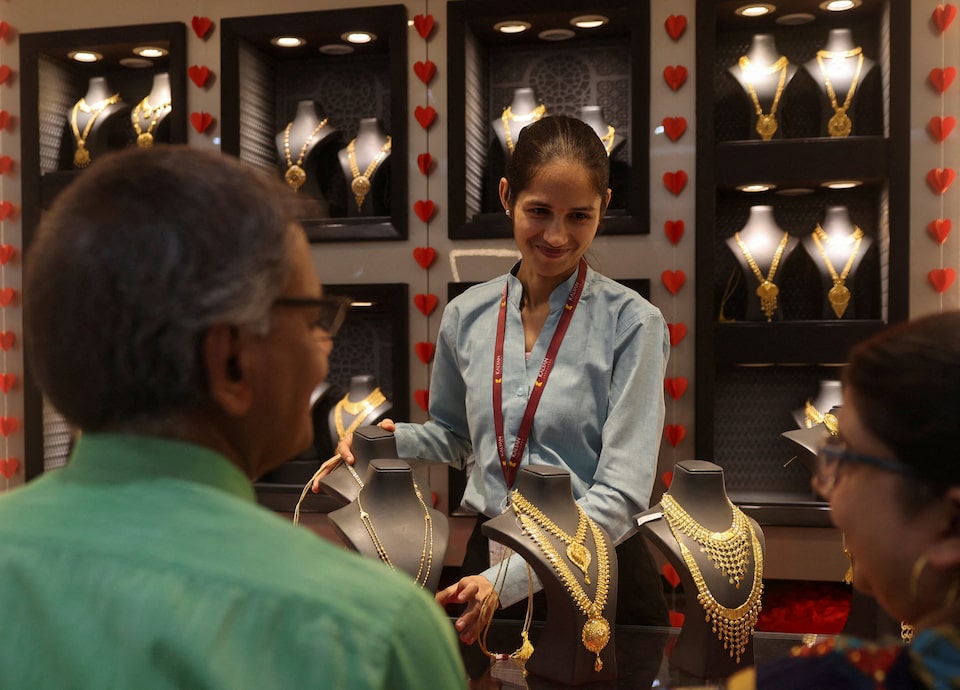
Indians are now spending substantially more on gold jewellery, even as the quantity of gold purchased has seen a marked decline. According to the World Gold Council's (WGC) report, 'Gold Demand Trends: India Focus Q3 2026', jewellery demand fell by 18 per cent year-on-year, totalling 241.1 tonnes during the first nine months of 2026. In contrast, the value of gold purchases witnessed a significant increase of 29 per cent, amounting to Rs 3,618.3 billion.
This disparity highlights a shifting trend influenced by record-high gold prices, suggesting that financial outlay on gold items is now more reflective of elevated prices rather than increased buying volume. The World Gold Council stated, ‘The increase in value was entirely price-led,’ indicating that households are opting to expend more money on gold, despite the smaller amounts being obtained.
The report also underscores a continuing trend observed in the September quarter, where consumption of gold jewellery decreased by 20 per cent year-on-year, totalling 99.9 tonnes. However, this marked an improvement of 33 per cent compared to the preceding April-June quarter. While spending rose by 16 per cent year-on-year in the same quarter, valued at Rs 1,487 billion, high average domestic gold prices have been a central concern for consumers.
In the third quarter of 2026, the average domestic gold price stood at Rs 1,48,891 per 10 grams, approximately 45 per cent higher than the previous year. This surge has left affordability as a vital consideration for buyers. The World Gold Council remarked that, ‘Affordability remained the overriding constraint.’
To adapt to these changes, consumers are increasingly choosing lighter-weight jewellery, lower-carat gold, and pieces adorned with precious stones—resulting in a decrease in the fine-weight gold aspect of their purchases. Data indicates that while buyers might spend a similar or greater amount, they are likely to receive less pure gold than in prior years.
The WGC's consumer survey shed further light on evolving purchasing strategies. Among participants considering changes in their buying behaviour, 77 per cent expressed intentions to downgrade on purity or carats, a rise from 72 per cent in an earlier survey. Additionally, those looking to exchange old jewellery for new pieces increased from 70 per cent to 76 per cent. Interest in using equated monthly instalments (EMIs) and regular gold-saving plans has shown relative stability.
These findings suggest that the high prices of gold are significantly altering not only the quantity of gold that Indians purchase but also how they finance these acquisitions and the types of jewellery they select. The WGC noted, ‘Consumers therefore continued to gravitate towards lighter-weight pieces.’
Looking ahead, while upcoming weddings and festive seasons may bolster jewellery demand, elevated prices are expected to maintain pressure on volume purchases.
Supreme Court Addresses Right to Protest and Impact on Livelihoods

Cyclone Murasu Causes Destruction in Andhra Pradesh

India's Economic Growth Resilient Amidst Global Challenges

Shift in Indian American Support from Republicans Ahead of Midterms
