Supreme Court Addresses Right to Protest and Impact on Livelihoods


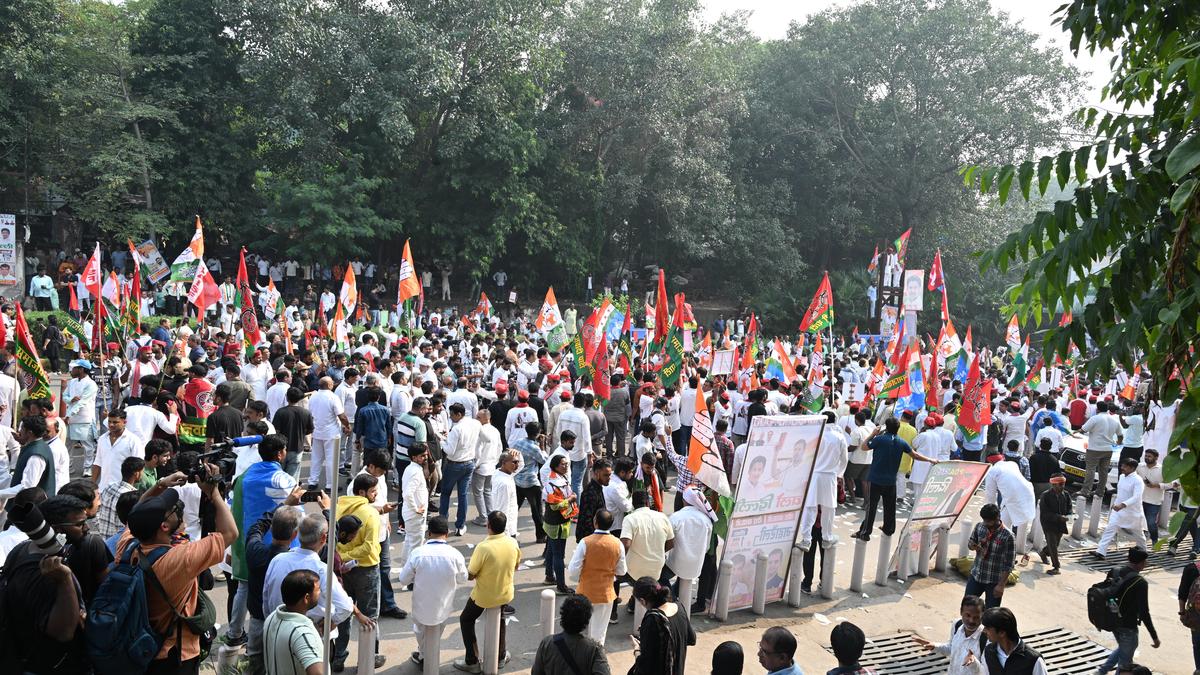
The Supreme Court of India ruled on Tuesday that protests cannot indefinitely occupy specific sites, emphasising the need for temporal limits to ensure other groups can also use these spaces. A bench comprising Chief Justice of India (CJI) Surya Kant, Justice Joymalya Bagchi, and Justice V Mohana presided over the case, which arose from demonstrations held in October in Delhi against Chief Election Commissioner Gyanesh Kumar.
CJI Surya Kant stated, "You cannot occupy a site for all times to come. There are other protesters. Where will the farmers go? Where will the workers go? Where will the trade unions go? Where will the homeless go? Everybody has a right to protest." He further highlighted the detrimental effects protests have on daily wage workers, questioning, "Where does that person go for their daily bread?"
The court expressed concern over the conflicting rights involved: the constitutional right to protest versus the right of individuals to earn a livelihood. CJI Kant articulated the need for a balanced approach, indicating that while the right to protest is fundamental, it should not hinder others from exercising their own rights.
Solicitor General Tushar Mehta remarked on previous instances where protests had overstayed their permitted duration, specifically citing a protest by the Cockroach Janta Party in July, which was allowed for one day but lasted for 17 days without approval. He stressed the importance of respecting legal boundaries regarding protests, especially near significant institutions like Parliament.
Senior Advocate Mukul Rohatgi, representing local traders affected by the protests, highlighted significant economic losses, claiming that the protests resulted in a revenue downturn of ₹2,000 crore. He argued that designated protest spaces often do not serve the immediate communities effectively, stating, "The government must now think and come out with a scheme... This is no longer merely about Jantar Mantar."
The court acknowledged the economic disruptions caused by protests but questioned whether these losses could be solely attributed to demonstrators or were also a result of state-imposed restrictions. Justice Bagchi remarked on the potential impact of barricades and imposed closures on businesses, raising the dilemma of determining the root cause of the economic strain.
In response, Solicitor General Mehta reiterated the adverse effects of unapproved protests on the economy and portrayed them as exacerbating challenges faced by local traders and workers. He warned against allowing mass gatherings to challenge legal frameworks and highlighted the potential for escalated conflicts.
Discussions also encompassed surveillance practices during protests. Advocate Prashant Bhushan raised concerns about privacy rights amid public demonstrations, arguing for clarity on the legal basis for surveillance. Mehta countered by asserting that only CCTV monitoring was in place and pointed to widespread social media live-streaming from influencers as a factor complicating privacy during protests. The court maintained that expectations of privacy could be drastically diminished in public settings, asserting that engaging in public protests entails certain forfeits of privacy rights.
This ruling calls attention to the pressing need for regulatory frameworks governing protests in urban environments. The court's observations underline the necessity for balancing the right to protest with the equally essential rights of daily wage earners and local trade operations, indicating further deliberations may be needed to achieve this equilibrium.
Cyclone Murasu Causes Destruction in Andhra Pradesh

India's Economic Growth Resilient Amidst Global Challenges
Shift in Indian American Support from Republicans Ahead of Midterms

Rahul Gandhi Challenges Prime Minister Modi Over Foreign Links