Putin's Visit to Beijing Highlights China's Diplomatic Role


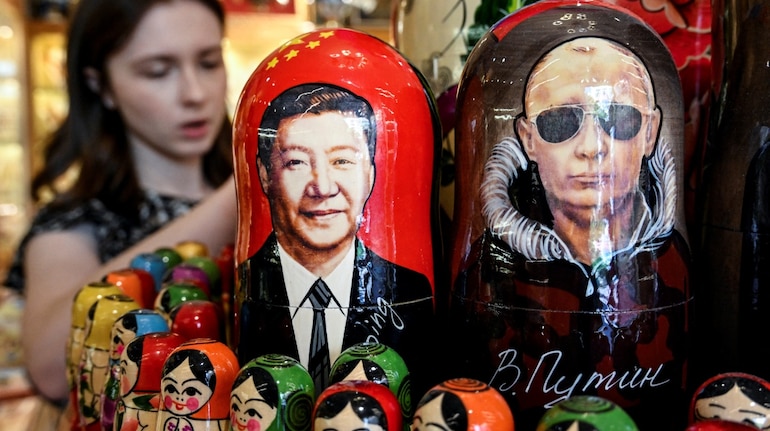
Russian President Vladimir Putin is set to arrive in Beijing on Tuesday evening, aiming to join Chinese President Xi Jinping in marking the 25th anniversary of the 2001 Treaty of Good-Neighborliness and Friendly Cooperation. Analysts indicate that the implications of the Xi-Putin summit extend well beyond this commemorative event and its scheduling.
Putin's visit was announced just a day after United States President Donald Trump concluded his own trip to China, where discussions of trade agreements took place. Despite Trump's optimistic claims regarding trade deals, there appear to be no significant advancements on critical issues such as Taiwan and the ongoing conflict involving Israel and Iran. Analysts assert that this situation works to Putin's advantage, allowing him to confidently engage with Beijing, knowing that the country remains steadfast in its relationship with Russia.
The juxtaposition of these visits showcases China's growing political leverage, positioning the nation as a key player capable of engaging with competing powers on its own terms. As both leaders navigate their relations under the strain of Western sanctions and a shared perception of Trump's foreign policy as unpredictable, they have established a strategic partnership in recent years. However, no major shifts are anticipated during this latest meeting, as analysts highlight a desire to reinforce and deepen their existing bilateral ties rather than forge new ones.
Marina Miron, a postdoctoral researcher in defence studies at King's College London, stated, "I don’t think that there is going to be a major shift. It’s going to be a deepening of bilateral relations when it comes to economic cooperation, business, exchange of military technologies and so on." Oleg Ignatov, a senior analyst at Crisis Group, echoed this view, noting the stability and importance of Sino-Russian relations without any expectation of military alliance.
Both nations are expected to collaborate on joint projects, particularly in the energy sector, with China seeking access to Russian energy resources and Russia relying on Chinese technology for various sectors, including drone production. However, some experts argue that the dynamics at play favour China more significantly in the bilateral relationship. Timothy Ash, an associate fellow at Chatham House, remarked, "Putin needs this more than Xi. Russia is now the junior, dependent partner, following Putin’s disastrous war in Ukraine."
Despite the visible asymmetry in their relationship, Ignatov calls for caution in interpreting the complexities between the two countries solely through a hierarchical framework. Both nations aim to foster a multipolar world, avoiding the establishment of dominant powers that exert undue influence over other states.
The significance of these back-to-back summits lies in the broader context of China's diplomatic strategy. By hosting both Trump and Putin consecutively, China is positioning itself as a crucial mediator and neutral player in an increasingly polarised global landscape. Miron explained, "China is trying to position itself as a mediator, as a kind of neutral player—without any sort of adversaries."
The geopolitical landscape remains influenced by other ongoing conflicts, notably the US-led actions against Iran, which has disrupted global energy markets and presents ramifications for China's economy. Analysts observe that while Russia benefits from short-term disruptions, both countries seek long-term stability and potentially an end to the conflict. Reductions in tensions in this area represent a mutual interest for Moscow and Beijing, even as they maintain channels of support with Iran.
Ash noted that the lack of significant progress from the Trump-Xi talks is a source of satisfaction for Moscow. In light of these developments, he stated that Beijing's position on Iran is not likely to change. Russia’s war in Ukraine is expected to be discussed; however, analysts do not foresee China pressing Moscow towards any particular resolution, instead viewing it as a matter of advocating for mediation without imposing unacceptable demands.
In summary, while Putin's visit to Beijing may not lead to groundbreaking diplomatic outcomes, it underscores China's role as a central player in international affairs, making it impossible to overlook its influence in the current global order.

Flydubai Co-Pilot Allegedly Attempts Terrorist Attack Mid-Flight

Protests in Delhi Demand Resignation of Chief Election Commissioner
Hardened Narco-Trafficking Kingpin Navpreet Singh Deported from Türkiye

Election Commission Initiates Drive to Re-Enrol Omitted Voters