Pakistan Shifts 72 Terror Launchpads as India’s BSF Signals Readiness for Sindoor 2.0


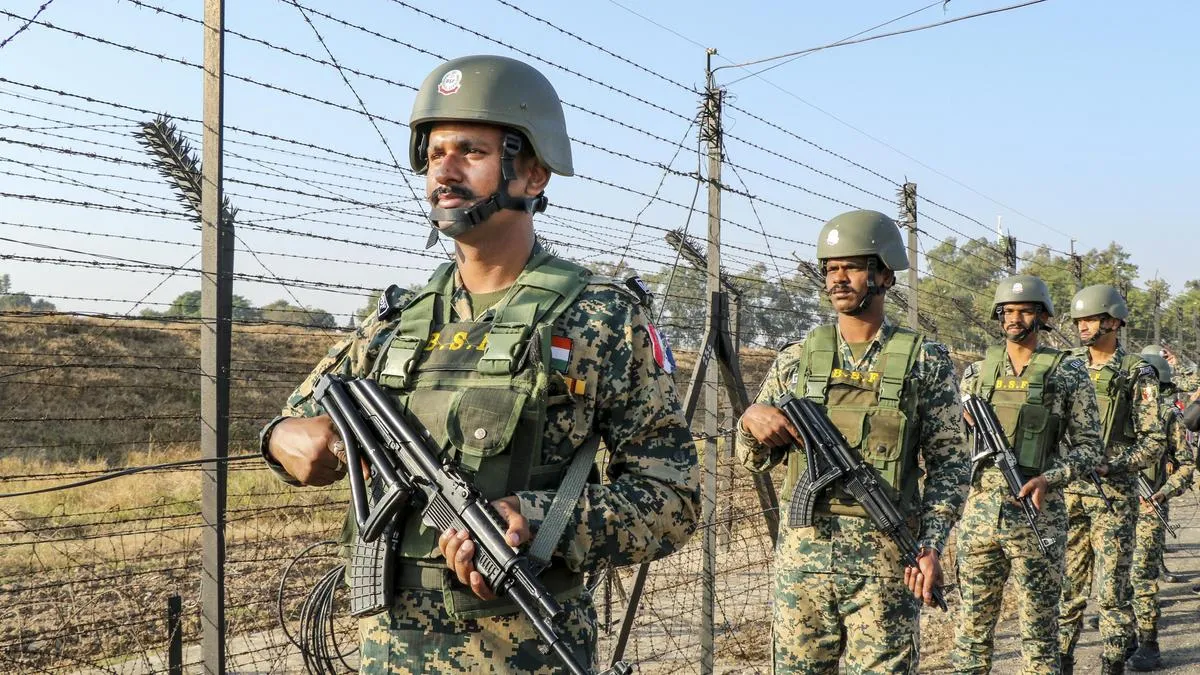
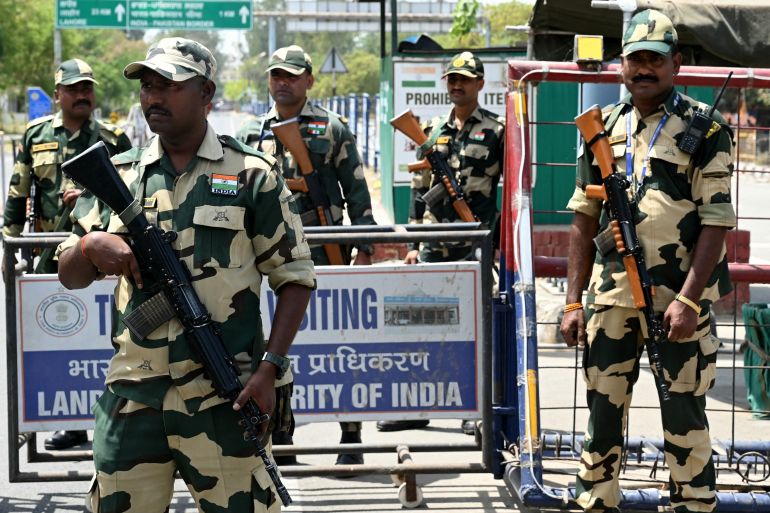
Senior officials of India’s Border Security Force briefed reporters on Saturday, revealing that Pakistan has shifted dozens of terror launchpads away from forward positions following Operation Sindoor, an Indian military action conducted in May in response to the Pahalgam attack that killed 26 people.
The BSF said that these facilities, which are used to station armed groups before they attempt to cross into India, were previously located close to the international border. According to BSF Deputy Inspector General Vikram Kunwar, many of them have now been pushed into what he described as “depth areas” inside Pakistan. He stated that 12 such sites are currently active near Sialkot and Zaffarwal, with another 60 placed further inland.
Kunwar explained that the number of militants present at each location fluctuates, and that individuals are often grouped in small units. “They do not remain there permanently. These launchpads become active only when terrorists are prepared to be pushed into India,” he said, adding that there were no training camps immediately adjacent to the border at present, though such facilities were operating deeper across the Line of Control.
He also noted changes in how groups operate. Previously, organisations such as Jaish-e-Mohammad and Lashkar-e-Taiba were believed to use separate routes. “After Operation Sindoor, they have formed mixed groups,” Kunwar said, explaining that militants from different organisations were now being trained together.
The briefing was attended by BSF Inspector General for the Jammu Frontier, Shashank Anand, who emphasised that the force remains fully prepared should India launch a follow-up operation. “The BSF has considerable experience in conventional and hybrid warfare, whether in 1965, 1971, during the 1999 Kargil conflict, or in Operation Sindoor,” he said. “If we are directed by the Government of India to act again, the damage we inflicted earlier would increase manifold.”
Anand also said that Pakistani Rangers, who temporarily abandoned several posts during Operation Sindoor, have since returned to their positions. He claimed that Pakistan’s communication and surveillance systems, along with more than 100 border posts, suffered significant damage in May, and that recovery efforts on the other side are ongoing. “They have tried to strengthen their defences in some areas, but all their activity remains under our surveillance,” he said.
Emerging security challenges, including the use of small drones for reconnaissance and smuggling, were also highlighted. Anand said that the BSF had been adapting to these developments since 2019. “The aerial dimension has become a part of modern warfare,” he said, referring to conflicts involving Russia and Ukraine, Israel and Palestine, and Armenia and Azerbaijan. He noted that India has installed counter-drone systems and intensified training, supported by partnerships with institutions such as the Indian Institutes of Technology in Delhi and Chennai.
The BSF said that the Indian government has been rolling out new measures to protect populations living near the border in Jammu and Kashmir. This includes constructing additional community bunkers in areas vulnerable to cross-border fire. Anand said civil authorities and the BSF were coordinating closely on these efforts.
He added that the force had restored border infrastructure damaged during severe flooding in August, including fences, outposts and embankments. “Our control rooms are functioning round the clock,” he said, noting that border fencing has been raised, electrified and equipped with modern surveillance tools.
The officer also said India has adopted what he described as a “360-degree approach” to tackling narcotics smuggling and that numerous cross-border tunnels used for infiltration have been discovered and neutralised in recent years. Technologies such as ground-surveillance radar, electro-optical systems and unmanned aerial vehicles are now widely deployed, he said.
Anand stressed that, for the moment, there was no unusual movement of militants along the border that would prompt an immediate alert. However, he reiterated that the BSF continues to monitor developments across the frontier closely and is adjusting its strategy in response to changing conditions. “We are committed to the government’s policy of zero infiltration,” he said. “If we get the chance, we will take proper action.”
Context
Operation Sindoor was launched earlier in 2025 after an attack in Pahalgam, in Indian-administered Jammu and Kashmir, that authorities say involved militants with cross-border links. The operation targeted infrastructure believed to be used by armed groups operating from Pakistani territory. India and Pakistan, both nuclear-armed neighbours, have fought multiple wars and continue to exchange fire across the Line of Control, a de facto boundary dividing the Kashmir region. Tensions have fluctuated over the years, with cross-border infiltration and militant activity often cited by Indian authorities as key concerns along the frontier.

Kerala Initiates Probe into 2006 Suicide Case Involving CEC

Extradition of Sheikh Hasina Feasible, Says Indian High Commissioner

Punjabi Makeup Artist Mad Sandhu Shot Dead in Amritsar

India Achieves Fourth Place at Asian Games 2026 Through Late Success