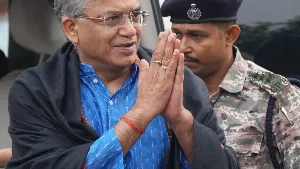
Om Birla Removal Motion Sparks Heated Debate in Lok Sabha


India’s lower house of parliament began debating a motion on Tuesday seeking the removal of Lok Sabha Speaker Om Birla, after opposition parties accused him of favouring the ruling government during parliamentary proceedings.
The resolution, introduced by opposition lawmakers including Congress member Mohammad Jawed, triggered a heated debate in the chamber over parliamentary procedures and the neutrality expected from the Speaker of the House.
Debate begins on removal resolution
The Lok Sabha, the lower house of India’s Parliament, took up the resolution after opposition legislators submitted a formal notice calling for Birla’s removal from office. According to parliamentary procedure, such a motion must receive the backing of at least 50 members before it can be admitted for discussion.
During Tuesday’s session, Jawed read out the notice seeking to introduce the resolution. Lawmakers from several opposition parties, including Congress MPs K Suresh and Mallu Ravi, were among those supporting the proposal.
Once the required number of members stood in support, the motion was formally admitted for debate. Lawmakers have been allotted up to ten hours to discuss the matter.
Congress Deputy Leader in the Lok Sabha Gaurav Gogoi began the discussion, raising questions about the conduct of the Speaker and the broader functioning of parliamentary debate.
Dispute over who should preside
Before the debate began, members argued over who should preside over proceedings while a motion against the Speaker was under consideration.
All India Majlis-e-Ittehadul Muslimeen (AIMIM) leader Asaduddin Owaisi raised a procedural objection, questioning the decision to allow Bharatiya Janata Party lawmaker Jagdambika Pal to chair the session. Owaisi argued that Pal’s appointment to the panel of chairpersons had originally been made by Speaker Birla, raising concerns about neutrality.
However, members of the governing Bharatiya Janata Party (BJP) rejected the objection. BJP MP Nishikant Dubey cited constitutional provisions and parliamentary rules to argue that Pal could preside over the session.
India’s Parliamentary Affairs Minister Kiren Rijiju also dismissed the concern, stating that Pal was fully authorised under parliamentary rules to conduct proceedings while the motion was discussed.
Trinamool Congress (TMC) MP Saugata Roy suggested that the government should formally move a motion to appoint a presiding officer specifically for the debate. The suggestion was not accepted, and Pal continued to chair the proceedings.
Opposition alleges partisan conduct
Opposition lawmakers used the debate to accuse the Speaker of acting in a partisan manner during his tenure.
Trinamool Congress MP Mahua Moitra delivered one of the strongest criticisms, accusing Birla of undermining parliamentary norms and limiting the ability of opposition parties to raise issues in the chamber.
She said the Speaker had repeatedly refused requests for adjournment motions and had presided over a large number of suspensions of opposition lawmakers.
Moitra told the House that Birla had “presided over the liquidation of the functioning of parliamentary democracy”, arguing that the Speaker’s role should be that of a neutral referee in parliamentary debate.
She also criticised the suspension of opposition members in 2023, when around 100 lawmakers were suspended from the Lok Sabha in a single day. According to Moitra, this represented a large proportion of all suspensions recorded in the chamber over the past two decades.
The Trinamool Congress MP also raised concerns about legislative scrutiny, saying that fewer bills were being referred to parliamentary committees, which typically examine legislation in detail before it is passed.
Moitra further argued that opposition members were often prevented from speaking or had their speaking time curtailed, while members of the ruling party were allowed more time during debates.
She also cited several issues that opposition parties say they were unable to raise through parliamentary motions, including security concerns in Parliament and other policy debates.
Government defends Speaker
Members of the ruling Bharatiya Janata Party rejected the accusations and defended Birla’s record as Speaker.
Indian Prime Minister Narendra Modi had earlier voiced support for Birla, stating that the Speaker had worked to include all lawmakers in parliamentary proceedings and remained committed to the principles of the Constitution and parliamentary democracy.
Supporters of the Speaker argue that disciplinary actions taken in the chamber, including suspensions, were necessary to maintain order and ensure that parliamentary business could continue.
They also note that parliamentary rules allow the Speaker to regulate debate and enforce discipline when proceedings become disrupted.
Background to the motion
A motion seeking the Speaker’s removal is relatively rare in India’s parliamentary system. The Speaker of the Lok Sabha is expected to remain politically neutral once elected to the role and to act as an impartial authority in managing debates, enforcing rules and allowing members to speak.
The opposition submitted the notice for the no-confidence motion against Birla the previous week, alleging that his conduct had been “blatantly partisan”.
Historical precedents for such motions are limited, but they are permitted under parliamentary rules as a mechanism for members to challenge the Speaker’s conduct.
Context: Role of the Speaker in Parliament
The Speaker of the Lok Sabha plays a central role in India’s legislative process. The position includes managing debates, interpreting parliamentary rules and ensuring orderly conduct during sessions.
Traditionally, the Speaker is expected to maintain neutrality once elected, even if they originally belonged to a political party.
The current debate in Parliament reflects broader tensions between the government and opposition parties over how parliamentary procedures are being applied.
As the discussion continues in the Lok Sabha, lawmakers are expected to debate both the allegations made against the Speaker and the procedural questions raised during the session before any further steps are taken on the resolution.

India Regulates Natural Gas Supply as Middle East Conflict Disrupts Energy Routes
India Evacuates 67,000 From Gulf as Conflict Raises Security Risks
India Arrests Suspects in Osman Hadi Killing Amid Bangladesh Ties

Indonesia Agrees to Buy BrahMos Missiles From India