India Evacuates 67,000 From Gulf as Conflict Raises Security Risks


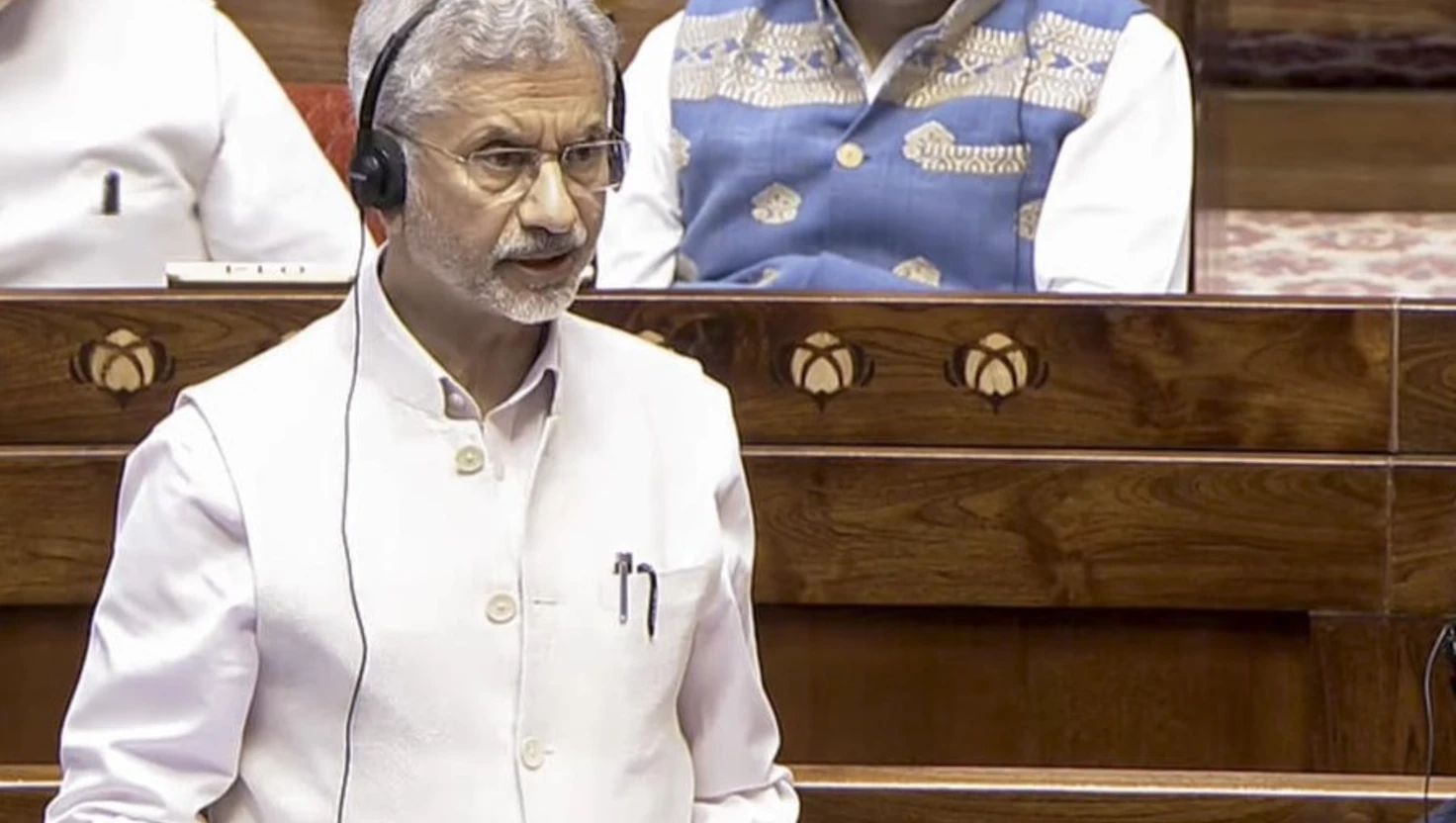
India has evacuated nearly 67,000 of its citizens from Gulf countries as fighting linked to the escalating West Asia conflict disrupts travel and maritime activity, Foreign Minister S. Jaishankar told Parliament on Monday.
Speaking in the Rajya Sabha, the upper house of India’s Parliament, Jaishankar said the government had arranged additional commercial flights and other travel options to bring Indians home while monitoring the broader impact of the crisis on shipping and energy supplies.
The conflict, which began on 28 February, involves hostilities between Israel and the United States on one side and Iran on the other. Attacks have spread across parts of the Gulf region, raising fears that the confrontation could widen and affect regional stability.
Evacuation operations and travel advisories
Jaishankar said India’s diplomatic missions had been working to assist citizens across the region, including relocating people from vulnerable areas and helping them travel through neighbouring countries before returning to India.
“Nearly 67,000 Indian nationals have returned so far through additional commercial flights and other arrangements amid partial airspace openings,” the minister told lawmakers.
The government had earlier issued advisories urging Indian nationals to avoid non-essential travel to Iran and advising those already in the country to remain in contact with the Indian embassy.
According to the Ministry of External Affairs, the embassy in Tehran remains operational and has been providing support to Indian students and workers. Officials have already helped move several students to safer areas as the situation in parts of the region remains uncertain.
Authorities are also assisting Indian nationals who are currently stranded in countries including Qatar and Jordan.
Prime Minister Narendra Modi is closely monitoring developments, Jaishankar said, adding that several government departments are coordinating responses to protect citizens and maintain diplomatic communication with countries in the region.
Concerns over seafarers and maritime attacks
The minister warned that the conflict had begun to affect international shipping routes, with attacks reported on merchant vessels operating in waters near the Gulf.
Indian nationals working in maritime industries have been caught up in these disruptions.
Jaishankar told Parliament that two Indian seafarers had died in incidents involving merchant shipping, while another mariner remains missing.
In response, the Directorate General of Shipping has established a rapid response team to support Indian sailors working on international vessels.
The Ministry of External Affairs has also opened a dedicated control room to monitor the situation and coordinate assistance for Indian nationals in affected areas.
Strategic importance of the Gulf region
India maintains extensive economic and social ties with the Gulf, where millions of Indian citizens live and work.
Government estimates suggest that roughly 10 million Indians reside in Gulf countries, forming one of the largest expatriate communities in the region. A smaller number of Indian students and workers are also based in Iran.
The region is crucial to India’s economy and energy supply, accounting for trade valued at around 200 billion US dollars annually. Several Gulf countries are also major suppliers of crude oil and natural gas to India.
Jaishankar told Parliament that the Cabinet Committee on Security, chaired by Prime Minister Narendra Modi, met on 1 March to review the evolving situation in West Asia. The meeting examined regional security conditions, economic implications and the safety of Indian nationals.
Diplomatic outreach
India has been maintaining contact with governments across the region in an effort to safeguard the Indian community and monitor developments.
Prime Minister Modi has spoken with leaders of the United Arab Emirates, Qatar, Saudi Arabia, Kuwait, Bahrain, Oman, Jordan and Israel. According to Jaishankar, these leaders assured him that Indian citizens living in their countries would be protected.
Jaishankar said he had also held discussions with Iran’s Foreign Minister Abbas Araghchi on 28 February and again on 5 March.
“While attempts have been made, contacts with Iran at the leadership level are obviously difficult at this time,” he told Parliament. “I have, however, spoken to the Iranian foreign minister on 28 February and 5 March. We will continue these high-level conversations in the coming days.”
In a related development, Jaishankar met India’s National Security Adviser Ajit Doval and Chief of Defence Staff General Anil Chauhan in Parliament to assess the security situation and coordinate the government’s response.
Humanitarian gesture and diplomatic stance
Jaishankar also informed lawmakers that an Iranian vessel, IRIS Lavan, had docked at the southern Indian port city of Kochi on 4 March after India granted entry on humanitarian grounds.
The government reiterated that it was calling for restraint and diplomatic engagement among all parties involved in the conflict.
“India is in favour of peace and urges a return to dialogue and diplomacy,” Jaishankar said. “We advocate de-escalation, restraint, and ensuring the safety of civilians. The wellbeing and security of the Indian community in the region is our priority.”
Political reaction in Parliament
The developments were discussed in Parliament amid criticism from opposition leaders who accused the government of not responding strongly enough to the crisis in West Asia.
Opposition members staged protests demanding a detailed discussion on the conflict and its implications for India.
Senior opposition figures, including Congress Party president Mallikarjun Kharge, former Congress leader Rahul Gandhi and Samajwadi Party chief Akhilesh Yadav, joined the demonstrations.
Despite the criticism, the government maintained that its primary focus remained on protecting Indian nationals abroad and safeguarding national interests, particularly energy supplies and trade links with the Gulf.
Context
West Asia remains one of the most strategically important regions for India due to its role in global energy markets and the presence of millions of Indian migrant workers.
Any escalation of conflict in the area can affect shipping lanes, oil supply routes and regional stability. Analysts say prolonged disruption could have wider consequences for international trade and energy prices.
Indian officials have repeatedly emphasised that diplomacy and dialogue are the preferred path to reducing tensions and preventing further escalation in the region.
Kerala Initiates Probe into 2006 Suicide Case Involving CEC
Extradition of Sheikh Hasina Feasible, Says Indian High Commissioner

Punjabi Makeup Artist Mad Sandhu Shot Dead in Amritsar

India Achieves Fourth Place at Asian Games 2026 Through Late Success