Oil Prices Exceed $100 Amid Middle East Conflicts and Attacks


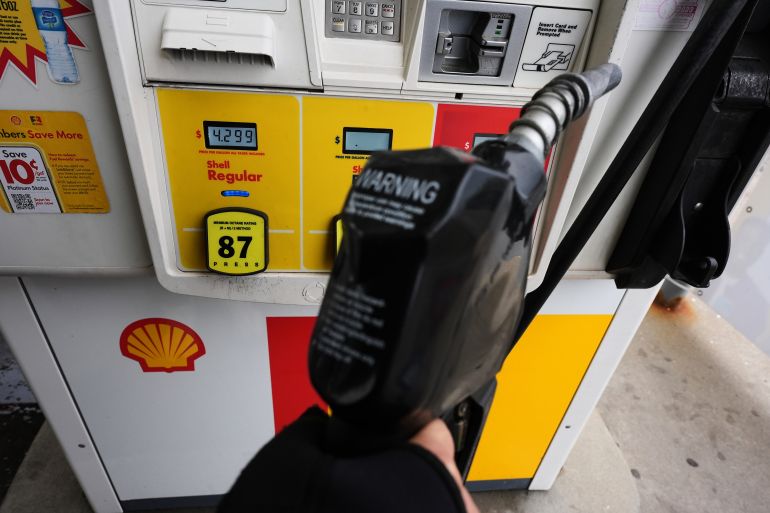
Oil prices have surged for the fifth consecutive day, with benchmark Brent crude surpassing $100 per barrel for the first time since May. This increase is primarily attributed to recent attacks by Yemen's Houthi rebels on Saudi Arabian oil tankers in the Red Sea, amid a backdrop of escalating violence between Iran and the United States.
The Houthis claimed responsibility for striking Saudi oil vessels, raising concerns about potential disruptions to global oil shipping routes. The Red Sea represents a critical maritime passage for oil transport, paralleling the already stressed Strait of Hormuz, which is a vital artery for energy shipments. Analysts caution that any sustained conflict could exacerbate global energy supply issues.
Susannah Streeter, Chief Investment Strategist at Wealth Club, commented, "Investors are in a wary mood… fresh jitters about the ongoing energy crunch are affecting market sentiment." She added that with both the Strait of Hormuz and the Red Sea facing increasing tensions, there are fears that essential energy routes could be severely impacted, potentially keeping oil prices elevated in the near term.
The ongoing conflict between Iran and the United States is substantially influencing this situation. Following a ceasefire that had been agreed upon in mid-June, hostilities have started to intensify once again, particularly around the strategically significant Strait of Hormuz. Reports indicate that the United States military has conducted continuous strikes on Iranian military targets over recent nights, while Iran has responded by targeting U.S. allies in the region.
The Islamic Revolutionary Guard Corps (IRGC) of Iran has asserted control over the Strait of Hormuz, declaring it “completely closed.” They have stated that no tankers would be allowed to navigate through this critical passage without coordination with Iranian authorities.
Financial analysts at Goldman Sachs have projected that if the current disruptions persist, Brent crude could potentially exceed $120 per barrel by the fourth quarter of this year and average $100 in 2024. This prediction is based on concerns surrounding both the Strait of Hormuz and another vital shipping route, the Bab al-Mandeb Strait. Goldman Sachs further noted that rising oil prices could be sustained through July and August as global inventories decline, influenced by reduced production in the Middle East and seasonal travel demand.
As the dynamics in the Middle East continue to evolve, experts advise that both investors and consumers brace for potential higher energy prices, which could also contribute to inflationary pressures in various economies around the world.

Kerala Initiates Probe into 2006 Suicide Case Involving CEC

Extradition of Sheikh Hasina Feasible, Says Indian High Commissioner

Punjabi Makeup Artist Mad Sandhu Shot Dead in Amritsar

India Achieves Fourth Place at Asian Games 2026 Through Late Success