Nepal Flood Prompts HKH Lawmakers to Call for Climate Cooperation


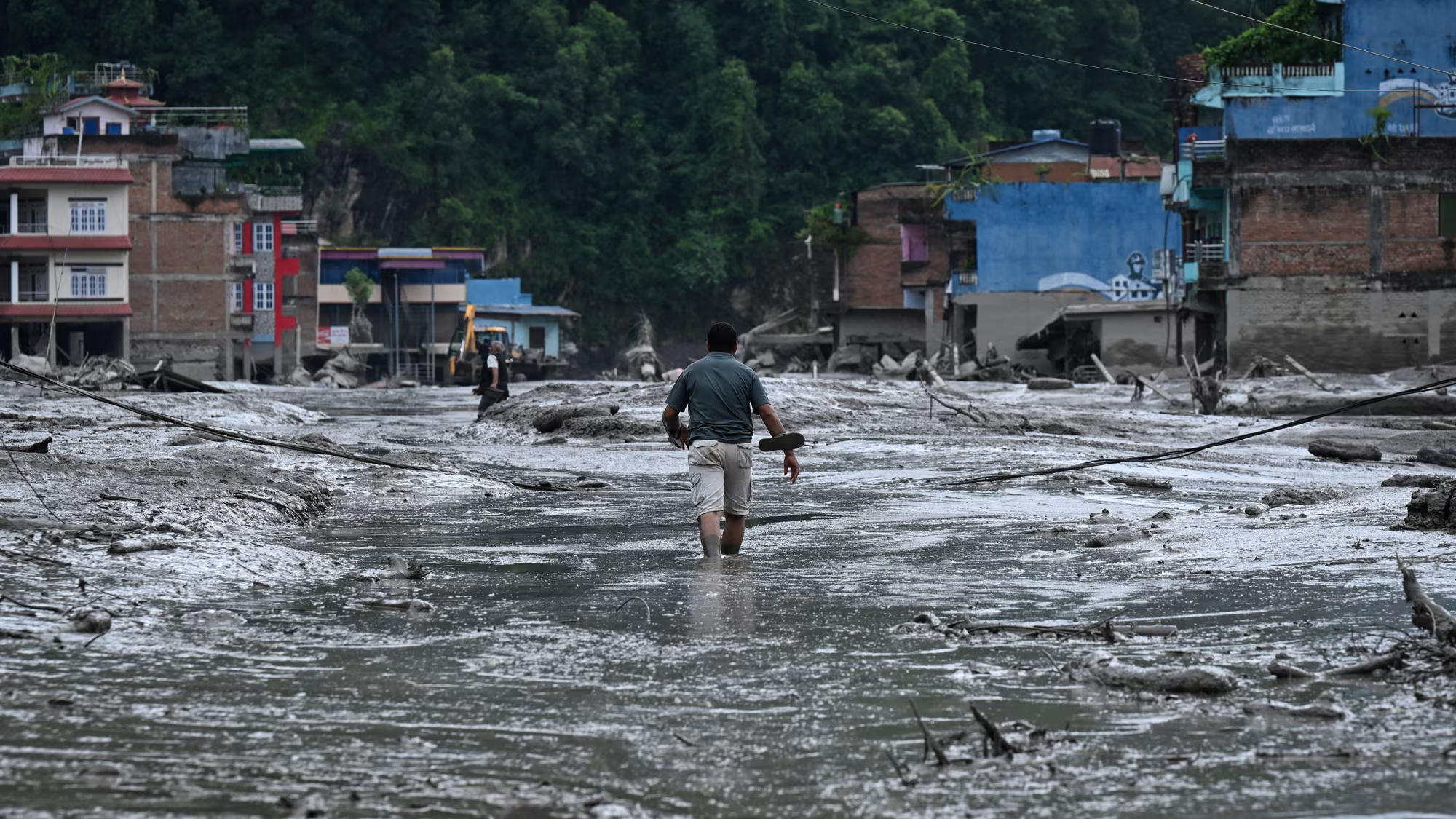
A devastating flood in Nepal's Rasuwa district has intensified calls for enhanced regional cooperation on climate-related risks among lawmakers from the Hindu Kush Himalaya (HKH) region. On August 26, 2026, speakers at the 2nd HKH Parliamentarians’ Meet in Thimphu, Bhutan, emphasised the necessity of collective action, climate-adaptive legislation, and improved cross-border preparedness to protect vulnerable communities. The meeting, hosted by the International Centre for Integrated Mountain Development (ICIMOD), highlighted that the Rasuwa disaster illustrates the urgent need for cohesive strategies that transcend national boundaries.
Lawmakers from the eight countries of the HKH region convened to share insights about emerging climate threats. They underscored that climate impacts are affecting communities across borders, necessitating a coordinated response rather than isolated national efforts. Deputy Speaker Sangay Khandu of the National Assembly of Bhutan opened the meeting with a clear message about the role of parliamentarians in transforming climate commitments into actionable policies. He stated, “Resilience cannot live in scientific reasoning anymore… It is parliamentarians who have the power to ensure it.”
The two-day meeting aimed to bolster political commitment and collaboration regarding climate action, resilience, and inclusive development. Pema Gyamtsho, Director General of ICIMOD, commented on the momentum from the first HKH Parliamentarians’ Meet in Kathmandu in 2025, which successfully initiated regional parliamentary dialogue. He remarked, “Let us not forget that the decisions we make, or do not make, today will affect generations in the future.”
Representatives shared perspectives on the significance of integrating climate adaptation into national development strategies. Muhammad Nawshad Zamir, Member of Parliament of Bangladesh, pointed out that the National Adaptation Plan illustrates a robust framework for resilience but emphasised the need for regional collaboration to maximise effectiveness. Additionally, Shezra Mansab Ali Khan Kharal, State Minister of Pakistan, highlighted the importance of embedding climate adaptation into development planning.
The HKH region, stretching approximately 3,500 kilometres across eight nations—Afghanistan, Bangladesh, Bhutan, China, India, Myanmar, Nepal, and Pakistan—serves as a critical area for food, water, and energy security for nearly two billion people. Its diverse ecosystems are also facing significant threats from climate change, pollution, and biodiversity loss. The 2nd HKH Parliamentarians’ Meet serves as a crucial platform for legislators to work toward actionable solutions that will foster resilience in the face of these growing threats.
Kerala Initiates Probe into 2006 Suicide Case Involving CEC

Extradition of Sheikh Hasina Feasible, Says Indian High Commissioner

Punjabi Makeup Artist Mad Sandhu Shot Dead in Amritsar

India Achieves Fourth Place at Asian Games 2026 Through Late Success