Mojtaba Khamenei Named Iran’s Supreme Leader Amid War


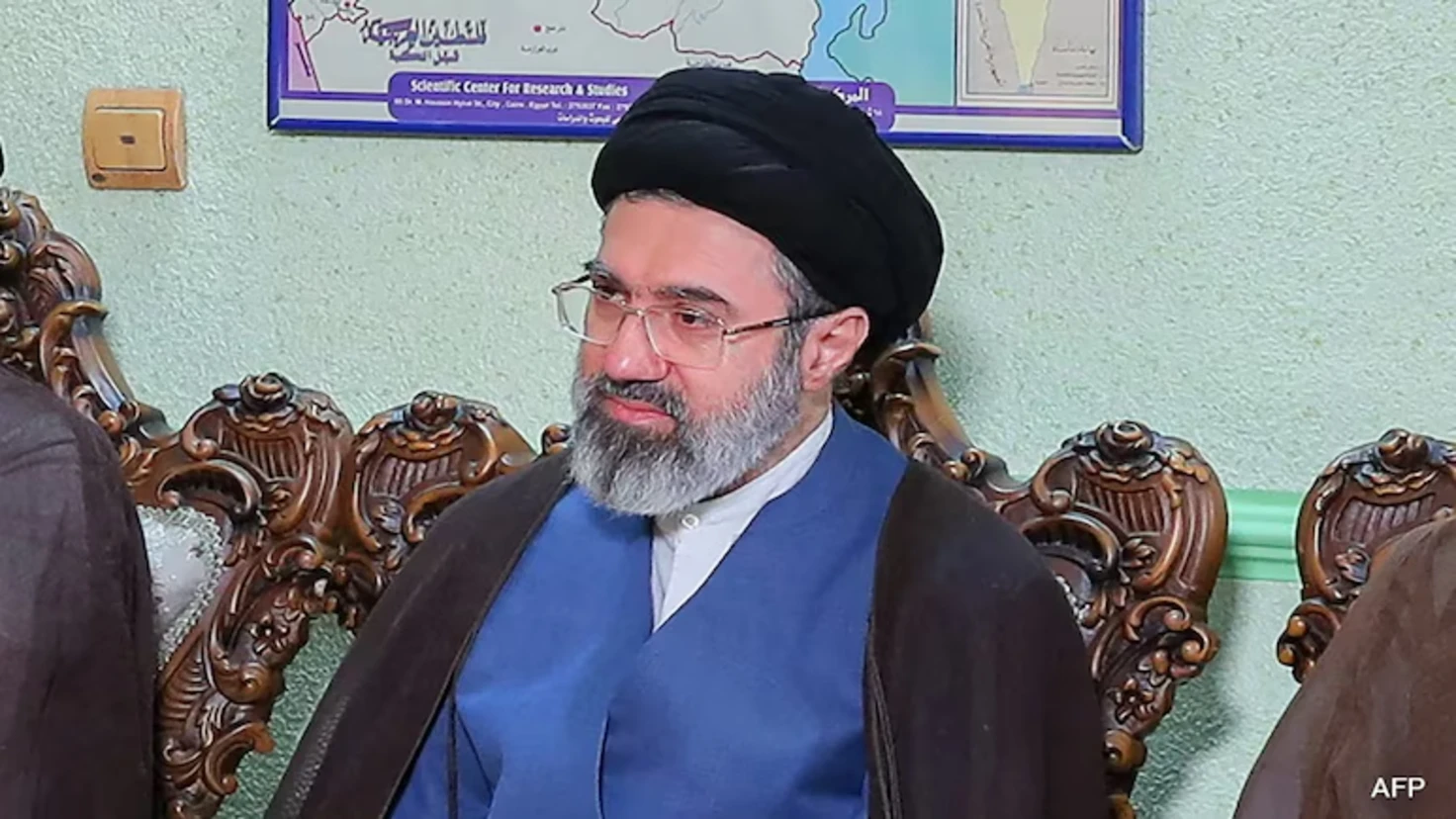
Iran has appointed Mojtaba Khamenei as the country’s new Supreme Leader following the death of his father, Ayatollah Ali Khamenei, during an escalating regional conflict, marking a significant transition in the leadership of the Islamic Republic.
Iran’s Assembly of Experts confirmed the selection of the 56-year-old cleric as the head of state, placing him at the apex of the country’s political and religious authority while the nation faces continued military confrontation and economic uncertainty.
Leadership transition during wartime
The leadership change comes as hostilities involving Iran, Israel and the United States enter their second week, with repeated strikes reported across the region.
The war has raised concerns about broader regional instability, affecting energy markets and strategic shipping routes in the Gulf.
The appointment of Mojtaba Khamenei signals continuity in Iran’s governing structure, though analysts say the distribution of power inside the country has already been shifting away from a single dominant leader.
For decades, the position of Supreme Leader has been central to Iran’s political system under the doctrine known as Velayat-e Faqih, or the Guardianship of the Islamic Jurist. The role grants the leader authority over the armed forces, judiciary and key state institutions.
However, experts say decision-making has gradually become more collective, particularly during periods of crisis.
Babak Vahdad, a researcher specialising in Iranian political dynamics, said the system had already been evolving before the leadership change.
“The Islamic Republic had been evolving toward a system in which power was increasingly exercised through interlocking networks rather than through the purely personal authority of one office,” he told Newsweek.
He added that the death of Ayatollah Ali Khamenei during wartime would accelerate that shift.
Growing influence of security institutions
Analysts say Iran’s security and intelligence institutions are likely to play a larger role in national decision-making during the conflict.
Among the most influential bodies is the Islamic Revolutionary Guard Corps, a powerful military organisation created after the 1979 Iranian Revolution to defend the Islamic Republic.
The Revolutionary Guard has significant influence over Iran’s military strategy, regional operations and economic activities.
According to analysts, institutions that control military force and intelligence tend to assume greater authority during wartime, particularly when rapid operational decisions are required.
Vahdad said that crisis conditions often strengthen organisations that possess operational power.
“In practical terms, this almost certainly increases the relative weight of actors such as the Revolutionary Guard and the intelligence-security apparatus,” he said.
Under this structure, the office of the Supreme Leader may remain the central source of political and religious legitimacy, but governance could increasingly involve coordination between several powerful institutions.
Background of Mojtaba Khamenei
Mojtaba Khamenei has long been regarded as an influential figure within Iran’s political system, despite holding few high-profile public offices during his father’s tenure.
Observers say he has maintained close relationships with conservative clerical circles and the Islamic Revolutionary Guard Corps.
These ties are widely considered crucial because the support of security institutions plays a key role in sustaining authority within Iran’s political structure.
Following the announcement of his appointment, the Revolutionary Guard reportedly pledged allegiance to the new leader, reinforcing his position at a time of conflict.
Internationally, Mojtaba Khamenei has been a controversial figure.
The United States government imposed sanctions on him in 2019, alleging that he represented his father’s interests and worked closely with Iranian security services in advancing government policies.
Financial investigations by Western media organisations have also alleged that networks connected to him were involved in international property investments through complex financial structures, though Iranian officials have rejected many such accusations.
Reaction from the United States
The leadership change has also prompted responses from international figures, including United States President Donald Trump.
In comments to reporters at the White House, Trump criticised the decision to appoint Mojtaba Khamenei, suggesting that a leader who continues the policies of the previous administration could prolong tensions.
Trump said the appointment was “unacceptable” and argued that Iran needed leadership capable of restoring stability.
When asked who might be an alternative candidate, he said that many potential figures had already died during the conflict.
Analysts say such statements from foreign leaders can have complex effects within Iran’s domestic politics, sometimes strengthening support for national leadership among political elites.
Regional tensions and economic impact
The leadership transition comes at a time of heightened geopolitical uncertainty.
Military operations linked to the conflict have targeted infrastructure and strategic locations across the region, raising fears of a wider confrontation.
Global energy markets have reacted strongly to the instability.
Brent crude oil prices have surged above 100 US dollars per barrel, reaching their highest level in several years as traders react to the possibility of disruptions in oil supply from the Middle East.
The increase reflects concerns that attacks on energy infrastructure or shipping routes could affect global supply chains.
Context
Iran’s political system combines religious authority with state institutions, making the role of Supreme Leader one of the most powerful positions in the country.
Since the establishment of the Islamic Republic in 1979, only two individuals had held the position before Mojtaba Khamenei: Ayatollah Ruhollah Khomeini, the founder of the republic, and his successor Ayatollah Ali Khamenei.
The appointment of Mojtaba Khamenei therefore represents only the third leadership transition in the history of the Islamic Republic.
However, analysts say the current geopolitical environment and the expanding influence of security institutions may shape the way authority is exercised in Iran in the coming years.
As the regional conflict continues, the country’s leadership structure is expected to face significant pressure while balancing military strategy, domestic stability and international relations.
Kerala Initiates Probe into 2006 Suicide Case Involving CEC
Extradition of Sheikh Hasina Feasible, Says Indian High Commissioner

Punjabi Makeup Artist Mad Sandhu Shot Dead in Amritsar
India Achieves Fourth Place at Asian Games 2026 Through Late Success