Mamata Banerjee Accuses Election Commission of Bias in West Bengal


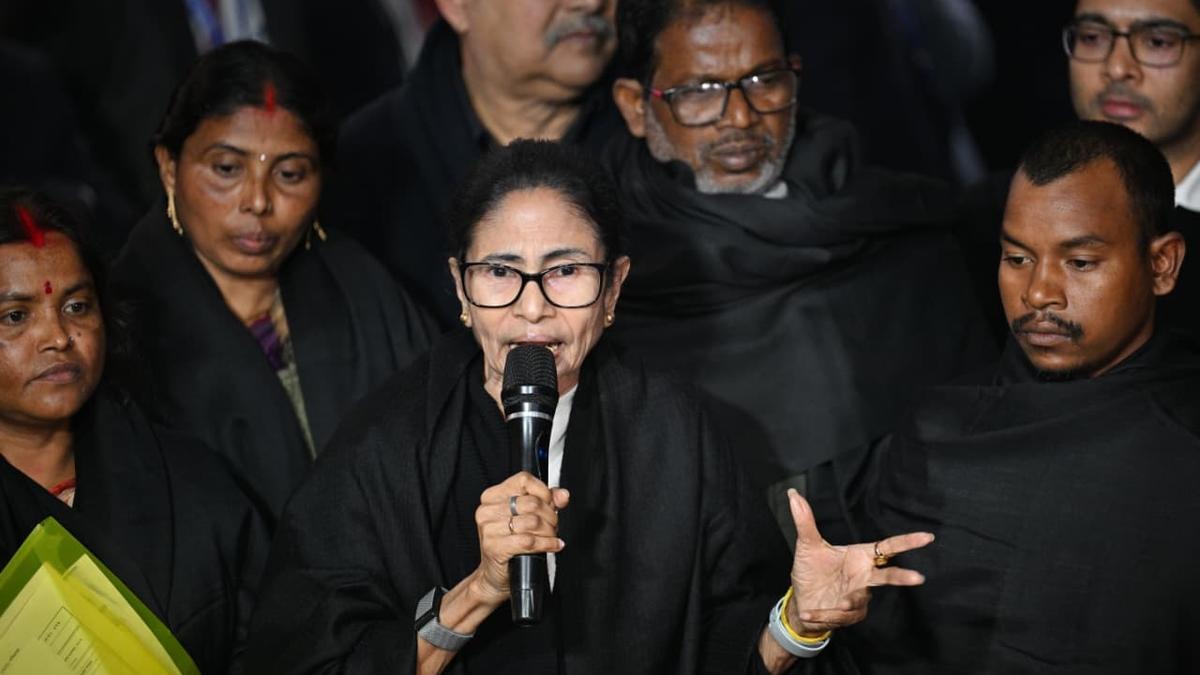
West Bengal Chief Minister Mamata Banerjee has expressed her strong discontent with the Election Commission of India (ECI) following a meeting with Chief Election Commissioner Gyanesh Kumar on 2 February 2026. After the meeting, which she described as disrespectful, Banerjee claimed that she was ‘insulted and humiliated’ by the commission’s leadership.
During this encounter, Banerjee was accompanied by members of the Trinamool Congress party and twelve voters from West Bengal, including individuals whose names were removed from the electoral rolls under the Special Intensive Revision (SIR) process. This action has been a point of contention for Banerjee, as she highlighted that five of those present were wrongly declared deceased yet were very much alive.
As a form of protest, the West Bengal delegation wore black shawls to the meeting. Banerjee accused the ECI of acting in accordance with the ruling Bharatiya Janata Party (BJP) and asserted that the removal of approximately 58 lakh voters from the electoral listings was not only unjust but part of a deliberate scheme to undermine her state.
‘Why was SIR not executed in BJP-ruled states like Assam?’ she questioned. Her comments encapsulated concerns that the scrutiny was disproportionately affecting states governed by opposition parties, namely West Bengal, Tamil Nadu, and Kerala.
The Chief Minister acknowledged that her party did not oppose the SIR process fundamentally; however, she called for its implementation to be more structured and not executed in haste, especially ahead of elections. She further demanded that the process should have exempted those that are election-bound.
‘If you had to do SIR, you should have left the election-bound states out of it and undertaken it with proper planning,’ she stated, criticising the lack of consistency in the commission’s actions across states.
Banerjee's claims about the ECI’s approach come amid allegations of authoritarian tactics. “You have the power of the BJP. We have the power of the people. We boycotted the meeting,’ she said, emphasizing her frustrations over the apparent arrogance displayed by Commissioner Kumar.
Moreover, she raised serious concerns over the documentation requirements stipulated by the ECI for voters, asking rhetorically whether prominent political figures could comply with such requests concerning their parents’ birth certificates.
In a bid to bring attention to the situations affecting voters, she claimed more than 150 individuals, including local electoral officers, have died during the SIR initiatives. ‘Some of these voters were declared dead, yet they are here with us,’ she noted poignantly, urging for recognition of their plight.
While Banerjee asserted her respect for the institution of the Election Commission, she denounced the current leadership, stating, ‘As long as he remains in the chair, it is dangerous for the country’.
In her earlier statements, she alleged that individuals from West Bengal had experienced intimidation while attempting to voice their concerns at the Commission and questioned the strong police presence outside West Bengal’s State guest house in New Delhi, where some affected families were gathered.
The incident has raised broader questions about the integrity of electoral processes in India, especially concerning how they are managed in politically sensitive regions. With the election atmosphere brewing, Banerjee's accusations set the stage for what could be an intense political discourse leading up to the elections.
Indian Government Declares Shahzad Bhatti Network a Terrorist Outfit
PM Modi Helps Former Schoolmate Recover Land After Long Dispute
Naval Collision in Arabian Sea Heightens India-Pakistan Tensions

Telangana CM Launches Inquiry Into Alleged Land Irregularities