Pakistan forfeit India match at 2026 T20 World Cup


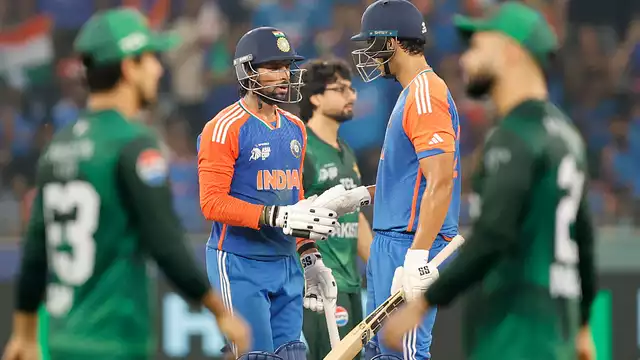
The Government of Pakistan said on Sunday that it had approved the national team’s participation in the ICC Men’s T20 World Cup 2026, scheduled to run from early February to early March, but instructed players not to take the field for the match against India on 15 February.
In a statement issued on the government’s official social media account, it said: “The Government of the Islamic Republic of Pakistan grants approval to the Pakistan Cricket Team to participate in the ICC World T20 2026. However, the Pakistan Cricket Team shall not take the field in the match scheduled on 15th February 2026 against India.”
The announcement brought an end to days of speculation over whether Pakistan would withdraw entirely from the tournament or selectively boycott matches. Officials confirmed that Pakistan’s squad would travel to Sri Lanka, one of the event’s co-hosts, where all of the team’s group matches have been scheduled.
The Pakistan Cricket Board, which governs the sport in the country, had earlier said a final decision would be taken following consultations with the government. It is understood that board chairman Mohsin Naqvi met Pakistan’s Prime Minister, Shehbaz Sharif, shortly before the decision was made public.
No official reason was provided for the refusal to play India, but the move follows weeks of tension at the International Cricket Council, the sport’s global governing body. Pakistan had strongly supported Bangladesh after the latter raised concerns about playing matches in India and requested an alternative venue. Bangladesh were later removed from the tournament after declining to travel, a decision that Pakistan criticised as unfair.
Mr Naqvi had accused the ICC of applying double standards and favouring India, the world’s largest cricket market. Pakistan was reportedly the only board to openly back Bangladesh’s request at an ICC meeting on the issue.
The India–Pakistan fixture is widely regarded as the most commercially valuable match in international cricket, regularly attracting hundreds of millions of television viewers worldwide. Since 2012, the ICC has ensured that the two sides are placed in the same group at global tournaments, even as diplomatic relations between the neighbouring countries have deteriorated.
India and Pakistan have not played a bilateral cricket series for more than a decade, with meetings restricted to ICC events and continental tournaments. If Pakistan’s decision stands, the 2026 T20 World Cup will become the first men’s ICC tournament since 2010 not to feature an India–Pakistan match in the group stage.
Pakistan have been drawn in Group A alongside India, the Netherlands, the United States and Namibia. They are scheduled to open their campaign against the Netherlands in Colombo on 7 February, followed by matches against the United States on 10 February and Namibia on 18 February.
Under ICC playing regulations, a team that forfeits a match is deemed to have lost it, with the opposing side awarded the points. Pakistan will therefore concede two points to India from the abandoned fixture.
The forfeiture will also affect Pakistan’s net run rate, a statistical measure often used to separate teams tied on points. ICC rules state that the defaulting team’s net run rate is calculated as if it had been dismissed for zero runs in the full quota of overs, while the non-defaulting team’s net run rate remains unchanged.
There has been no immediate comment from the ICC on how it will respond to Pakistan’s decision. The governing body faces a significant challenge in managing the commercial and logistical impact of losing its most anticipated group-stage match, particularly with broadcast schedules and sponsorship agreements built around the fixture.
Indian officials have not publicly commented on Pakistan’s announcement. In previous disputes, India has maintained that sporting decisions at ICC events should be handled by the governing body and host organisers.
Despite the boycott of the India match, Pakistan’s participation in the rest of the tournament appears unaffected. The team announced its squad within the ICC’s deadline, signalling that a full withdrawal was unlikely.
Questions also remain about what would happen if India and Pakistan were to meet later in the competition, such as in a semi-final or final. No guidance has yet been issued on whether Pakistan would extend its boycott beyond the group stage.
Context
The decision highlights how political tensions continue to shape cricketing ties in South Asia, where the sport carries deep symbolic and commercial significance. For the ICC, the episode underlines the difficulty of balancing governance, security concerns and the competing interests of member boards.
For Pakistan, forfeiting the India match carries a competitive cost, potentially harming its chances of progressing from the group stage. It also sets a precedent that could influence future tournaments, particularly if similar disputes arise over venues or participation.
As preparations for the 2026 T20 World Cup continue, the focus will now turn to how the ICC manages the fallout from the boycott and whether further diplomatic or sporting negotiations can prevent disruption later in the tournament.
India to Supply Nepal with Daily Electricity After Flood Damage

US Space Force confirms weapons deployed in space orbit

Maruti Suzuki Exports One Lakh Units of Jimny and Fronx to Japan
China's Foreign Minister Urges Strengthening International Ties
