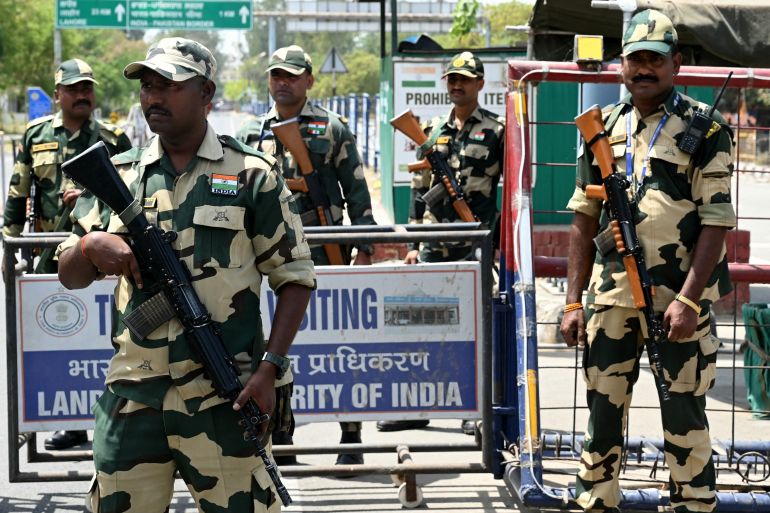
Jaishankar Discusses India's Neighbourhood Policy Amid Tensions


NEW DELHI: India's External Affairs Minister Subrahmanyam Jaishankar recently addressed the nation's neighbourhood policy, underscoring the country's right to defend itself against persistent threats. His remarks were made during a speech at the Indian Institute of Technology Madras and were interpreted as a critique directed towards Pakistan.
Jaishankar's comments come in the wake of escalating tensions between India and Pakistan, particularly following a terrorist attack in Pahalgam, Jammu and Kashmir, which claimed the lives of 26 civilians. The Indian government has accused Pakistan of supporting terrorism in the region, a claim that has exacerbated already strained bilateral relations.
"You can have bad neighbours... unfortunately, we do," Jaishankar stated, referencing the ongoing challenges India faces with its western neighbour. He highlighted that a country that engages in terrorism poses significant risks to its neighbours, stating, "When you have bad neighbours, if you look to the one to the west... we have a right to defend our people against terrorism. We will exercise that right."
In his speech, Jaishankar also reiterated India's position regarding external mediation in the India-Pakistan conflict, seemingly dismissing claims made by former United States President Donald Trump regarding his willingness to mediate. He asserted, "How we exercise that right is up to us. Nobody can tell us what we should or should not do. We will do whatever we have to do to defend ourselves."
The minister further elaborated on the significance of goodwill in international relations, specifically referencing the Indus Waters Treaty, a water-sharing agreement established between India and Pakistan. Jaishankar noted that long-standing hostility undermines mutual benefits, stating, "Many years ago, we agreed to a water-sharing arrangement, but if you had decades of terrorism, there is no good neighbourliness... You can't say, 'Please share water with me, but I will continue terrorism with you.' That's not reconcilable."
Jaishankar's comments reflect a broader sentiment within the Indian government regarding its foreign policy in South Asia. During the same address, he also drew a contrast between 'good neighbours' and 'bad neighbours,' indicating that India's approach is guided by common sense and mutual respect.
In a related engagement, Jaishankar had recently attended the funeral of Khaleda Zia, Bangladesh's first female prime minister, where he conveyed condolences from Indian Prime Minister Narendra Modi to Tarique Rahman, Zia's son and acting chairperson of the Bangladesh Nationalist Party.
While discussing India's interactions with 'good neighbours', Jaishankar emphasised India's commitment to fostering relationships based on cooperation, stating, "If you have a neighbour who is good to you... your natural instinct is to be kind and to help that neighbour. If nothing else, you will say hello, try to build friendships and bonding, and that is what we do as a country."
Jaishankar reaffirmed India's role in providing support to its neighbours during crises, such as vaccine distribution during the COVID-19 pandemic and assistance to Sri Lanka during its economic difficulties. He concluded by asserting that India will continue to act in its own interest while navigating the complexities of regional relationships and security concerns.
Kerala Initiates Probe into 2006 Suicide Case Involving CEC
Extradition of Sheikh Hasina Feasible, Says Indian High Commissioner
Punjabi Makeup Artist Mad Sandhu Shot Dead in Amritsar
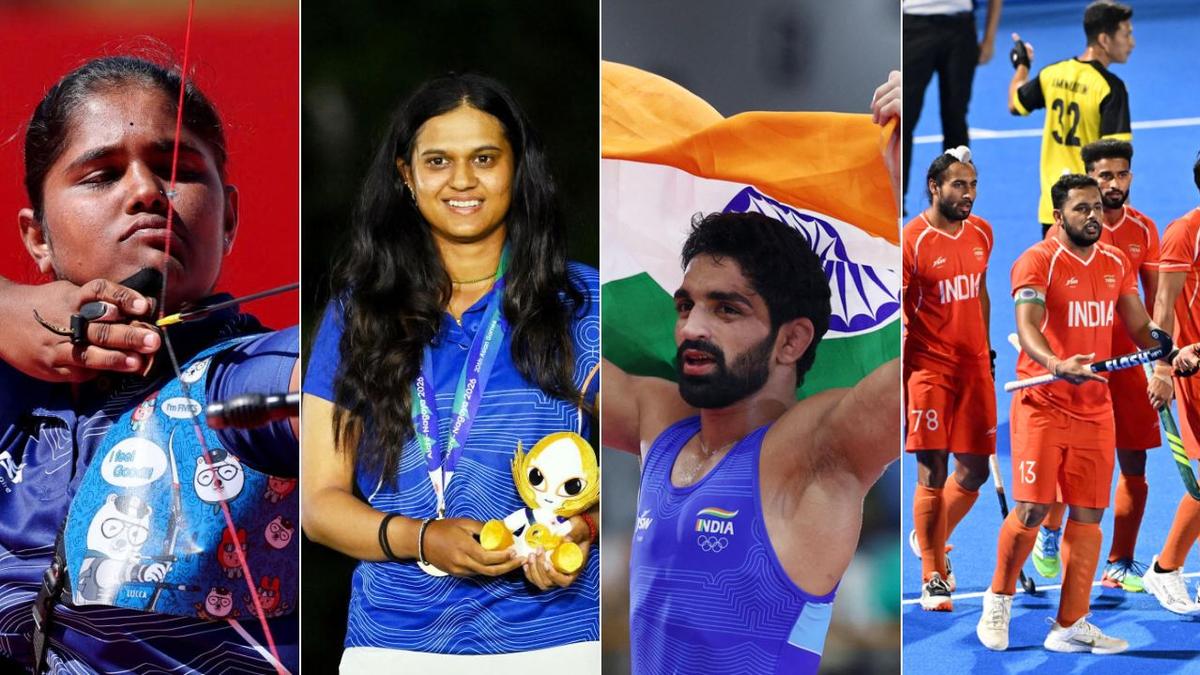
India Achieves Fourth Place at Asian Games 2026 Through Late Success