Italy Implements Border Controls with Spain Amid Ceuta Migrant Crisis


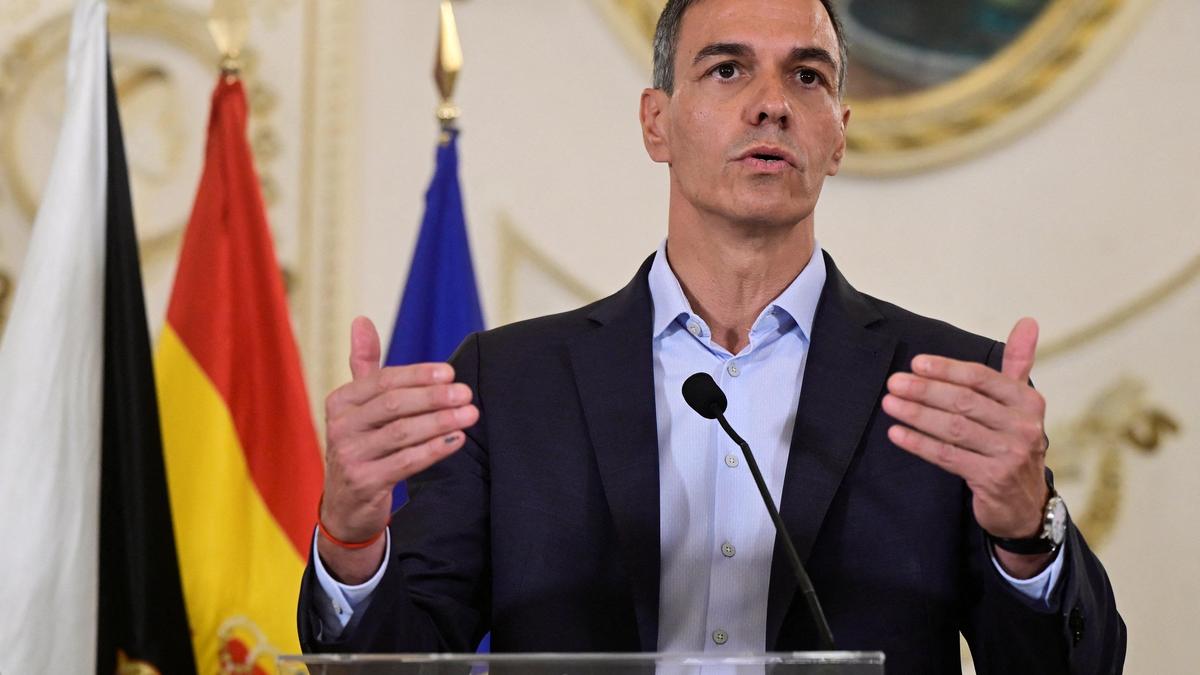
Italy has announced the suspension of free movement with Spain in response to a significant influx of migrants into the Spanish enclave of Ceuta from Morocco. This decision, made on July 30, follows reports indicating that over 60,000 individuals crossed into Ceuta recently, with 72 confirmed deaths during the crossing.
Ceuta's president, Juan Jesus Vivas, reported that between 3,000 and 5,000 migrants are still within the enclave, while the majority have returned to Morocco. Italy's reintroduction of border controls, which affects travel primarily by air and sea due to the lack of a land border, has led to concerns about the Schengen Agreement, which facilitates the free movement of people across 29 member states.
Experts suggest that the move by Italian Prime Minister Giorgia Meloni’s government is as much political as it is practical. Davide Colombi, a researcher at the Centre for European Policy Studies, stated that while Italian media suggested a suspension of Schengen, it is not feasible to expel a country from the agreement. Colombi clarifies that member states can only temporarily reintroduce internal border controls, which is a common occurrence.
The Schengen Agreement, established in 1985, allows for seamless travel across its member nations. Nevertheless, several countries, including Austria, Denmark, and Sweden, have implemented various forms of internal border checks since the European refugee crisis peaked in 2015.
Eleonora Testi, a senior legal officer at the European Council on Refugees and Exiles, highlighted that Italy's action marks a significant precedent as it unilaterally reinstates controls based on migrant arrivals from a country without a direct border, emphasising that the motivations behind the move may be politically driven.
Rights organisations have described Italy's decision as political theatre, asserting that the government attempts to appear tough on migration while predominantly impacting tourists and visa holders travelling from Spain to Italy. Chiara Catelli from the Platform for International Cooperation on Undocumented Migrants (PICUM) referred to the measure as a strategic manipulation of EU law.
Following Italy's announcement, 22 EU member states signed a letter supporting Italy's position, indicating a shift towards increasing solidarity among nations over migration issues. However, Testi drew a contrast with prior instances, such as Poland's suspension of asylum rights, noting a disparity in EU responses based on political alignments.
As migration policies across Europe become stricter, Spain’s government has pursued a relatively liberal stance, allowing undocumented migrants to apply for legalisation. This approach attracted over a million applications, highlighting the differing national strategies regarding migration.
Looking ahead, upcoming elections in Italy, Spain, and France may further influence migration policies across Europe. Experts warn that a potential shift to more right-leaning governments could lead to decreased solidarity and coordination among EU states when faced with future migration surges.
In conclusion, the factors leading to the recent Ceuta crossings remain debated among analysts, but the response from the Italian government reflects broader trends in European migration politics. With the European Pact on Migration and Asylum now applicable, the effectiveness of these policies will be tested against the realities of increasing migratory pressures.
US Approves Visa for Iranian Delegation Amid Ongoing Conflict

Election Commission Restricts TMC Use of Name and Symbol in Bypolls

India Revises Passport Rules for Minors Under 15 Years Old

World's Highest Flower Fields Open in Leh, Ladakh at 10,600 Feet