Israel and India Set to Finalise $10 Billion Defence Agreements


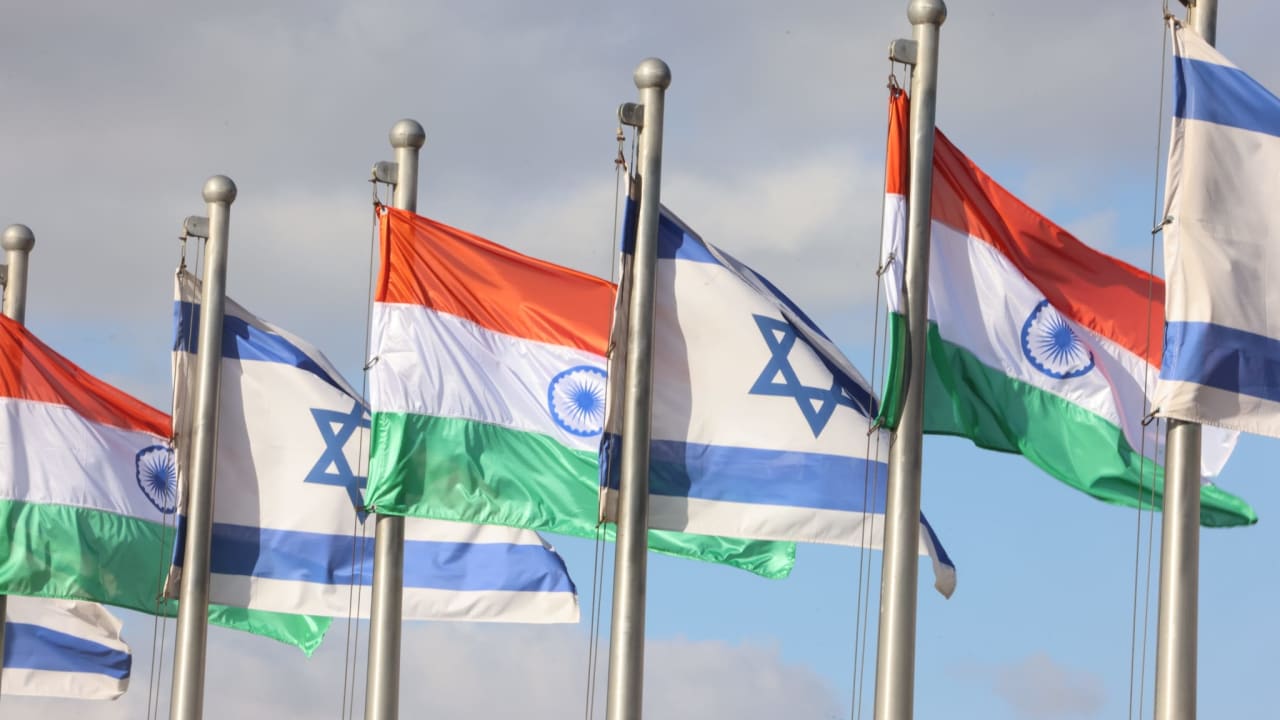
Israeli and Indian officials are poised to finalise an expansive set of defence agreements during the visit of Indian Prime Minister Narendra Modi to Israel, with estimates of the total value reaching between $8 billion and $10 billion, according to various reports, including local Indian media.
This development follows recent military conflicts, notably the 2023-2025 Middle East War, which underscored the effectiveness of Israeli air defence systems. Additionally, the May 2025 conflict between India and Pakistan exposed vulnerabilities in New Delhi's capabilities in drone, missile, and cyber warfare.
Anticipated deals include significant components of Israel's multi-layered missile defence framework. This includes the Arrow missile defence system produced by Israel Aerospace Industries, along with Rafael’s David's Sling and Iron Dome systems. The Iron Beam system from Rafael and Elbit Technologies is also expected to feature prominently. However, none of these companies have yet confirmed any specific agreements or made public declarations regarding these potential deals.
Currently, India employs the Russian S-400 air defence system, alongside systems based on Akash, Barak, and Quick Reaction Surface to Air Missiles (QRSAM). Apart from missile systems, provisions for enhanced detection capabilities and improved coordination across various air defence layers are also under consideration, which could significantly bolster India’s defence against a range of aerial threats, including long-range ballistic and medium-range rockets.
The agreements may extend into both offensive and defensive drone capabilities. Multiple Israeli companies are in competition, offering diverse solutions in this domain. Notably, a substantial contract may be finalised for Elbit's Hermes 900 drone.
On the offensive side, it is reported that agreements could be in place for Rafael’s SPICE 1000 guidance kits, Elbit Systems’ Rampage air-to-ground missiles, Ice Breaker naval cruise missiles, and Israeli Aerospace Industries’ supersonic Air LORA missiles. Modi is particularly interested in securing the ability to launch missiles from considerable distances, beyond the range of enemy air defences, similar to tactics employed by the Israeli air force in its operations against Iran in June 2025.
India has emerged as a key defence partner for Israel, consistently ranking as the country’s largest defence purchaser in recent years. According to the Stockholm International Peace Research Institute (SIPRI), India accounted for 34% of Israel's total defence sales from 2020 to 2024. Meanwhile, Israel's Defence Ministry’s International Defence Cooperation Directorate (SIBAT) has reported total arms sales to India in this period amounted to around $20.5 billion.
The trend of defence sales began accelerating between 2012 and 2017, culminating in sales reaching $3.4 billion, which included the Barak anti-ship missile system sale to India. Although trade cooled slightly from 2017 to 2023 as India adapted to Prime Minister Modi’s “Made in India” policy, Israeli investment in India has been reinstated since 2024, with many defence firms establishing local subsidiaries.
These shifts towards a blend of purchases and long-term partnerships in defence production coincide with renewed military tensions, suggesting that defence agreements could surpass previous records by 2026. Additionally, joint ventures in cyber, artificial intelligence, and even quantum technologies are also expected to emerge as part of Modi's discussions in Israel.
Kerala Initiates Probe into 2006 Suicide Case Involving CEC

Extradition of Sheikh Hasina Feasible, Says Indian High Commissioner

Punjabi Makeup Artist Mad Sandhu Shot Dead in Amritsar

India Achieves Fourth Place at Asian Games 2026 Through Late Success