Israel Captures Historic Beaufort Castle Amid Ongoing Conflict


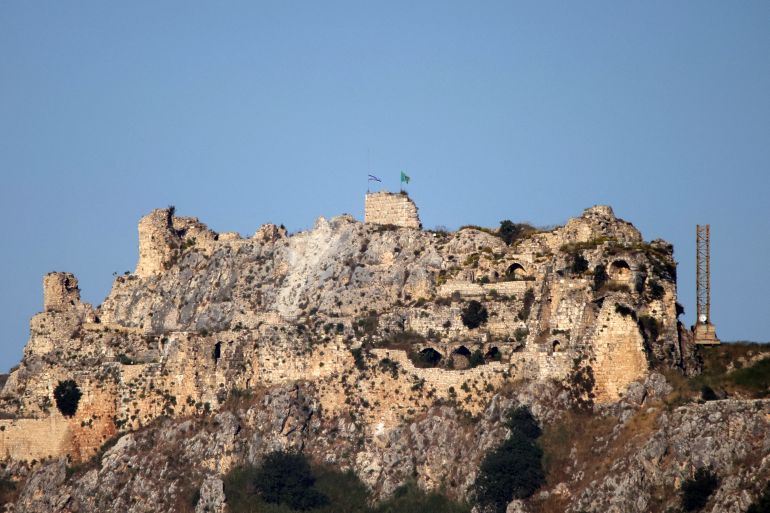
The Israeli military has successfully captured Beaufort Castle, a 900-year-old fortress located in southern Lebanon. This move forms part of an extensive military campaign against Hezbollah, a Lebanese armed group. Announced on Sunday, the capture occurred amidst ongoing conflict, despite a declared ceasefire that has seen multiple violations by Israel.
Israeli Defence Minister Israel Katz confirmed the recapture during a memorial event for soldiers who lost their lives in the 1982 Lebanon War. He noted, “The Israeli flag is once again flying over the peaks overlooking the Galilee communities,” as he shared an image of the castle with flags from the Israeli military’s Golani Brigade.
Beaufort Castle, known in Arabic as Qalaat al-Shaqif, is perched on a rocky hilltop approximately 700 metres above sea level. It was originally constructed in the 12th century by Crusaders, who named it Beaufort, meaning 'beautiful fortress' in Old French. Its historical significance stems from its elevated position, enabling control over several strategic areas in southern Lebanon.
Throughout the centuries, the castle has transferred ownership between various rulers and empires, including the Ottoman Empire. It was occupied by Israeli forces during their 1982 invasion of Lebanon and held until Israel's withdrawal in 2000.
The recent seizure of Beaufort Castle provides Israeli forces with an extensive vantage point across southern Lebanon and parts of northern Israel. This strategic location has raised alarms among local residents, with reports indicating heightened concerns about an escalation of operations by Israeli troops.
Al Jazeera’s Obaida Hitto reported from Tyre, stating that capturing the fortress grants Israeli forces a significant advantage against Hezbollah. “It overlooks all of the towns and villages around the city of Nabatieh. It also looks over the western Bekaa Valley and into the occupied Golan Heights,” he noted.
As of now, the conflict has resulted in substantial casualties, with over 3,412 fatalities and 10,269 injuries reported since March 2, according to the Lebanese Ministry of Public Health. The capture of the castle followed intense battles and air strikes surrounding the fortress, with Israeli forces deemed responsible for multiple attacks leading to civilian casualties.
Israeli troops have reportedly taken control of around 2,000 square kilometres of Lebanese territory, representing nearly one-fifth of the nation. This escalation in hostilities has been partly triggered by Hezbollah's involvement in the conflict, which began after the killing of Iranian Supreme Leader Ali Khamenei earlier in the year.
Hezbollah responded to this with rocket attacks aimed at Israel, marking a shift in its operational stance, which had remained relatively restrained since the November 2024 ceasefire.
Israeli Prime Minister Benjamin Netanyahu announced a deeper military incursion into Lebanon, instructing forces to intensify their operations. He stated, “My instruction is to deepen and expand our grip on places that were under Hezbollah’s control.”
In an alarming development, Israel has ordered the forced displacement of residents from seven villages in southern Lebanon, including Houmine al-Faouqa and Bnaafoul. The military has directed those affected to evacuate an area of 1,000 metres around these locations, citing impending military action. These escalating tensions signal a potentially extended offensive in the region as Israeli forces seek to dismantle Hezbollah’s infrastructure and secure strategic military positions.
Kerala Initiates Probe into 2006 Suicide Case Involving CEC

Extradition of Sheikh Hasina Feasible, Says Indian High Commissioner

Punjabi Makeup Artist Mad Sandhu Shot Dead in Amritsar

India Achieves Fourth Place at Asian Games 2026 Through Late Success