India and US Trade Agreement: Minor Details Finalised Before Signing


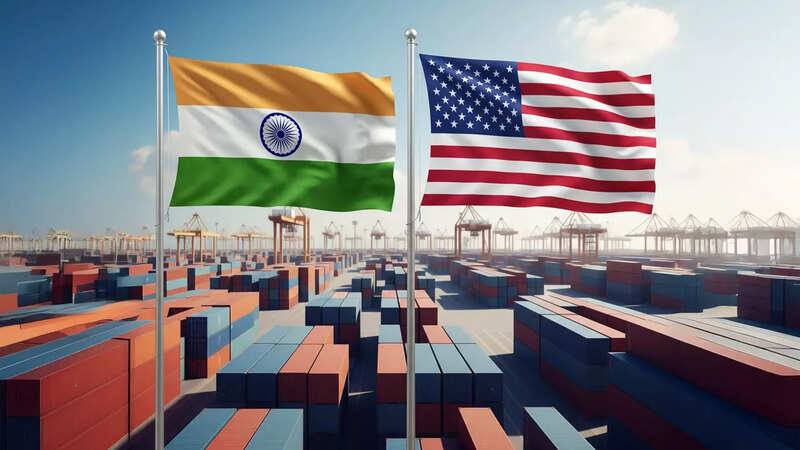
India's Minister of Commerce and Industry, Piyush Goyal, announced that most components of the bilateral trade agreement with the United States have been completed. The remaining discussions, scheduled for June 2-4, will centre on minor details, described by Goyal as 'commas and full stops'. The US delegation is visiting India to finalise an interim arrangement, following a framework agreement announced on February 3 this year.
During a press conference on June 1, Goyal stated, 'All the major points have been settled.' He referenced a comment from the US Ambassador to India, who claimed that 99% of the agreement has been finalised. Goyal expressed confidence in concluding the first phase of the agreement swiftly, which will serve as a precursor to negotiating a more comprehensive trade pact between the two nations.
Leading the US delegation is chief negotiator Brendan Lynch, while Darpan Jain, an additional secretary in the Department of Commerce, heads the Indian team. The discussions will cover various topics, including market access, customs facilitation, non-tariff barriers, investment promotion, and supply-chain cooperation.
A joint announcement made earlier confirmed the contours of the first phase of the bilateral trade agreement, which focuses on reducing tariffs substantially. According to the outline, the US has committed to lowering tariffs on Indian goods from 50% to 18%. Additionally, the removal of a previous 25% tariff on Indian imports related to Russian oil is anticipated.
Recent legal shifts in the US tariff policy have also influenced these negotiations. In February 2026, the US Supreme Court ruled against prior sweeping tariffs implemented under the 1977 International Emergency Economic Powers Act. Subsequently, President Biden announced a temporary 10% tariff on imports from all countries, which is set to last until July 23 this year.
In light of these developments, both countries need to recalibrate the agreement. India's proposal includes eliminating or reducing tariffs on a range of US industrial and agricultural products, such as tree nuts and soybean oil. India has also indicated plans to purchase $500 billion worth of US energy products and technology over the next five years.
With competitive advantages over Southeast Asian nations and other countries like Bangladesh and Pakistan, India is keen to ensure favourable terms within the trade pact. Future discussions will seek to address these tariff advantages comprehensively.
Goyal highlighted that the upcoming meetings with the US negotiators will play a pivotal role in resolving the final aspects of the agreement. US Trade Representative Jamieson Greer is anticipated to visit India later for further discussions contingent upon the outcomes of this week’s negotiations.
The US has consistently ranked as India's second-largest trading partner, with India's exports to the US experiencing a slight increase while imports have risen significantly in recent years, resulting in a slightly reduced trade surplus. The successful conclusion of the interim agreement could pave the way for broader, more detailed negotiations in the future.
Kerala Initiates Probe into 2006 Suicide Case Involving CEC
Extradition of Sheikh Hasina Feasible, Says Indian High Commissioner

Punjabi Makeup Artist Mad Sandhu Shot Dead in Amritsar
India Achieves Fourth Place at Asian Games 2026 Through Late Success