Iran's Rial Hits Record Low as US Sanctions Drive Inflation


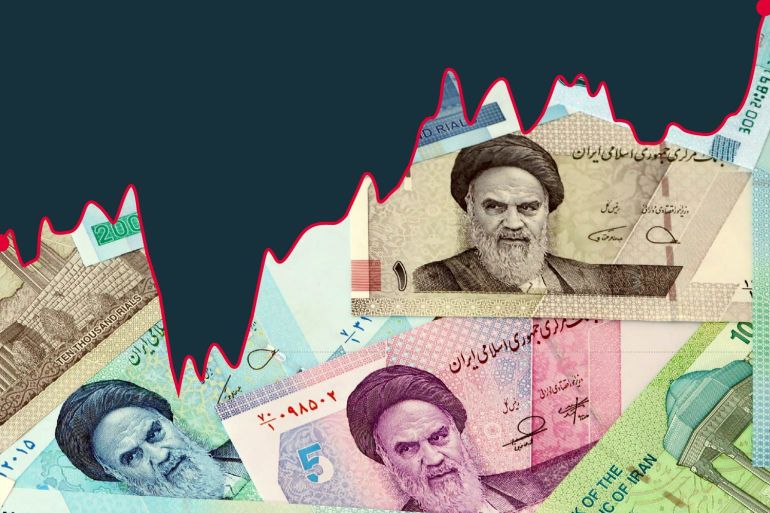
The Iranian rial has fallen to a historical low, trading at over 2 million rials for one US dollar following intensified sanctions imposed by the United States. This plunge in currency value has exacerbated the economic challenges faced by Iran's 92 million residents. The sanctions are part of a broader strategy to undermine Tehran's economy, particularly in relation to its nuclear programme. Inflation and increasing prices for basic goods have made it increasingly difficult for families to manage their finances.
In Tehran, Al Jazeera examined the impact of these economic changes on everyday consumers by comparing the costs of essential items before and after the recent sanctions. For instance, prior to the sanctions, 2 million rials could buy approximately 4 kilograms of tomatoes, half a kilogram of chicken, and nearly a litre of cooking oil. Currently, this amount yields barely half as much, with the prices of tomatoes soaring by 71 percent, chicken by 74 percent, and cooking oil seeing an alarming increase of 177 percent. Additionally, the cost of insulin, vital for diabetics, has surged by 642 percent, while paracetamol has increased by 93 percent. The price of government-subsidised baby formula has also risen by 95 percent.
One resident, Afsaneh, shared her harrowing experience: "Before the war, we could think about what we wanted to do three or six months down the road, but now our only concern is making it to the end of the month with the income we have." For Afsaneh's family, which includes a one-year-old child, the cost of childcare has climbed to 500,000 tomans, equivalent to about 5 million rials or $2.5, making it increasingly unaffordable.
While the Iranian government subsidises some essential goods, families still struggle to afford necessary health care and nutritional supplements. Afsaneh reflected how their family’s priorities have shifted, stating, "Many purchases, such as new clothes or upgrading our car, have been cut from our plans. And I don’t think things are going to get better anytime soon."
The situation has had dire effects on local businesses as well. Zamir, a 35-year-old men's retail worker in Tehran, disclosed that his store has experienced a dramatic 40 percent drop in sales compared to last year. He expressed concern about the future of many businesses, predicting that many may go bankrupt by winter if conditions do not improve. "Everything has become more expensive," he explained, highlighting the rising costs of wages and materials essential for running a business.
The current economic climate has also affected daily living expenses. Zamir noted that even when being financially prudent, individuals spend a minimum of 700,000 to 800,000 tomans—a sum equivalent to around $3.5-4—daily on basic needs such as transport and food, not including grocery costs.
In another account, Salama, a mother working in Hormozgan province, revealed how the escalating costs have impacted her household. "We used to do our weekly grocery shopping for around 500,000 tomans, but now we have to spend at least 5 million tomans for the same groceries," she disclosed. Salama further stated that she has had to reduce her family's meat consumption and noted that even basic medicines have become prohibitively expensive.
While the ongoing conflict has not been the root cause of Iran's economic struggles, it has magnified existing issues, including heightened unemployment and stagnant wages. Economic experts worry that these persisting challenges will further undermine the purchasing power of millions, leaving many Iranians grappling with the basic question of how to afford necessities amid skyrocketing inflation.

Kerala Initiates Probe into 2006 Suicide Case Involving CEC

Extradition of Sheikh Hasina Feasible, Says Indian High Commissioner

Punjabi Makeup Artist Mad Sandhu Shot Dead in Amritsar

India Achieves Fourth Place at Asian Games 2026 Through Late Success