Iran Refutes Claims of $2 Million Passage Fees in Strait of Hormuz


Iranian authorities have rejected claims that the country is imposing fees of up to $2 million on merchant vessels for transit through the strategically important Strait of Hormuz. The assertions were labelled as 'unfounded' by officials, who clarified that such statements are based on personal remarks rather than official policy.
The controversy arose following comments made by Iranian lawmaker Alaeddin Boroujerdi, a member of the national security committee in the Iranian Parliament. Boroujerdi stated on a television programme that Iran might consider levying transit fees due to the ongoing conflicts involving the United States and Israel. He stated, 'War has costs, and naturally we must take transit fees from ships passing through the Strait of Hormuz,' suggesting it would reinforce Iran's authority over the crucial waterway.
Despite Boroujerdi's remarks, Iranian officials have distanced themselves from the idea of implemented transit fees, asserting that no official regulations have been enacted regarding this matter.
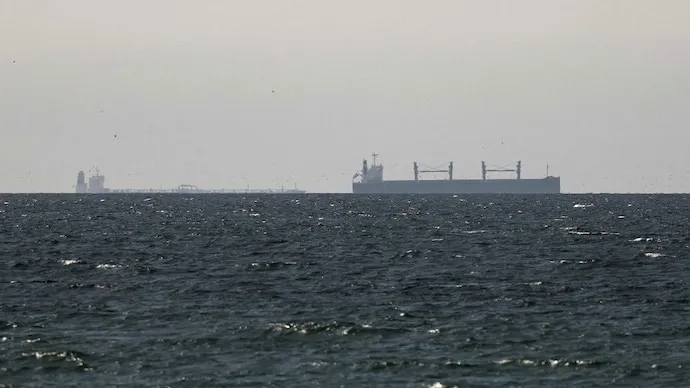
The Strait of Hormuz is a vital maritime route where approximately 20% of the world's oil and LNG (liquefied natural gas) supplies are transported. The area has faced significant disruption since early March due to heightened hostilities between regional and international powers. Shipping activity in these waters has slowed drastically, with reports indicating a selective blockade enforced by Iran.
According to Iranian officials, the restrictions are directed primarily at vessels flagged by nations deemed as 'enemies' or those supporting actions against Tehran. However, exceptions have been noted. Indian-flagged liquefied petroleum gas carriers and at least one oil tanker from Pakistan have reportedly been granted safe passage.
Furthermore, Iranian officials have indicated a willingness to allow vessels linked to Japan, but no official consent has been confirmed.
Tensions around the Strait of Hormuz have escalated following a 48-hour ultimatum issued by United States President Donald Trump, who demanded the full reopening of the waterway. Trump warned that non-compliance might lead to military strikes on Iranian infrastructure.
In retaliation, Iranian parliamentary speaker Mohammad Baqer Qalibaf has threatened attacks on critical energy infrastructure throughout the Middle East. The Islamic Revolutionary Guard Corps also issued a warning that any assault on Iranian facilities would result in a 'complete closure' of the Strait of Hormuz.
Amid these tensions, maritime security has deteriorated sharply. Recently, explosive-laden boats attacked two fuel tankers in Iraqi waters, resulting in a fire that claimed the life of one crew member, an individual from India.
The ongoing disturbances in the Strait of Hormuz have already triggered a rise in global fuel prices, fuelling concerns about the stability of supply chains.
While Iran's official stance aims to assuage fears surrounding these issues, the reality in the Strait remains fraught and unpredictable. Should any formal charges for passage be enacted, it would further complicate shipping operations already burdened by existing sanctions on the Islamic Republic.

Concerns Rise Over Delhi Voter Registration Discrepancies

Controversy Erupts Over Rahul Gandhi's PM Modi Mimicry at Event

Father of IIT Bombay Student Calls for Action Against Discrimination

India and Japan Conduct Joint Air Exercise 'Veer Guardian-2026'