Iran Reacts Strongly to US Military Actions Amid Ongoing Blockade


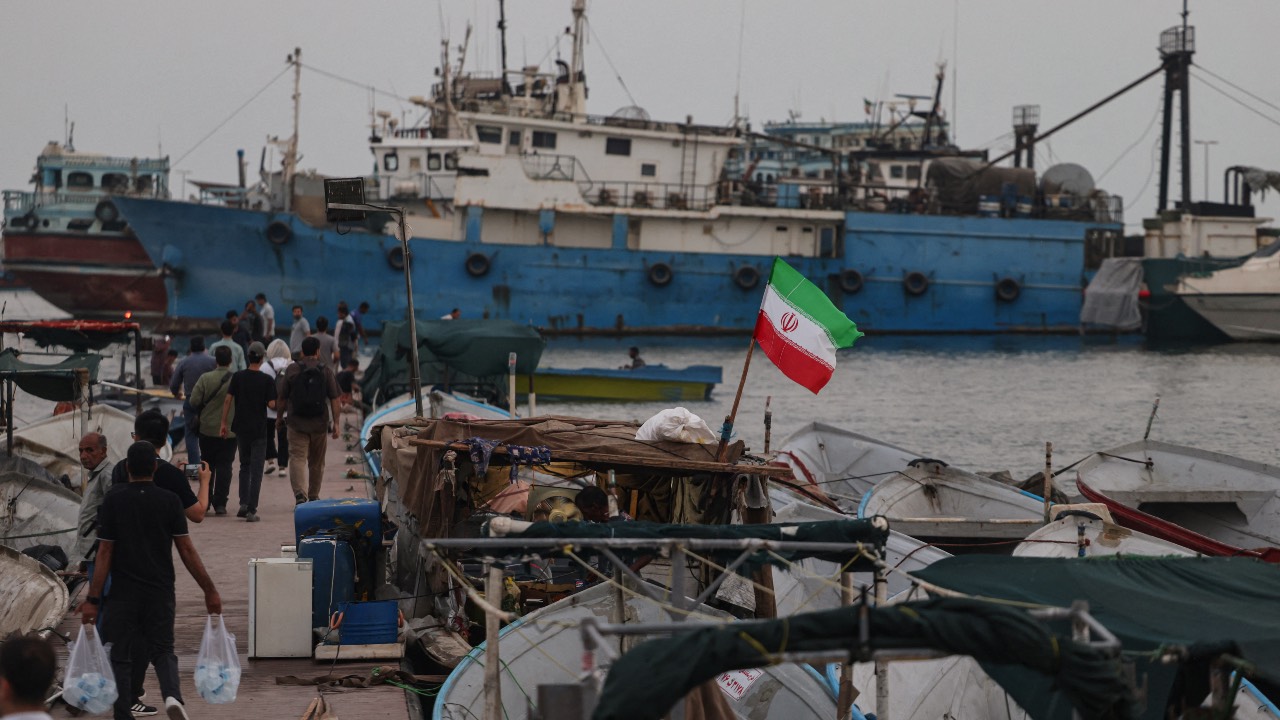
The Iranian government has declared that its policy of proportionate retaliation has concluded in response to escalating military actions by the United States. This declaration comes after the US Central Command (CENTCOM) released footage of attacks on three Iranian crude oil tankers, which occurred close to the blockade line, primarily around Kharg Island, Iran's principal oil export location. According to CENTCOM, two of the tankers were severely damaged, and a third vessel ultimately sank as a result of extensive bombing. In retaliation, the Islamic Revolutionary Guard Corps (IRGC) broadcasted videos showing their attacks on multiple vessels within the vital Strait of Hormuz. The IRGC warned that the US must cease its actions in the region, stating, "Aggressor US must know that it has no way but to leave the region and stop its malignance." The IRGC detailed an encounter involving a US drone, asserting it was engaged as the drone attempted to breach Iranian waters. The reported incidents underscore the ongoing tensions in the Strait of Hormuz, a crucial passageway through which one-fifth of the world’s oil and gas flows during peacetime. On Sunday, the IRGC also reported firing ballistic missiles at US naval vessels enforcing the blockade, claiming some damage to the ships. CENTCOM, however, stated the missiles had been successfully avoided. The IRGC portrayed the missile launch's acknowledgement by the US as evidence of strategic failure for Washington and a testament to their operational strength. Speaker of Parliament Mohammad Bagher Ghalibaf confirmed during a private meeting that Iran has dealt significant blows to US interests in the region, indicating a heightened state of military readiness. Ghalibaf warned that any future US attacks would elicit stronger and more painful responses from the Iranian military. The Iranian Foreign Ministry condemned the US assaults on its vessels as illegal and referred to them as a war crime that contravenes international law outlined in the United Nations Charter. Divergent interpretations of the current conditions in the Strait of Hormuz have emerged, particularly regarding the US blockade initiated in mid-July. The Trump administration claims that maritime traffic through the strategic waterway is close to pre-war levels despite reported disruptions. Conversely, Iranian officials assert that the blockade has significantly hindered their oil exports. Military reports confirm the redirection of roughly 90 commercial ships as part of the imposed blockade, which has reportedly impacted crude oil exports from the Middle East, significantly decreasing output compared to earlier this year. Recent estimates suggest that Iranian crude oil exports may remain at an ineffective level amid such pressure. President Masoud Pezeshkian, however, noted that Iran continued to sell oil, albeit in limited quantities through alternative arrangements, particularly with China. American officials have expressed optimism about depleting the available Iranian oil supply quickly, indicating that as few as 30 million barrels may be left that have not yet been purchased by China. The Trump administration continues to enforce a combination of military presence and sanctions as part of their strategy known as Operation Economic Outcast, aimed at isolating Iran economically. In reaction to these challenges, Iran's Economy Ministry has established a dedicated unit to develop strategies to counter the sanctions and economic pressures it faces within a context of high inflation and economic instability. The IRGC spokesman suggested that the economic repercussions for the US are expected to be considerable, potentially exceeding the damages inflicted upon Iran itself.
Kerala Initiates Probe into 2006 Suicide Case Involving CEC
Extradition of Sheikh Hasina Feasible, Says Indian High Commissioner

Punjabi Makeup Artist Mad Sandhu Shot Dead in Amritsar

India Achieves Fourth Place at Asian Games 2026 Through Late Success